This was a tutor lead visit arranged by Matt White taking in three separate exhibitions at the Museum of Wales in Cardiff. The exhibitions were August Sander, Bernd and Hilla Becher and Martin Parr. Before embarking on a viewing of the works we were introduced to our guide and host, the museums Senior Curator of Photography, Bronwen Colquhoun. We were also set a task by Matt which would be the basis of an informal discussion after we had viewed the works. The task set by Matt was to curate our own exhibition containing work featuring one, two or all of the artists. On entering the exhibition spaces Bronwen gave us a synopsis of the work and artists.
August Sander
The exhibition featured eighty portraits by the influential German photographer August Sander, featuring images taken from his huge self-initiated project People of the Twentieth Century. For this project Sander travelled the length and breadth of Germany, photographing its citizens from across the social, political and class divide. His subjects range from farm labourers to Archduke’s, anarchists to General’s, prisoners to politicians. The exhibition was categorised into social groups such as: The Farmer, The Skilled Tradesman, Woman, Classes and Professions, The Artists, The City, and The Last People (homeless persons, veterans, etc.). These were all assigned by Sander himself during the creation of his project and is a sign of the times he lived in. I noted that all of his portraits were taken in surrounds that were familiar and representative of his collaborators and help form easy associations with them. There is also a very humanistic feel to the images that ranges across the differing social divides.
Bernd and Hilla Becher
The title for this exhibition is called Industrial Visions and brings together over 225 photographs by two very influential photographers. Bernd and Hilla Becher are German photographers and key protagonists of the typology photographic movement, they were also the course leaders at the Kunstakademie Dusseldorf. For over fifty years they collaborated on a project to record industrial structures all over the world. The structures range from winding towers through to lime kilns. In 1966 they came to photograph the winding towers in the South Wales valleys and made an extensive series of images that now stand as a testament to the lost industrial ways of life of the region. The exhibition has kickstarted desire within me to explore them and their work further. Prior to seeing this exhibition, I never really connected with their images. I understood the importance of their work and influence, but I failed to bond emotionally with it. Standing in front of their images I was impressed by the scale of the presentation and the geometry within the groupings. I had a sense of the work almost standing as headstones to lost communities. Very powerful indeed.
Martin Parr
Martin Parr is one of Britain’s most productive and influential photographers and has been photographing in Wales for a large part of his career. Photographing his usual tropes of tourism and leisure, food and cliché and working in places such as working men’s clubs and coal mines, the images are all shot in his trademark flash lit, saturated colour aesthetic. The exhibition is filled with images taken only in Wales and range from shots in working men’s clubs to tourists on beaches, ice creams and fetes. What more can you say other than typical Parr?
After a break for lunch we reconvened in the museums conference room to discuss our ideas regarding our curated exhibition. My image selections are below.
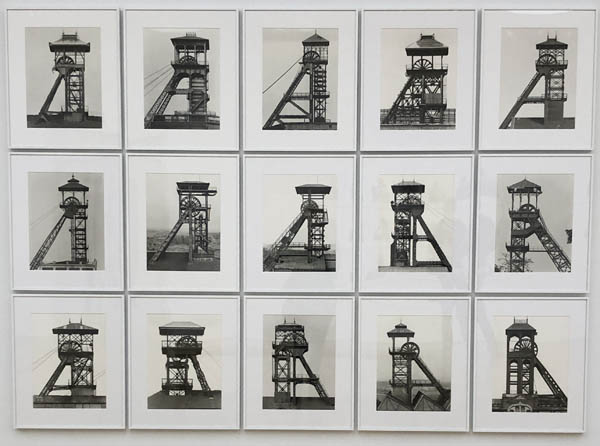
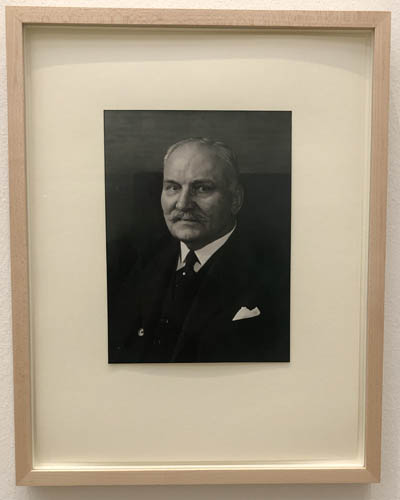
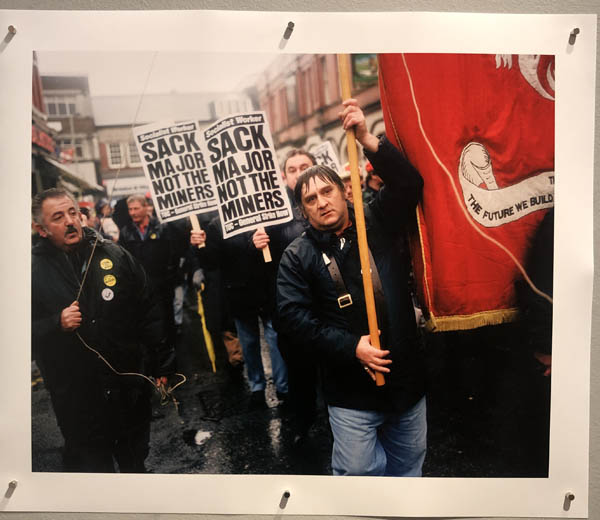
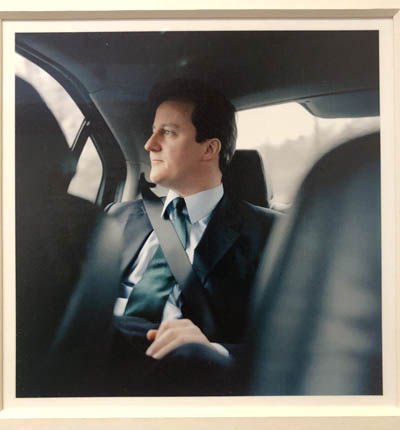
There was much talk around the table especially from students who had grown up in Wales about their emotional connection to the mining industry and its decline over the last thirty years. Symbols of the industry that were once commonplace within the local landscape that are now distant memories, such as the pithead images made by the Becher’s. My selection relates more to industrialisation in general. I wanted to include work from all of the exhibitions and also from the side gallery. For me, the subject of industrialisation raises many questions and doesn’t necessarily deliver answers regarding earths ability to provide for future generations. Although Britain is offsetting its carbon usage and aims to be a leading light in world emissions reduction, are the policies of past and future governments truly beneficial when all we are doing is shifting the problem around the world by buying our energy from countries who don’t adhere to our own superficial high standards?

 Context and Narrative