Submission
I was taken aback when watching recent news footage of right-wing anti-covid 19 demonstrations in America. I wasn’t surprised by what I perceived as the foolishness of the demonstrators, but I was shocked by the fact that many of them had turned up with their children in tow and to the fact that these children were replicating the same levels of anger as their parents during these protests, it seemed to me very much like social conditioning. My interest was piqued. In their book The Development of Political Attitudes in Children psychology professor’s Dr’s Robert D. Hess and Judith V. Torney state, ’The role of president-as-father is a transitory stage in the genesis of the emergence of the understanding of – and loyalty to – the abstract system of law in U.S children’ (Hess and Torney, 2006:xix). I was curious regarding the politic washing of children and how this can develop as an ideology that either stays with them or that they rebel against (as I rebelled against my father’s views) in adulthood.
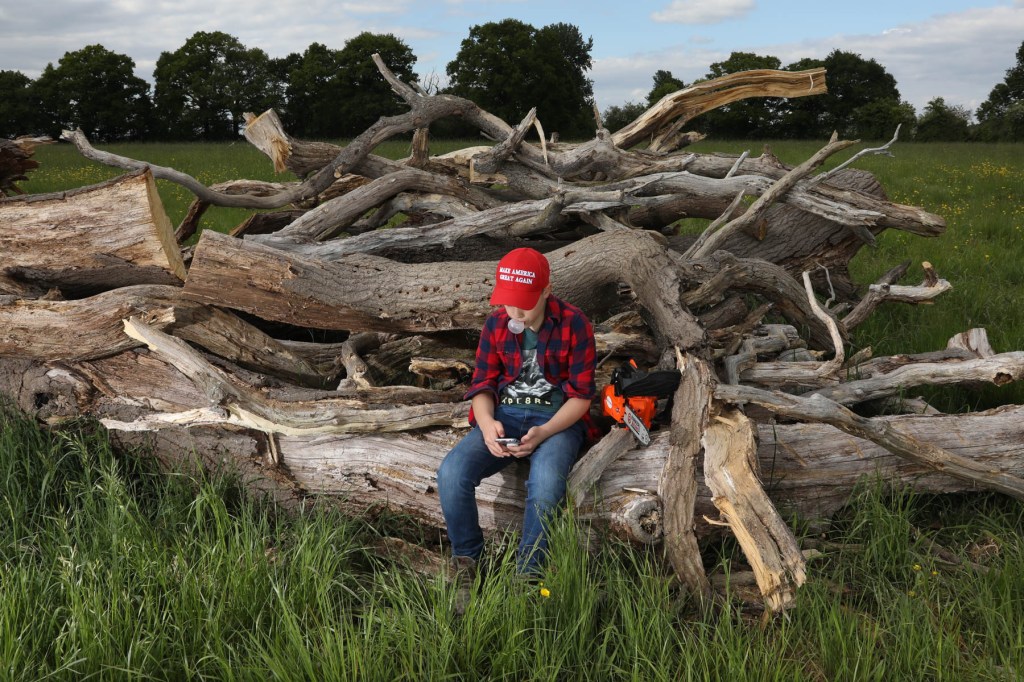
My intentions with this assignment was to show using symbols and metaphors how children are conditioned at an early age through influences such as parents and peers, and perhaps that these influences have greatest sway just as they are approaching puberty, when they are starting to forge their personal identities. I also wanted to try and simulate the age when the loss of innocence occurs, when external influences hold greater sway with children. Americanism, technology and the advent of YouTube soundbites are also shaping worldwide youth culture and it seemed important for me to represent this in some way. Finally, I thought it was important to include a symbol of climate concern as this is the overriding concern for future generations.
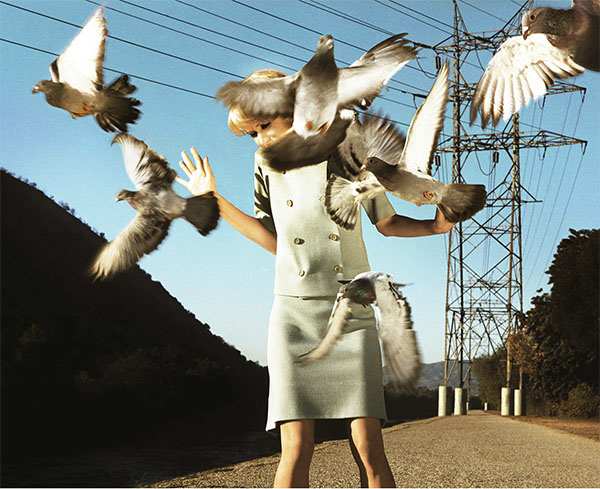
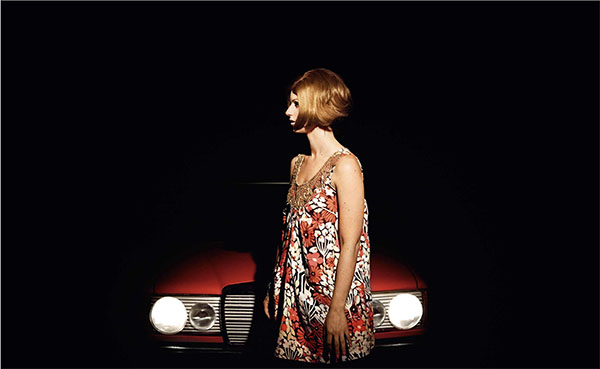
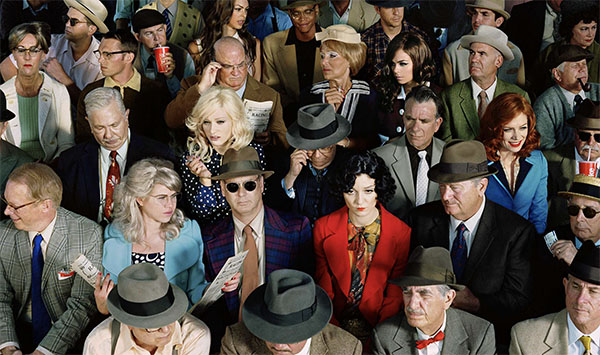
My ideas had been slowly coming together after assignment three and I knew I wanted to complete a project based on the idea of external influence on children. For a long time, I had the notion of completing a tableau style image and had been looking at the works of Gregory Crewdson and Alex Prager; particularly, I was very taken by their dramatic use of lighting and, as I had recently purchased a pair of Profoto lights, I wanted to incorporate their use in this assignment and try to create a better level of understanding of lighting control.
My initial idea was to create an image based around the child safety short films of the 1970’s (my childhood era). I had imagined a scene of a carnage involving a kite and some overhead power lines and thought of developing it into a modern moral dilemma around the issue of people filming such scenes, rather than helping. My mind was swayed after I saw the news footage of the anti-covid demonstrations coming from America and decided on a completely different approach. I thought that with this subject I would be able to represent a truer definition of my own humanistic point of view, so the ideas that I outlined earlier formed.
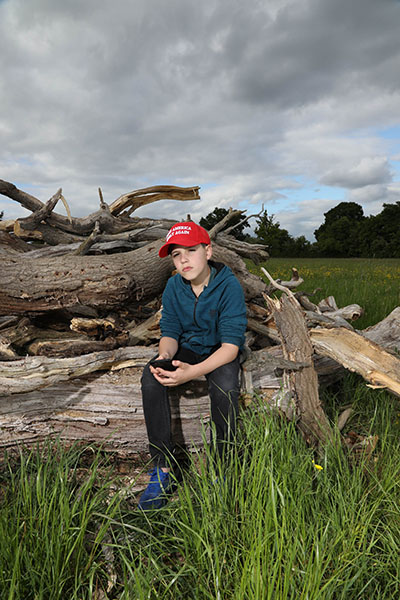
The location for my shoot was close at hand. I regularly walk to an old dead tree that’s situated in a field just behind my house. The place is usually a place that I go to for a bit of peace and quiet, somewhere to reflect and still my mind. The tree recently toppled after the ground became saturated and the rotten roots could no longer bear it. I thought that it would be a good location to resemble the Trumpian heartlands of the mid-west and if shot in the right manner would not reflect rural Worcestershire as there are no signifying features of the UK. Other props that I chose would dress it in American symbolism. My son agreed to act as the protagonist and is the age of youth I wished to portray. He’s twelve and is displaying the characteristics of someone that is undergoing a shift in the understanding of his own identity; outside influences are having a great bearing on his social conscience. As to the props, I had to use things that would reinforce a sense of American rural identity and aesthetic. I also made a conscious decision to illustrate the poignancy of the crossover from childhood to adolescence and so had him blowing a bubble-gum bubble, again, perhaps a trope of Americana. Everything was set, I did a test shoot to get to grips with my lighting set up and was ready to proceed with my staged image.
The lighting set up for the actual shoot wasn’t over-elaborate; both lights were positioned to left and right of the camera and approximately 45 degrees and 10 feet away from the subject. I aimed the light on the cameras left to illuminate the woodpile and righthand side of the subject, this light was at full power, 250W. The light on the right of the camera was set a little lower in height and delivered a quarter less power. Using aperture, I underexposed the ambient light by 2/3’s of a stop and let the flash govern the lighting on the subject and foreground.
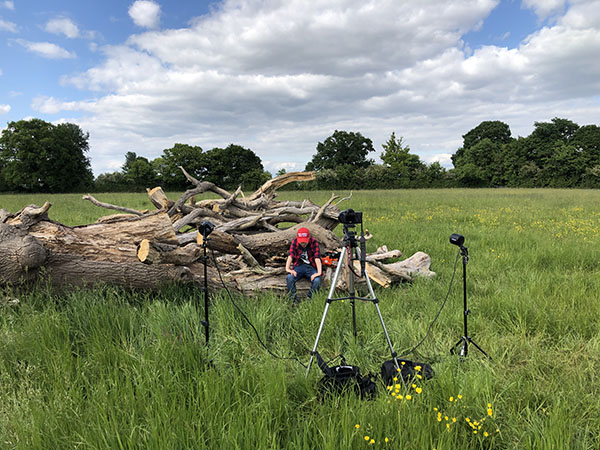
I thoroughly enjoyed using the lights. It has been a long time since I last used a studio lighting set up and practicing with them prior to the shoot gave me confidence, this meant I was more relaxed with my engagements with my subject and knowing the outcome I wanted to achieve meant I had clarity with my procedure, enabling me to achieve my desired outcome, as Graham Clarke says ‘First, we must remember that the photograph is itself the product of a photographer. It is always the reflection of a specific point of view, be it aesthetic, polemic, political, or ideological. One never takes a photograph in any passive sense.’ (Clarke, 1997, 29).
Bibliography
Hess, R. and Torney-Purta, J., n.d. The Development Of Political Attitudes In Children.
Clarke, G., 1997. The Photograph. London: Oxford University Press.
 Context and Narrative
