Charity
Martha Rosler’s essay: In , Around and Afterthoughts (On
Documentary Photography), which appeared in Richard Bolton’s edited book of
essays The Contest of Meaning, sets about constructing an argument that
documentary photography reinforces class structure by emboldening the gap
between social classes through the capitalist paradigm.
Rosler states, “Documentary photography has come to represent the social conscience of liberal sensibility presented in visual imagery” (Rosler, 1992). When speaking of Jacob A. Riis and Lewis Hine, two photographers working in highlighting social injustices; who’s aims were predominantly about bringing reform through awareness via their documentary practice, she says “their appeals were often meant to awaken the self-interest of the privileged. The notion of charity fiercely argued for far outweighs any call for self-help. Charity is an argument for the preservation of wealth, and reformist documentary (like the appeal for free and compulsory education) represented an argument within a class about the need to give a little in order to mollify the dangerous classes below…” (Rosler, 1992). This seems such a massive slight on the principles of the two men, motivated to change a way of thinking by exposing the injustices they felt. Their motivations were not for self-aggrandizement but were for reform much like the prison reformists of the nineteenth century or the slave trade abolitionists.
If
anything, the capitalist construct isn’t augmented by documentary photographers
reinforcing the Us and Them thinking, but by the 1% who have much to lose with
its downfall, emboldened by political and media moguls. Rosler appears to be a motivated
by political viewpoint. I fail to see how people caught in the trap of poverty
can help themselves unless pursuing a life of crime. Food-banks are an
indicator of charitable worth in our present climate, and if charitable
donations increase because of the public’s awareness to the plight of the poor
or other social ailments (health, work, modern slavery), then the work started
by Riis and Hine and modern contemporaries such as Jim Mortram, Matt Black,
Chris Killip and Tish Murtha should be applauded.
In so far,
as to whether images of the poor and destitute are patronizing or exploitative,
this depends on the intent of the image makers. Taking Riis and Hine as
examples, there is an argument that their work is patronizing but only in terms
representative of class – they are much more privileged than those that they
are making images of. This has no bearing on their intent though – highlighting
the plight of the poor who were being exploited by wealthy landlords; their
intent was purely humanitarian.
Photography
has a great power to prick the conscience of the viewer. A single image is
remembered far easier than five-minute documentary of moving image and I think
is more affective at initiating social change. Photography’s potency should not
be underestimated or disregarded as a catalyst for change.
Compassion
Fatigue
“To suffer
is one thing; another thing is living with the photographed images of
suffering, which does not necessarily strengthen conscience and the ability to
be compassionate. It can also corrupt them” (Sontag, 1979:20).
If you fail
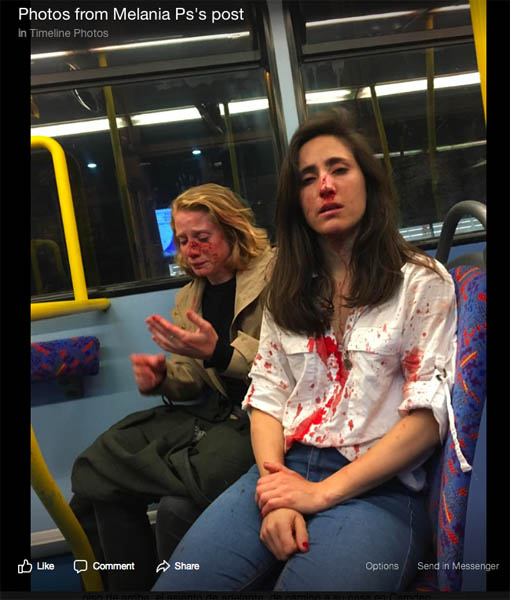
to be moved by an image of destruction or suffering you must be a sociopath, no
matter how many times such images are presented to you. Are we being
anaesthetised by the flow of images from the ever-present wars and cases of
suffering presented to us? I’d like to think not; there is a great propensity
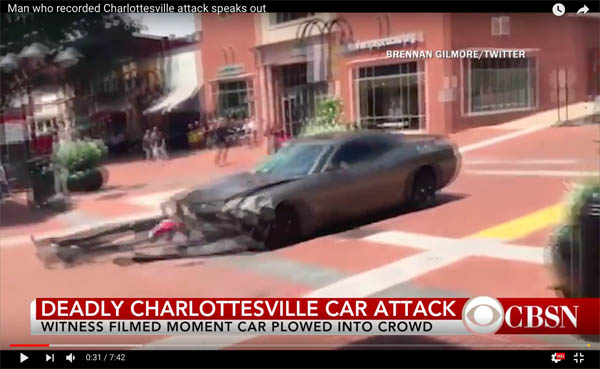
for photography to establish emotive responses. If anything, I think that the
use of moving image is lessening the emotional responses; because of the
constant streaming into our consciousness through rolling news channels or even
nightly broadcasts.
Take the
image made by Eddie Adams of Gen. Nguyen Ngoc Loan, killing a suspected Viet
Cong official. Eddie wasn’t the only journalist there at the time, there was
also a film crew. When viewing the moving footage of the incident it is very
easy to become dislocated from the event; the movement through the preliminary
interactions, the firing of the gun, the immediate aftermath – where the camera
tracks the General and then moves on, all happens so quickly and plays out more
like a Hollywood fiction than reality. The power of the still image stops us in
our tracks – holds us, and the freezing of time has a greater potency to lock
the image cerebrally.
If
anything, I think that Sontag’s view is more applicable, presently, to the moving
image as opposed to the still image. Adam’s picture helped the already turning
tide of political opinion in the United States, assuaging policy and along with
other images such as Nick Ut’s, helping embolden the anti-war movement, hastening
the end of the Vietnam war. More recent images such as the body of Alan Kurdi
and chemical gas attacks in Syria have had a huge impact and have stirred
emotions, leading to direct political interventions.
Inside/Out
Recently, I
attended an exhibition showing the work of two photographers who both produced
work on the subject of Polish communities in the West Midlands. The works were separated
by two decades, by film choice (colour and black & white) and finally they
were separated by the national identities of the photographers. Jon Tonks is an
English national (outsider) and Czeslaw Siegieda was born in a displaced
persons camp pf Polish lineage (insider). Siegieda made black and white images
during the 70’s and 80’s and Tonk’s work was commissioned by MultiStory and was
made in the two-year period after the outcome of the EU referendum.
When viewing the two sets of work it was obvious to me who was the insider and who was not. Siegieda’s images hold a greater sense of immersion and familiarity, there is a feeling of participation and understanding of the community, whereas Tonk’s work, for me, has a feel of distance and a sense of voyeurism. I know Jon spent over two years on his project and earnt the trust of the community, but I can’t escape the sense of detachment between him and his subjects. I’m reading into this, but I feel his association with his subjects were fleeting rather than immersive. I believe that an outsider can produce successful insights in documentary work, but only by engaging in longform projects and being truly immersed in their subject’s way of life.
Bibliography
Grange, A. (2013). Basic Critical Theory for Photographers. [S.l.]: Focal Press.
Bolton, R. (1992). The Contest of meaning. Cambridge, Mass.: MIT Press.
Sontag, S. (1979). On photography. London: Penguin Books.
Public information. (1994). San Francisco: San Francisco Museum of Modern Art [etc.].
Jon Tonks. (2019). Stories of Home – Jon Tonks. [online] Available at: https://www.jontonks.com/work/stories-of-home/ [Accessed 15 Jul. 2019].
Czeslawsiegieda.com. (2019). Czesław Siegieda Documentary Photographer. [online] Available at: https://czeslawsiegieda.com [Accessed 15 Jul. 2019].


 Context and Narrative