For an assignment that initially gave me the most concern prior to starting, I have to admit to gaining the most pleasure from the whole process and final outcome including my tutors report. I really didn’t have a clue how to approach this assignment initially. Usually I have an idea or number of ideas on reading assignment briefs – not this time. To look at myself felt like therapy and I was fearful of what I might find. How much did I want to uncover/reveal about myself.
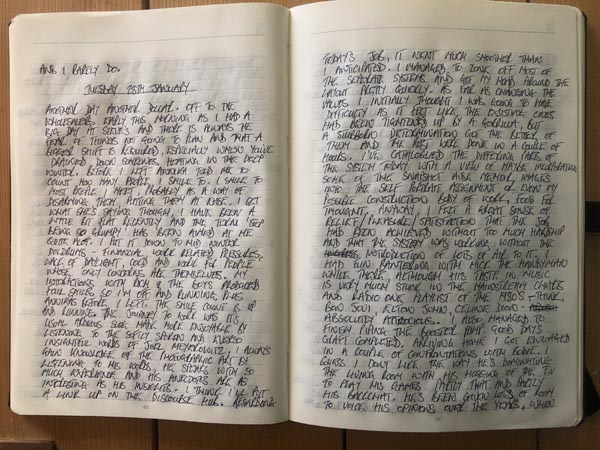
Keeping the journal over a couple of weeks was the impetus I needed to form a foundation of reflection, uncovering details about myself that I probably would normally ignore or put to one-side. The journal helped me see a common thread within my thought process with which I could pursue as a theme. I really feel this assignment has helped me develop a working through of ideas and experimentation to reach an effective conclusion; something that I can carry forward to further assignments.
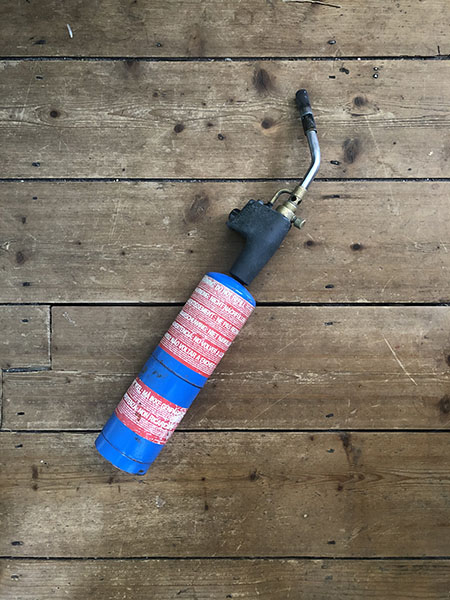
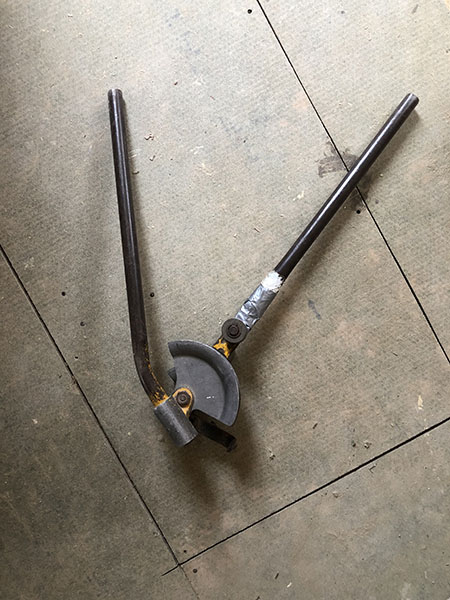
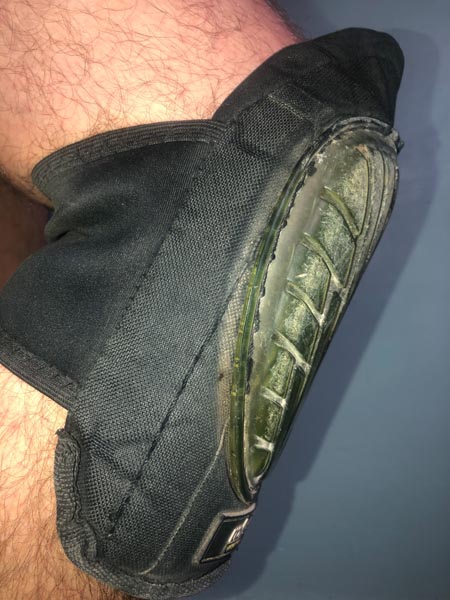
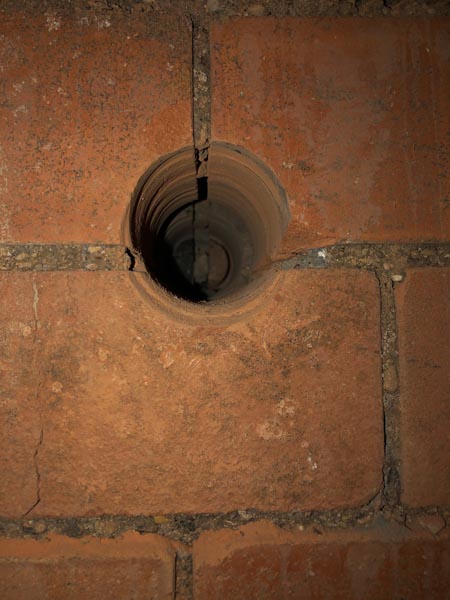
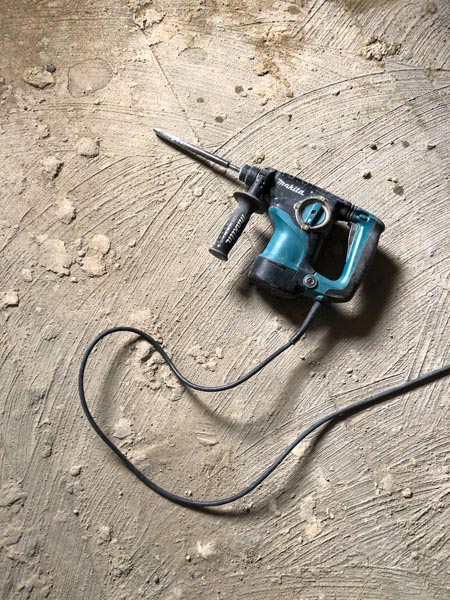
I have taken onboard my tutor’s comments regarding the need to diversify the backgrounds featured in the tool images. There is a repetition that needs breaking up to make the set of images more cohesive; so, I have re-worked these images.
The largest part of our lives are spent sleeping in our beds, the second could be argued is spent in our workplace. Like it or not the jobs we hold form a significant part of our identity. Some of us shift about in varying career environments, whereas others are happy staying put in one place, and perhaps with one role for a lifetime. I have shifted around and returned to the job I trained in on leaving school – that of a plumber. My diary entries mainly focused on aspects of my job; the toll of manual labour, dissatisfaction of chasing payments, the bond between colleagues, the freedom of self-employment. I guess my diary entries are reflecting a shift in thinking with respect of my future and how I wish to progress.
For a while I was confused as to how to progress with the assignment. I had varying ideas but couldn’t settle on an outcome; whether to follow one strand or multiple. I knew I wanted to pursue a still life approach to show the unseen aspects of my work with a leaning towards abstraction or something visually appealing. I also decided early on to complete the assignment with my phone camera as this was the best way to make workplace still life’s.
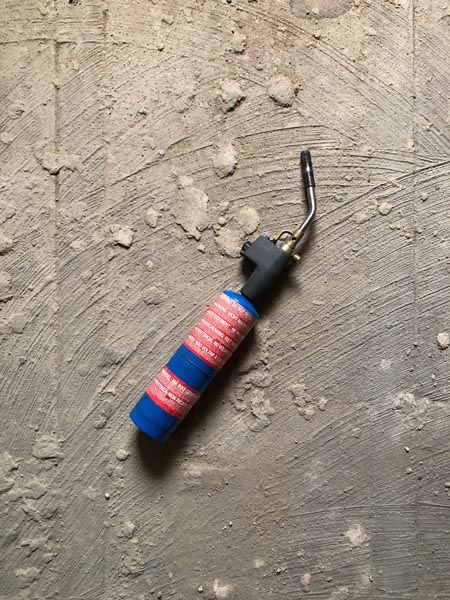
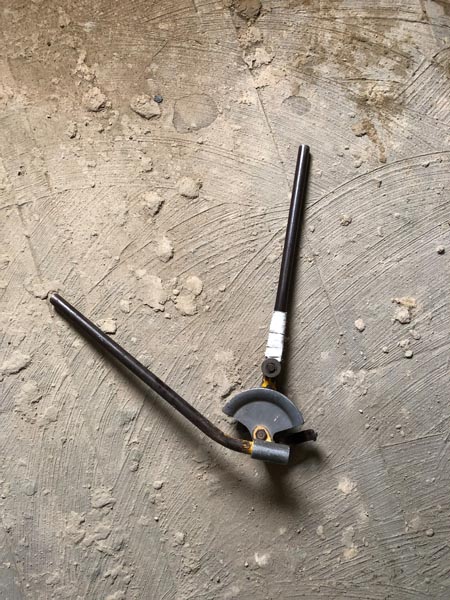
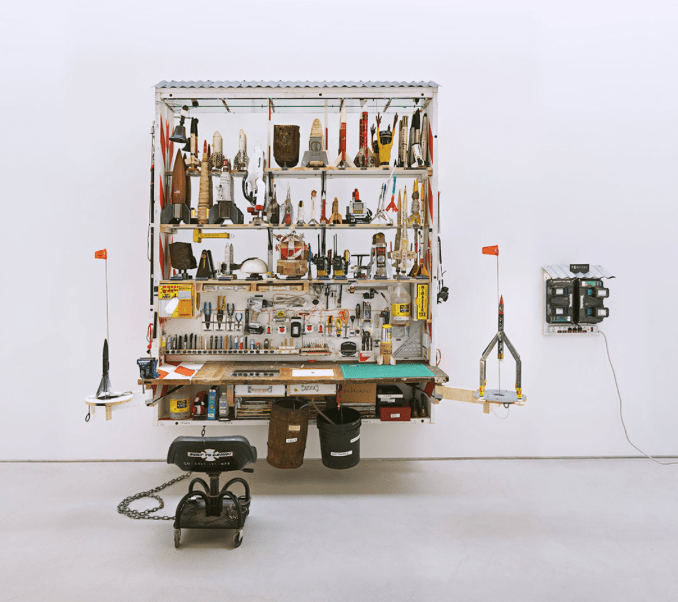
On seeing Tom Sach’s Rockeths installation I also realised that the best way to convey the physicality of my work and to emphasise the labour required would be to make some more still life’s of the tools I use. I have a love hate relationship with this equipment, they enable me to maintain a level of pride in what I do, but, also, they are beginning to exact a toll on my body and I have become weary of them.
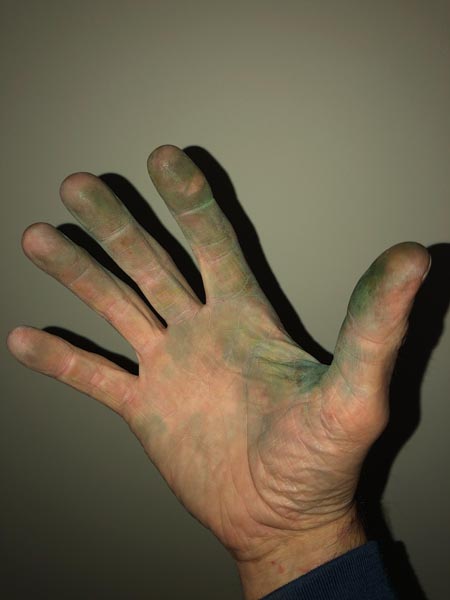
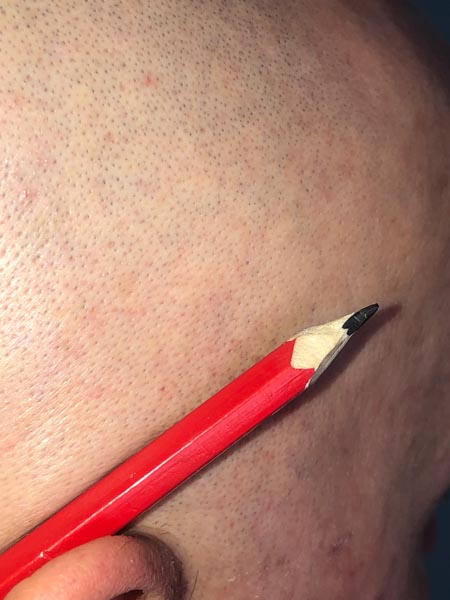
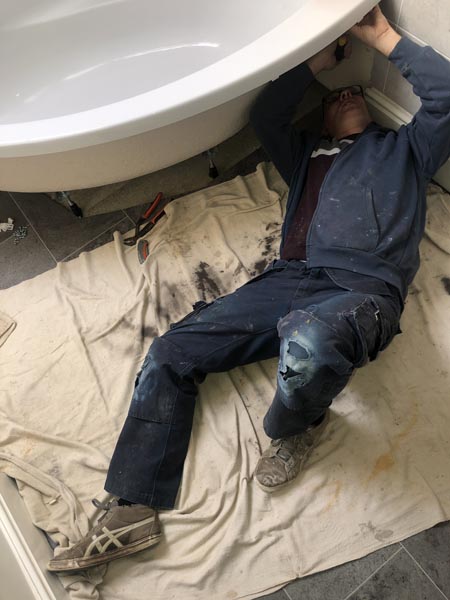
The final piece of the jigsaw was me. I felt it was important to show a little of myself, to allow my imprint on the story. I wanted to show signifiers that enable the viewer to understand the environment without spelling it out. I also wanted it to be reminiscent of snapshot images from old family albums, so I went in close with flash on, to give a stark shadow or highlights off reflective surfaces.
Viewing Nigel Shafran’s and Tom Sach’s work has helped inform the direction that I wish to follow with this assignment. Looking at their work has been beneficial in helping decide to follow a multi-strand approach to the brief. By that, I mean to incorporate still life scenes (aide memoire images), still life objects equated to labour (power tools) and self-portrait representative of workplace environment. As much as the assignment is about self-portrait I also want to establish a connection to labour and manual endeavour.
For a while I’ve wrestled with the notion of including images of me undertaking my work, thinking that it would be good to include actual work-based practice. I can’t say that I was particularly pleased with any of the resulting images though, they tended to lack dynamism or visual impact, they were just boring and if I had seen them anywhere else I’d have probably thought…yeah, so what!
So instead I decided to follow a more abstract version of myself, one that alludes to the rigours of labour and that is less obvious, making the viewer make their own connections.
I also made a couple of short time-lapse films https://vimeo.com/user4294756, but am as of this moment unsure about including them in the final submission. Although I like them they do have a slightly gimmicky quality – time-lapse to me, means Benny Hill. No, actually, those last words mean I am sure, they can stay on the cutting room floor.
As I was developing a variety of strands for this assignment I pondered on how objects could represent self. A internet search didn’t reveal to much in respect of photographic practice, but I did stumble upon an American artist call Tom Sachs and in particular a piece of work entitled, Rockeths (2017).
Tom lives and works in New York after moving there from LA via London where he studied architecture at the Architectural Association School of Architecture. His contemporary art practice combines mixed media and sculpture, working with a wide variety of materials. His works are mainly concerned with consumerism, labour and an obsession with space.
Rockeths forms part of a series of works based around the German notion of Wunderkammern – cabinets of curiosities, dating back to the Renaissance period. The items contained within the carefully curated and structured works are objects of his fascination and often relate to labour intensive practice, he states, ‘I want labour to be the point, because everything in our lives is miraculously made with no idea of how it’s done.’ (Sachs, 2017). This resonates with me because my assignment equates specifically to the subject of labour inherent in my working identity. A particularly poignant element of his piece is the chair chained to the work surface, for him it represents slavish dedication to hobbyism, whereas, with relation to my own work it could represent a different notion of slavery, that of slavery to a capitalist model.
When looking at images that are representative of me in respect of social media presence, they are, in the main oblique to the standard fare that usually adorns profile images. I generally shy away from selfies per se and if people ask me to join in a group shot it’s either reluctantly or an adamant ‘NO’. There’s a reason I like to be behind the lens rather than in front of it – it gives me a chance to hide. I don’t specifically think it’s through lack of ego – I have one just the same as anyone else and have always worked in male only environments where big egos abound, it’s just that I might be a little too self-aware, a hang up from my youth perhaps. I started taking photographs in my teens and often repeated the mantra “I prefer to be this side”, I guess it stuck in some psychological guise. So, it was with a great deal of trepidation that I started the exercises and the thinking for this assignment.
Sometimes I get a flood of ideas around a project, sometimes it’s just one, this time though, I couldn’t think of anything. Instead I procrastinated. So, it was I embarked on my diary to gain some insight into my persona with a view to make a reflective set of images that grasped my own identity. Accordingly Bate states ‘a photographic portrait may offer an image of someone that the viewer can identify with’ (Bate, 2016, 102). This sounded relatively attainable, but, I like and am interested in and engage with many things, so I had to identify which specific facet of my life to pursue.
Whilst making entries into my diary I germinated some initial ideas for the project. The first being around the sports I enjoy. I am practitioner of a variety of different sports all of which could be grouped into the heading of extreme or outdoors. As with a lot of sports, the process of being involved in them can often result in injuries and that is quite a true to the sports I participate in; mountain biking, martial arts, surfing and occasionally climbing. Perhaps I could base my project around injuries sustained through the practice of my sports and as a an aside it could be contemplative of masculinity. Thinking of putting this idea into practice required a key component that I don’t have access to, that of a theatrical make up artist. Some of the historic injuries I’ve collected over the years include, broken bones, severe cuts and more commonly bruising, all of which aren’t easily replicated unless you have the required skill sets. Another thing that put me off the idea, especially in relation to masculinity and sport is that it is an outdated notion and therefore lacks weight of argument, gender representation has advanced, although there are some sports that still need dragging out of the dark ages, thankfully not the sports that I enjoy. So, I put this initial idea on the backburner for now, although it’s an interesting notion I’d like to come back to.
My diary progressed and although it was a slog to complete at times I managed to write a day for two weeks, no mean feat!
On reflecting over the entries, I was aghast to see that the main preoccupation regarded work and my often dissatisfaction with it, probably exaggerated by the mid-winter blues. For over thirty years my line of work has exacted a heavy physical toll from my body and I’m reaching the stage now where I am looking at either a complete change in working practice or retreating to a warmer, less exacting office-based environment. My line of work – I am a plumber and I face the daily routine of slowly warming up my joints when getting out of bed to be able to physically function without too much pain. I now knew which subject with relation to self that I wanted to develop, I just had to find a way of conveyance.
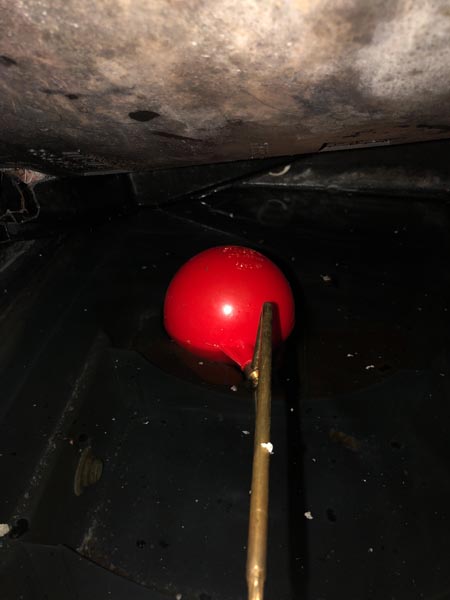
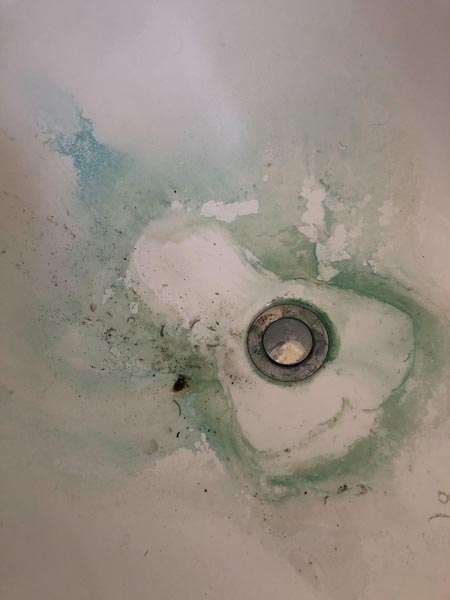
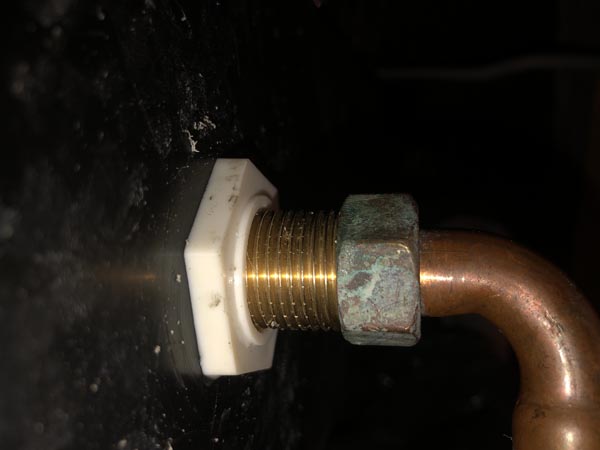
My initial idea was to create images relating to work practice. The advent of smart phones has been hugely beneficial as an aide memoire and also to show clients of correct procedure in unattainable places – well to them anyway. I am always taking images, often lit with flash so as to prepare for future work and have a phone full of current and historic references. This idea would draw upon Nigel Shafran’s Washing Up series of images and therefore would imply the notion of the still life as insight to workplace routine, the mundane becoming the view of another world. I also like the idea of using flash to encompass a snapshot aesthetic. As Bate states ‘Like portraits, still life pictures combine several elements together, the subject (the object), it’s background location, the “expression” of the object (achieved through lighting, camera angle and lens) and other props that give it a context…’, he further says ‘The two levels of meaning, informational and symbolic, are combined in an instantaneous reading of the image’, (Bate, 2016,151). This could be a good avenue to approach with revealing insight to my identity, as even if the viewer doesn’t understand the artefact in question, they can at least identify the fact that they are related to my line of work.
As I carried on with my daily routines I would sometimes ask clients, especially those that I knew well or had good working relationships with to make an image of me with my phone as another form of recorded practice. At this time, I was unsure of where I wanted to be with my final outcome, so decided to catalogue as many different aspects or viewpoints relating to me and my job. On top of this I was keeping a further pictorial record of my trace within my working day with a view of further developing insights for the un-initiated, sometimes mundane, sometimes obscure. Although not completely sure of where to take this assignment to develop its conclusion. I am now gathering images in three separate groupings; snapshot still life, objects associated with workplace and partial body images. Maybe I’ll amalgamate all three. I still have an exercise and more research to complete, but at last I think I’m getting there.
 Context and Narrative