‘External context is the situation in which a photograph is presented or found. Every photograph is intentionally or accidentally situated within a context.’ (Barrett, 2006, 109).
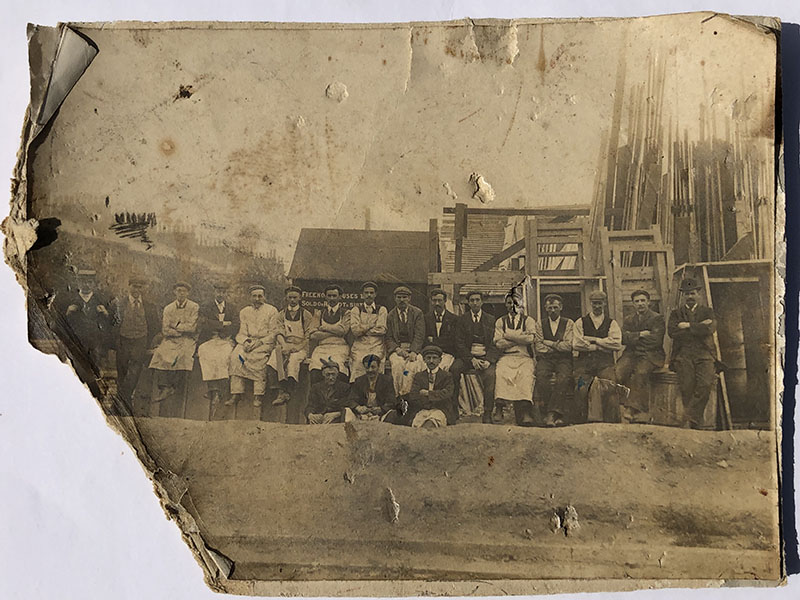
Barrett’s statement holds great sway with how I view the image above. The image is a found image that I actually stumbled across. Let me explain as it gives context with how I view this image.
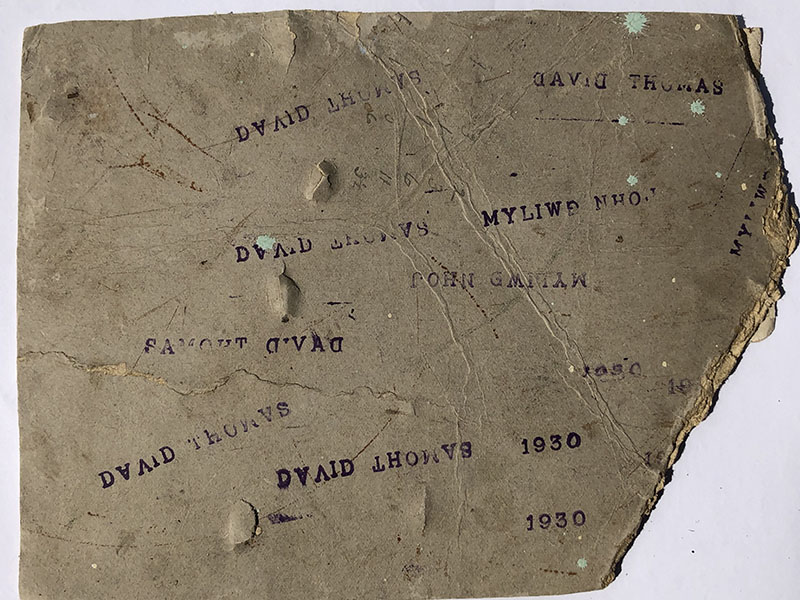
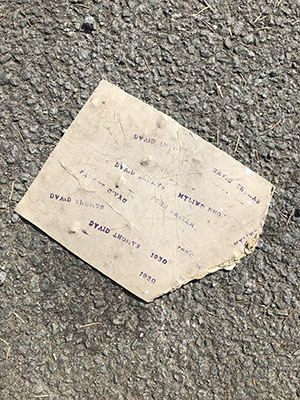
My partner and I were on an ad hock holiday in The Llyn Peninsula, Wales, sleeping out of the back of a van and avoiding paying for camping sites. We found a beautiful park up on the edge of some Nation Trust land overlooking the bay at Hells Mouth; it was a glorious weekend and my partners birthday; we were totally in the moment, without distraction. I’d gone for an early morning walk and was absorbed by birdsong and blossoms when I noticed the card squashed into the tarmac. A huge smile appeared when I looked at the reverse of it and saw it was a photograph, and a historic one at that; two of my great joys. Now whenever I look at the image I am also reminded of a time and place; the image releases a memory within.
On reviewing the image, I consider many varying aspects related to its meaning, which are formed over its entire history; up to the point that I found it. Time and the interplay of human interaction have all helped shape the image.
‘a photograph is a trace of the past, of a past that the image is already separated from.’ (Short, 2005, 21).
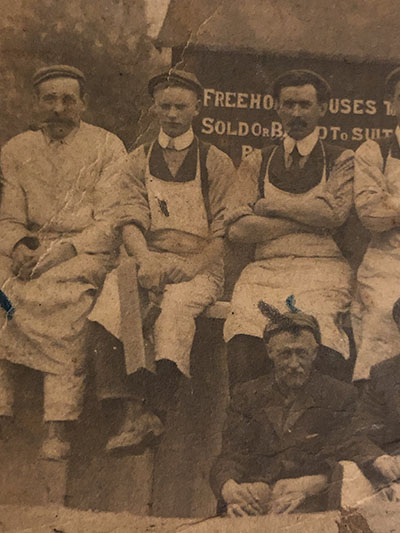
Considering the image objectively; there is a collective of males; bound by labour, in the surroundings of the workplace environment; recorded for prosperity. The image shows a particular slice of society of the era; predominantly the working-class male. A further look at that which is denoted reveals a timescale of the Edwardian period, as indicated by the style of clothing; a straw boater, flat caps, bowler hat, starched collars and bushy moustaches. We can see more from the appearance of the majority of the men that their clothing is akin to working class men of the time. The aprons the men are wearing suggest a workshop environment and the figure, six in from the left is holding a plane, coupled with the columns of timber on the right-hand side it is obvious that these are employees in a woodyard. Looking at the incomplete signage on the building I can decipher Freehold Houses To be Sold Or Build To Suit… the rest of the writing is obscured. The employees are bookended by four authoritative figures; on the left two well-dressed gent’s indicative of ownership and management, and on the right their subordinates in authority; a workshop manager and supervisor perhaps? Just behind the figures on the left is a row of terraced houses with multiple chimney stacks. Unfortunately, the photographer has chopped the legs of the seated figures by not being able to elevate his camera above the height of the wall or earth bank that makes up the foreground of the image.
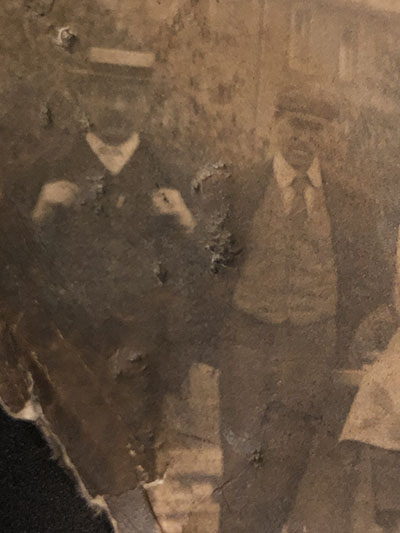
On a subjective level, I can only apply my personal reading as relates to my own experience and interests. History is a passion and in particular the history of The First World War, it’s therefore easy for me to make the connection with these figures in the workplace and then to re-imagine them on the Western Front; complete with similar structures of hierarchy in place; lambs being led to slaughter. Another factor that shapes my reading comes from a family lineage of a proud working class identity; union leaders and non-conformists; anti-establishment provocateurs and a sense of injustice carried through a family psychology, in turn, informing another element of my interpretation, that of hierarchal subservience. These interpretations come from my own personal engagement with information contained within the frame and are born out of my own history, producing a subjective and individual visual discourse. As John Walker states in his Camerawork essay, Context as a Determinant of Photographic Meaning, ‘A viewer approaches an image not with a blank mind but with a mind already primed with memories, knowledge, prejudices; there is a mental set or context to be taken into account.’ ( J. Walker, 1980, 5-6).
This photograph, is an object that has undertaken many transformations in context throughout its history, bearing the marks of human interaction and ultimate neglect as scars puncturing and tattooing its fabric; until, finally finding its way into my possession. Where once it might have taken a prestigious place on an office wall, framed and pondered over as a new technology, making its mark alongside other radical technological advancements; heralding a new age of visual communication and mass appeal. Then, discarded and squashed into the tarmac, bearing the hallmarks of age and eventual disregard; picked up by my hand and given a new context, as I studied it in wonder, in the back of my van, overlooking the ocean on a beautiful, calm, sun-drenched Sunday morning, sipping tea and surrounded by a chorus of birdsong and the noise of the lapping ocean; pondering its history and journey; giving the image new life and a fresh context with which it is viewed. Thinking of the life of this image I am reminded of Barthes words in Camera Lucida ‘…like a living organism, it is born on the level of sprouting silver grains, it flourishes a moment, then ages… Attacked by light, by humidity, it fades, weakens, vanishes; there is nothing left to do but throw it away.’ (Barthes, 1980, 93). I couldn’t throw it away though; I have attached sentimentality to it, and this is the new context of the image; viewed as a reminder of my own history and a sense of wonderment and intrigue of the image itself. A time machine serving to access a memory of a particular Sunday morning on the Llyn Peninsular in 2019.
Word count 999
Bibliography
Walker, J., 2020. Context As A Determinant Of Photographic Meaning. [online] Academia.edu. Available at: <https://www.academia.edu/11911020/Context_as_a_determinant_of_photographic_meaning?auto=download&ssrv=ss> [Accessed 13 September 2020].
Barthes, R., 1993. Camera Lucida. Vintage.
Barrett, T., 2012. Criticizing Photographs. New York: McGraw Hill.
Bull, S., 2010. Photography. London: Routledge.

 Context and Narrative