Project 4: The Gallery Wall – Documentary As Art

The thought-provoking nature of Paul Seawright’s Sectarian Murder series is the key to its success. As a viewer we have to engage more thought in the reading of the images – nothing is obvious. The work is more challenging than say, an image made in the immediate aftermath, with police cordon tape surrounding the scene and then reproduced in a newspaper – this would be purely photojournalistic. As he says in his video, this would give up its meaning too quickly, leaving the viewer no room for interpretation, the image would be explicit with an obvious and easy to grasp reading. By obfuscating his images, which become more apparent with added context of the written text – taken from journalistic print – in the immediate aftermath of the shootings, he transforms the images with a greater, more mentally engaging meaning. Add to this his own history to the area and the fact that he was growing up with murders occurring at regular intervals, helping shape his own understanding. This too, adds sensitivity to the work.

The crux of his argument when talking about his series is all about viewer interpretation. Paul doesn’t want the meanings lying within his work to be obvious, he wants the viewer to expend some mental energy in fathoming their own understanding of it. His aim is to give room within it, enabling the viewer to engage fully with it. All art should be engaging and not obvious.

I think that if a piece of documentary photography is defined as art, its meaning is changed. I’ll add a caveat, its definition as art is defined by the creator and their intent. For me a standard documentary image that features in a broadsheet, with easy interpretation does not hold the same allure as an image that is more challenging. Two photographers could embark on making work of the same subject with differing outcomes – one artistic and the other documentarian, I’m sure the meanings would differ greatly when comparing the two works.

Bibliography

Paul Seawright. (2019). Sectarian Murder — Paul Seawright. [online] Available at: http://www.paulseawright.com/sectarian [Accessed 10 Aug. 2019].

Vimeo. (2019). Catalyst: Paul Seawright. [online] Available at: https://vimeo.com/76940827 [Accessed 10 Aug. 2019].

Project 3: Reportage II

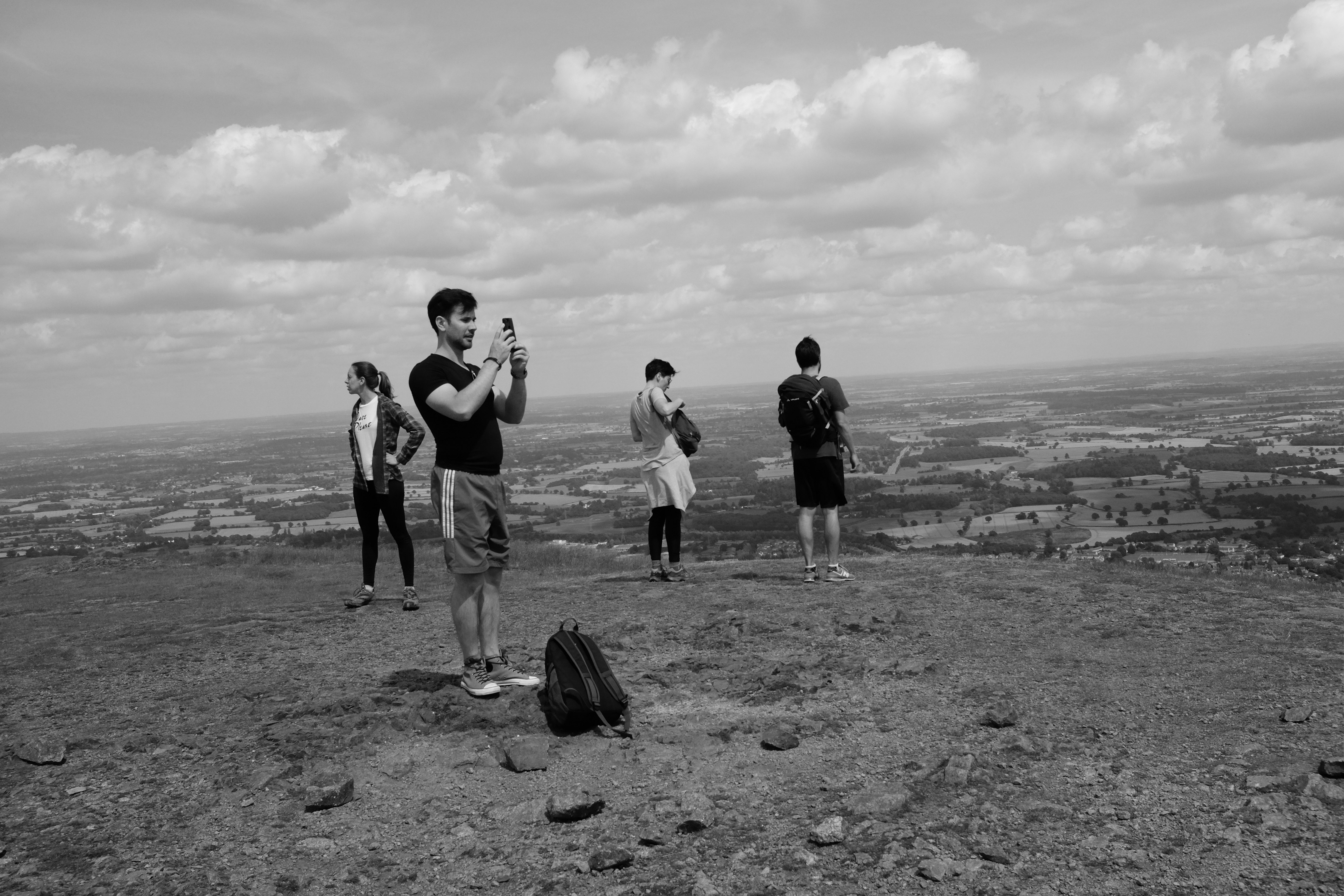
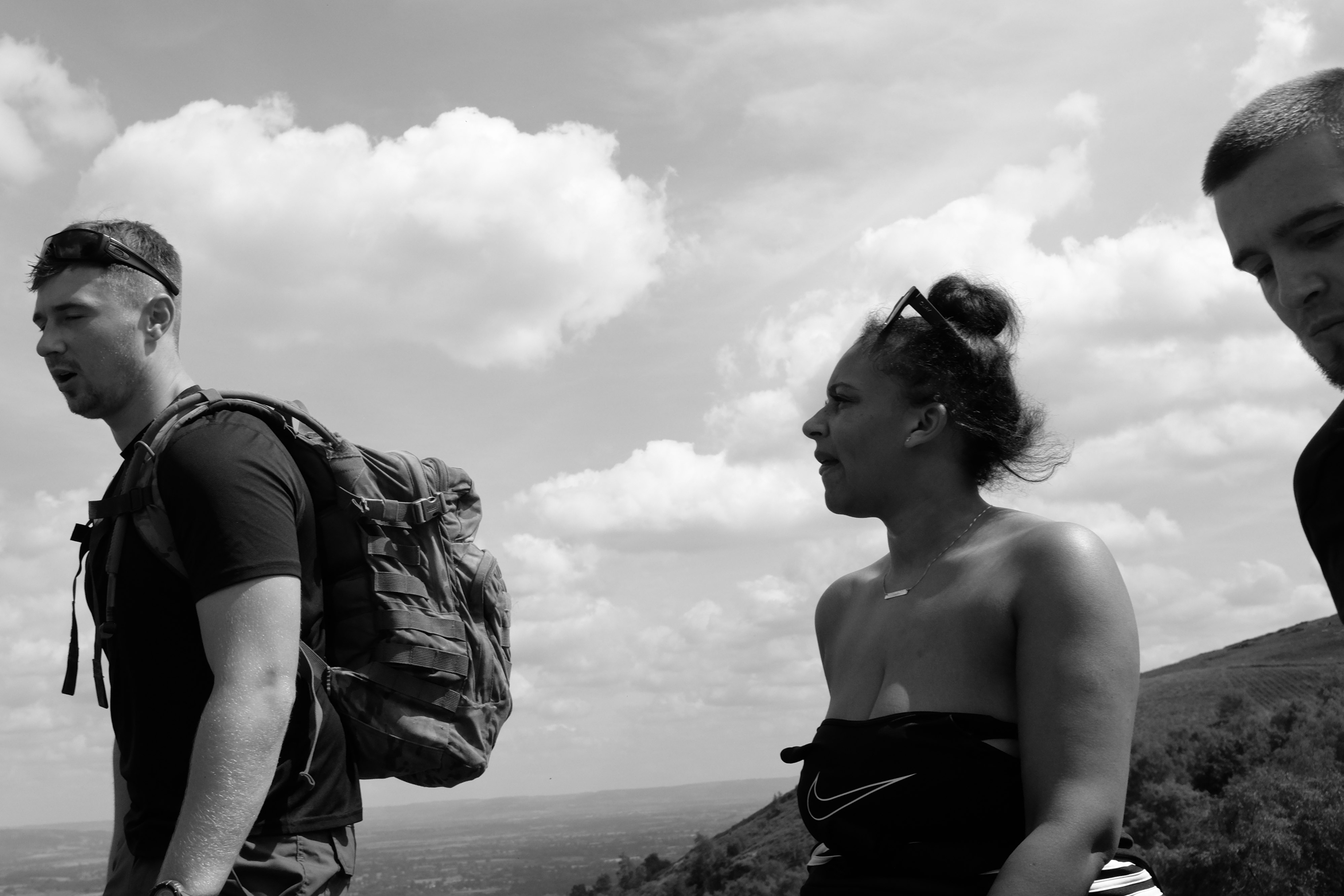
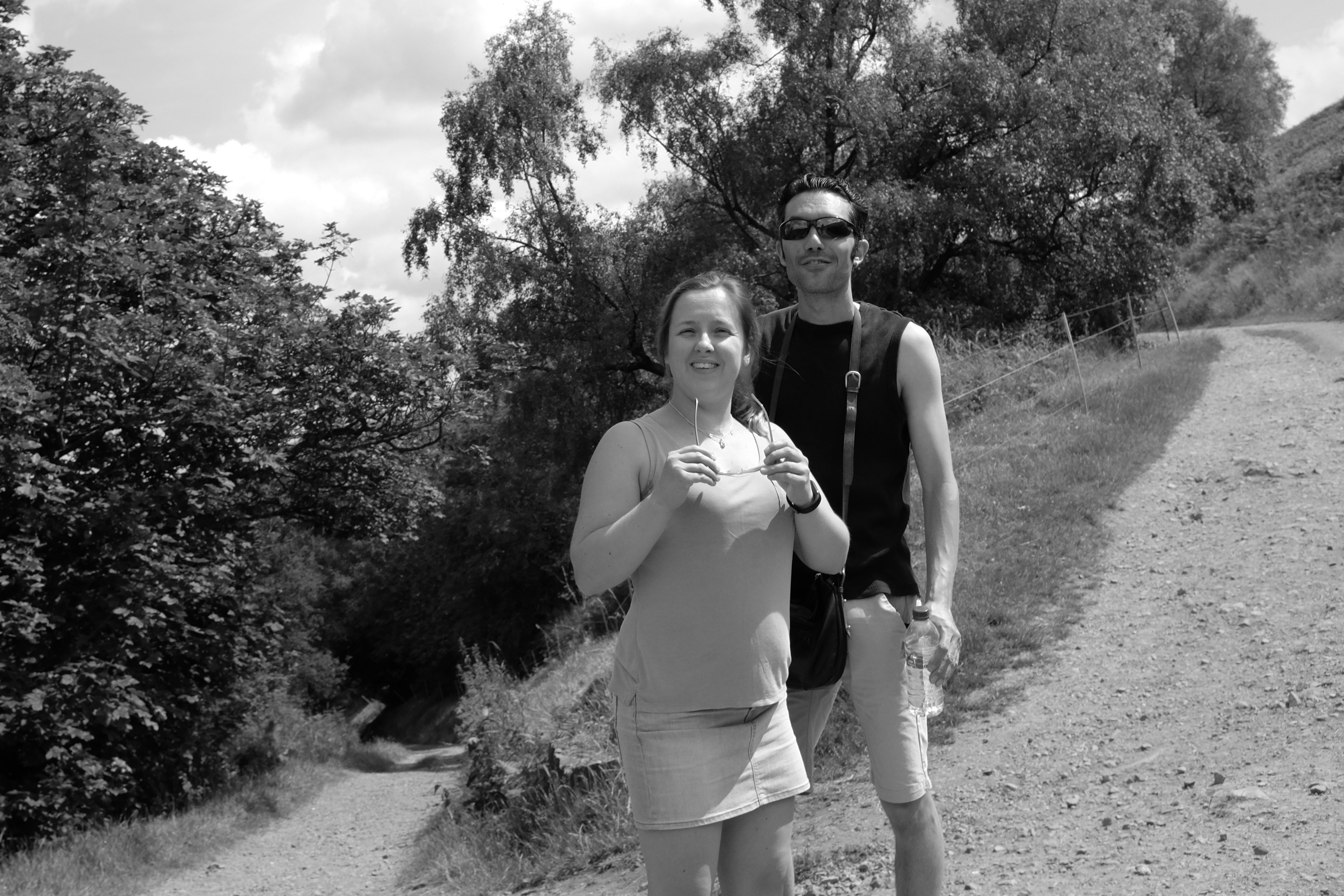
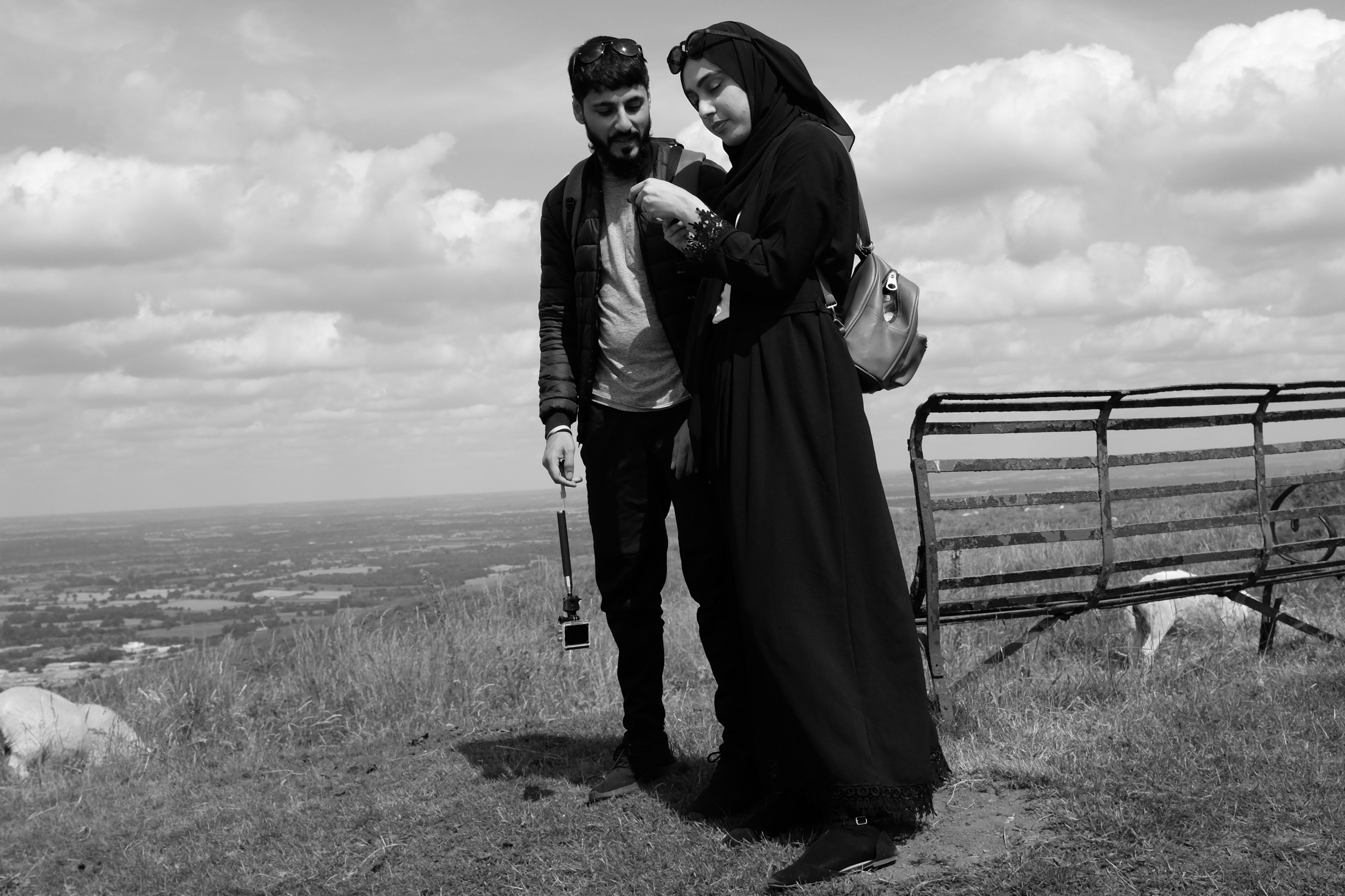
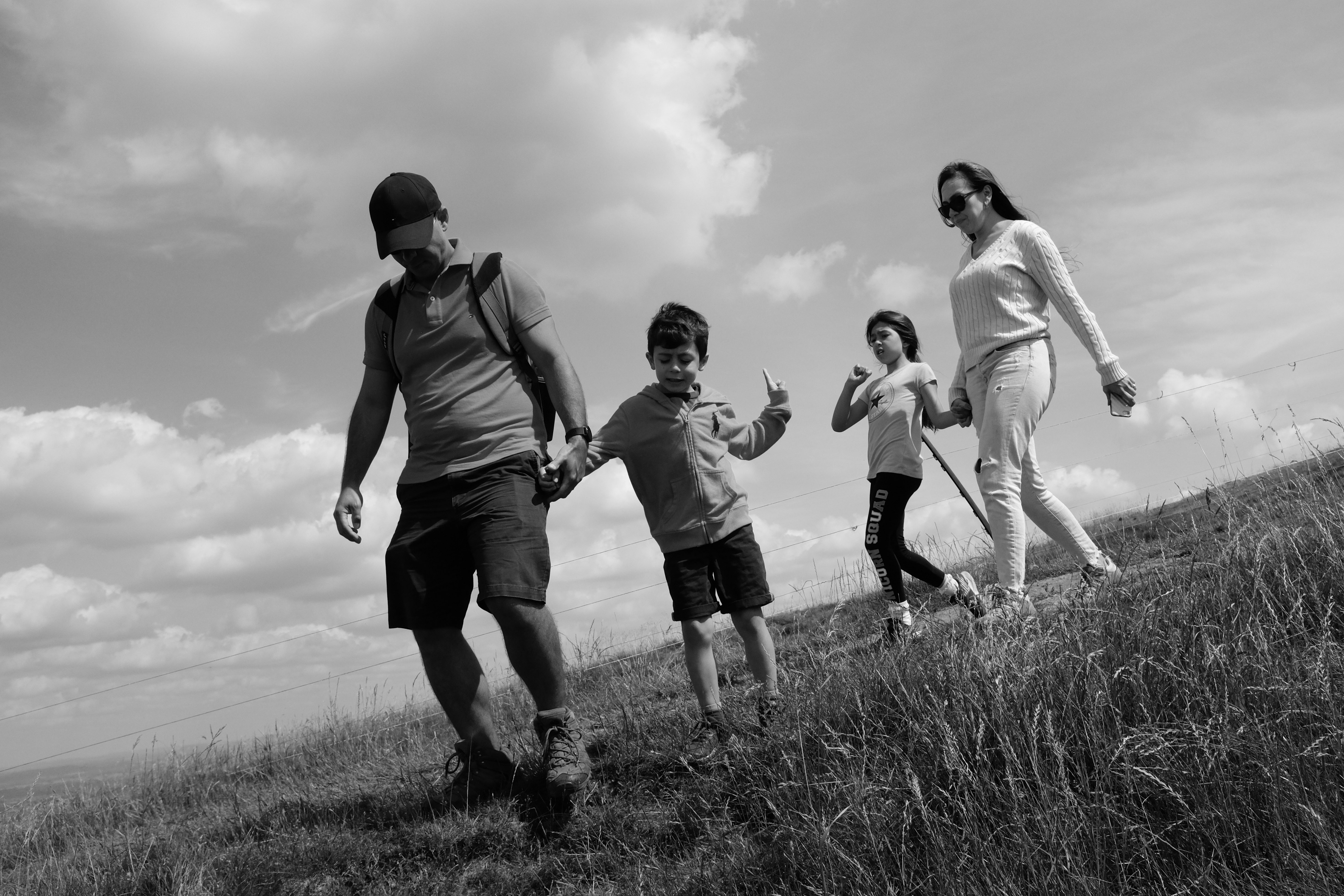
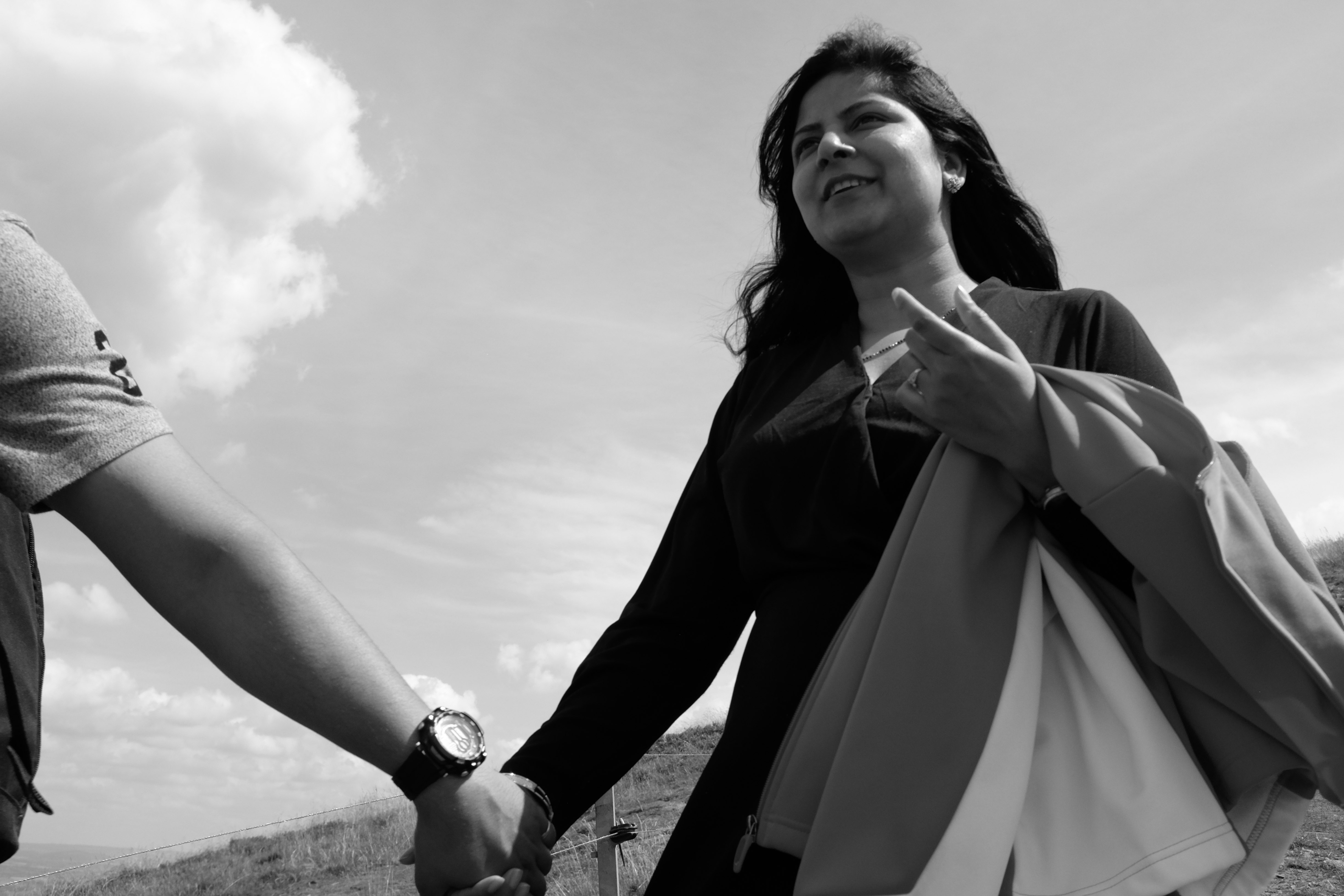
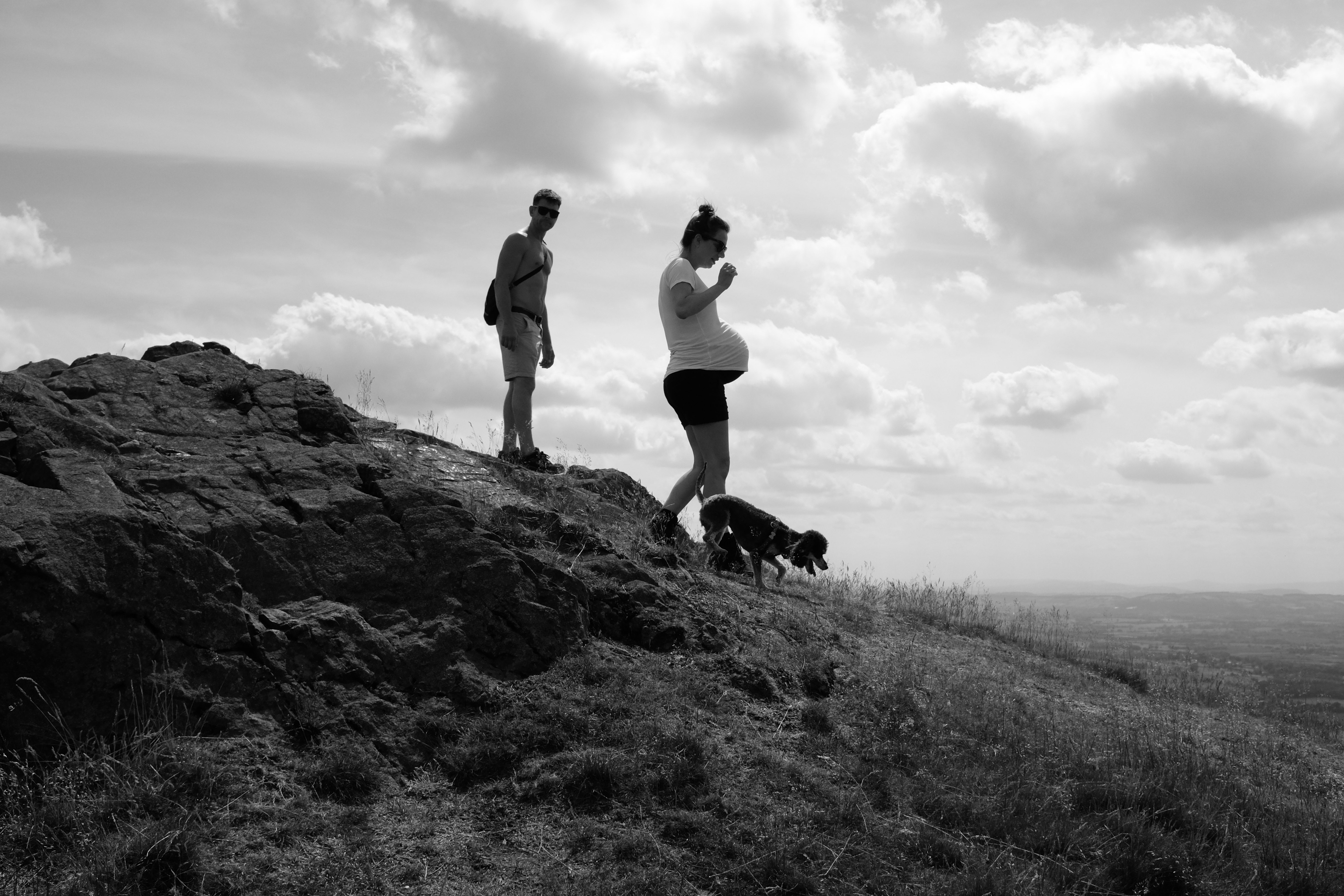
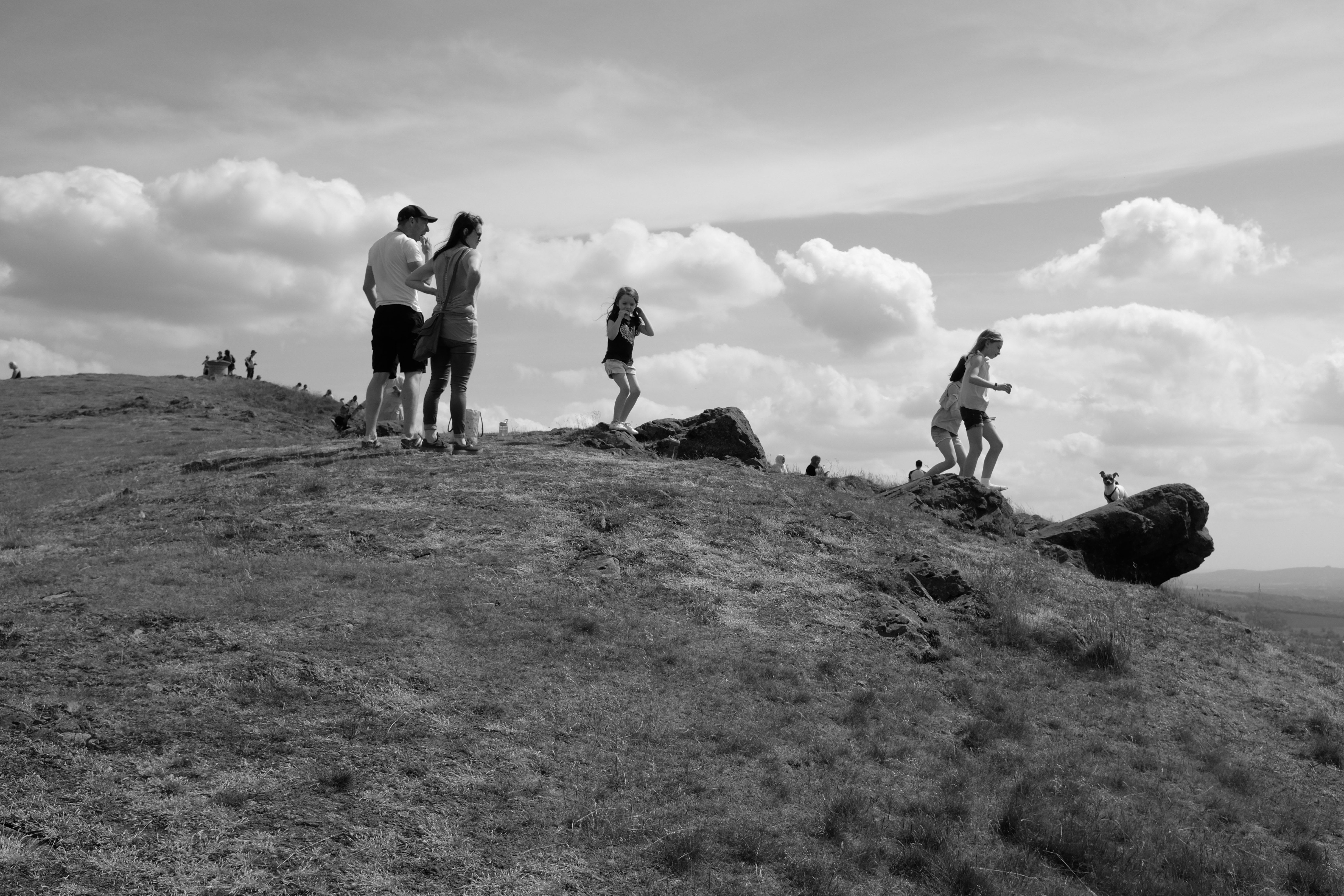
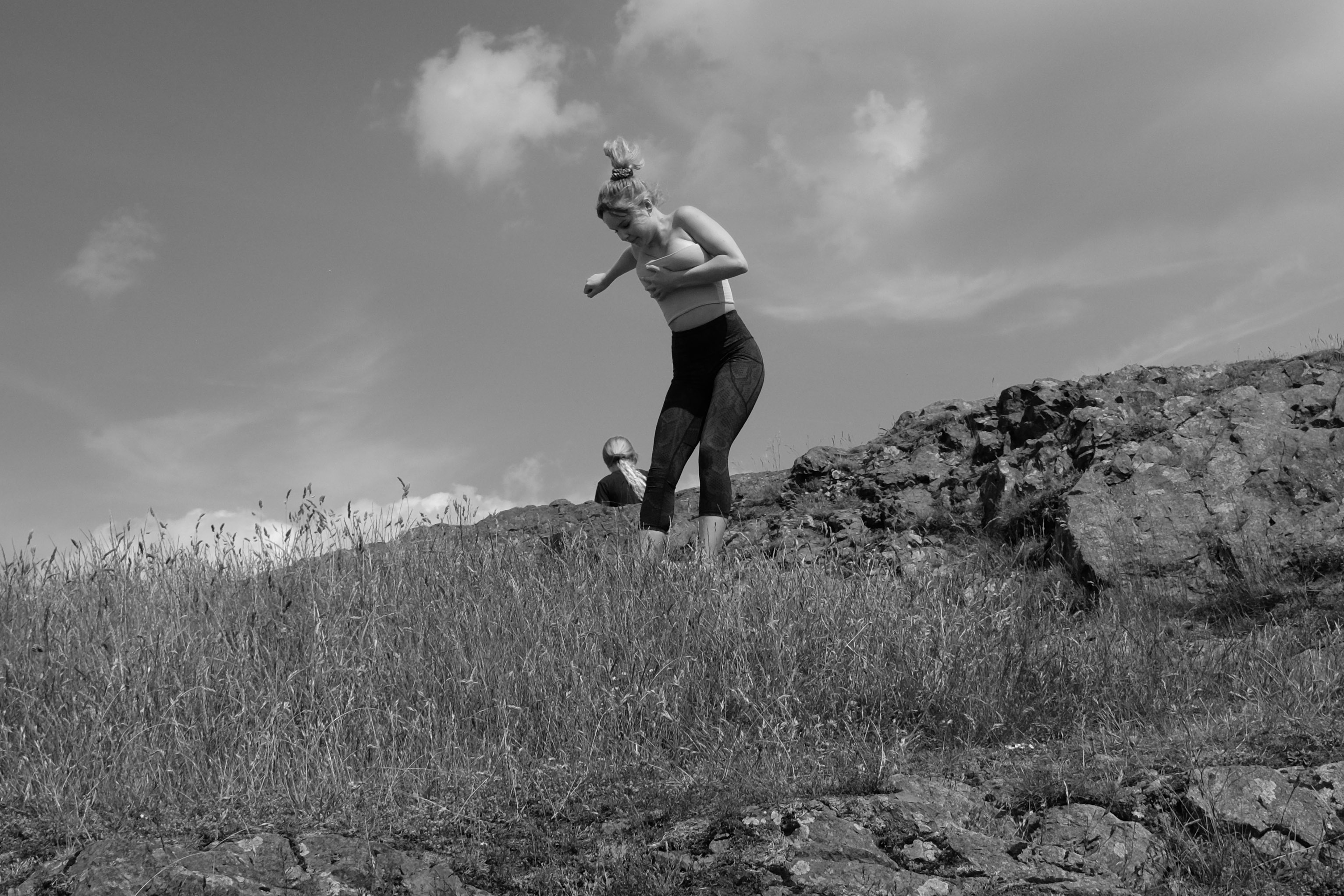
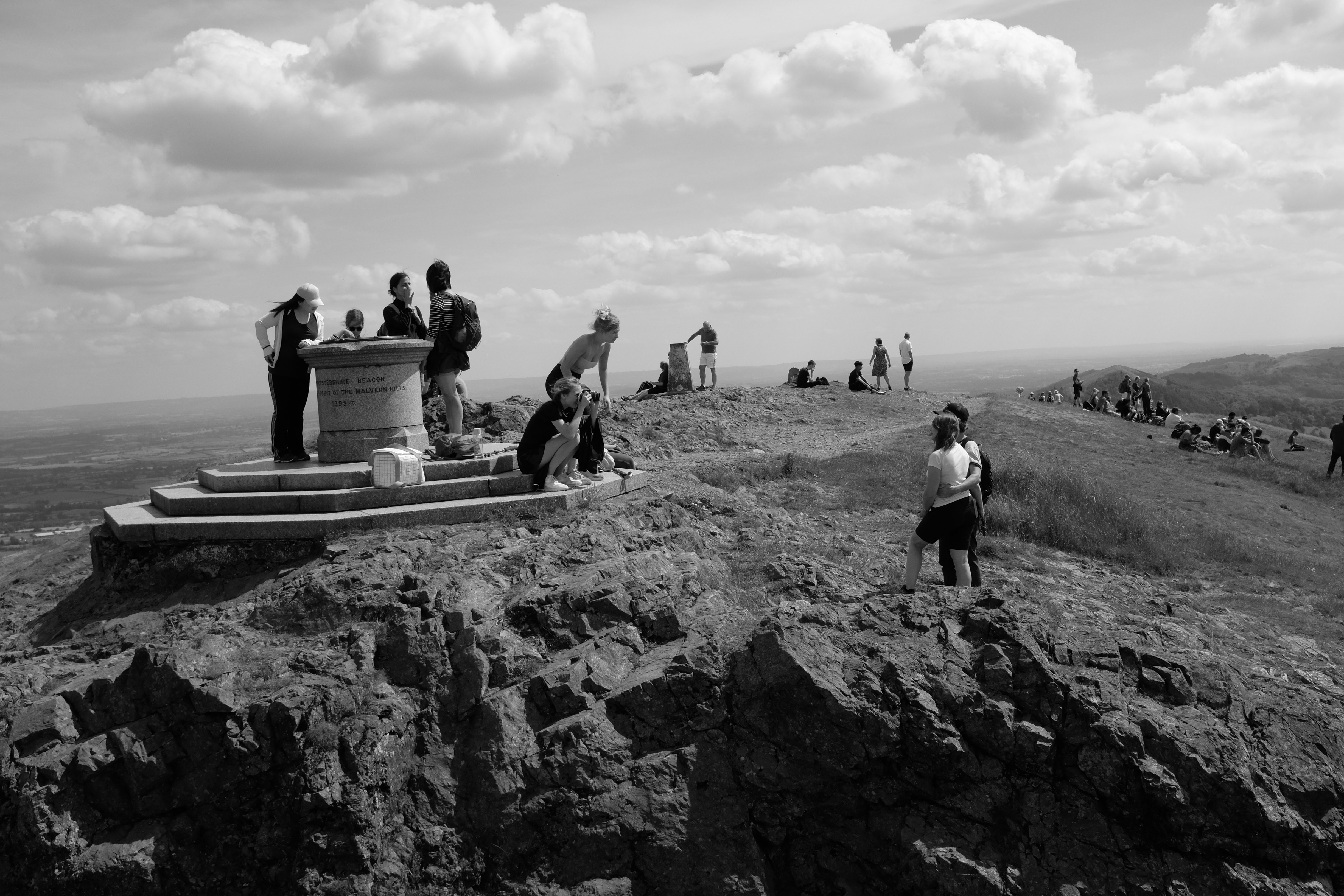
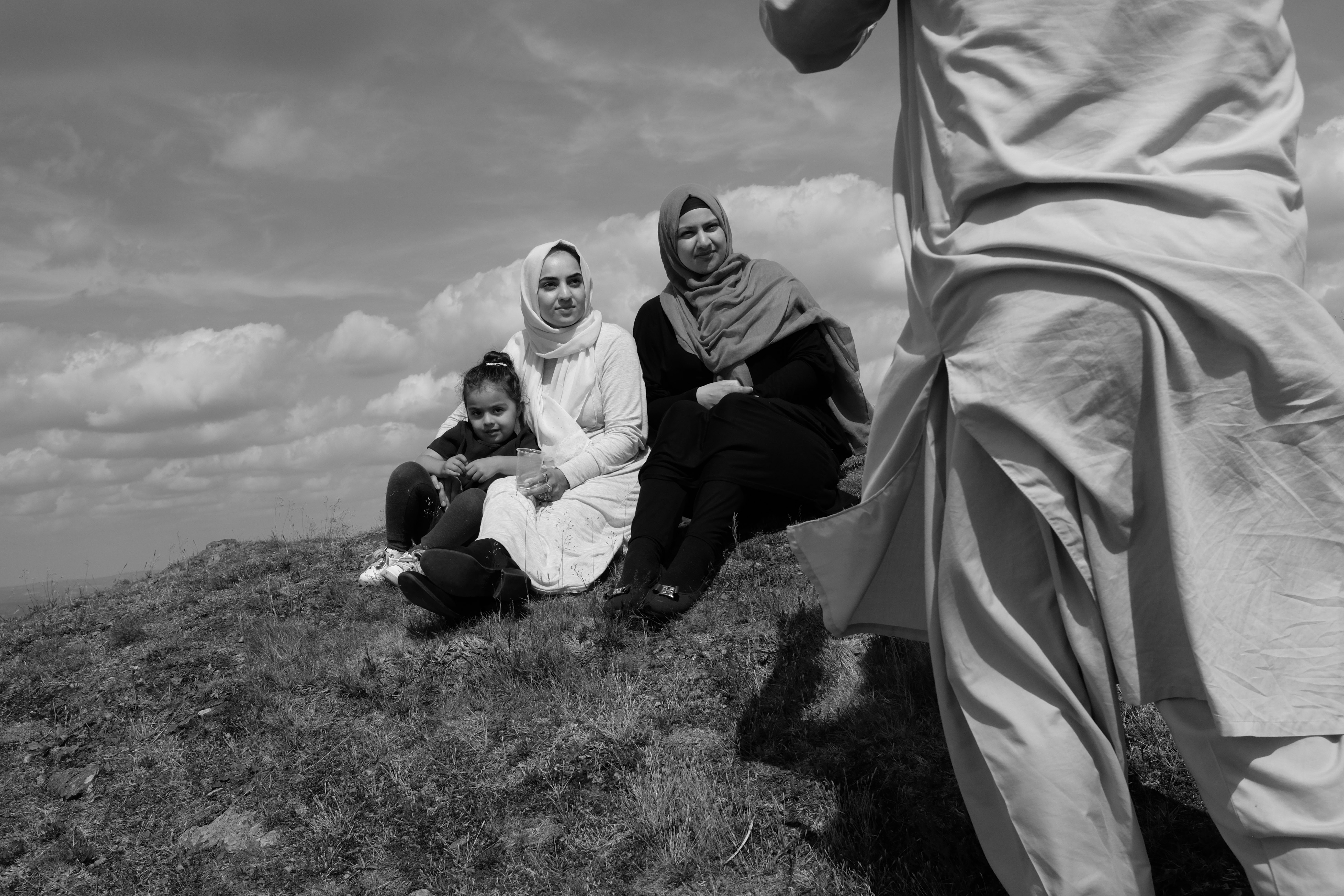
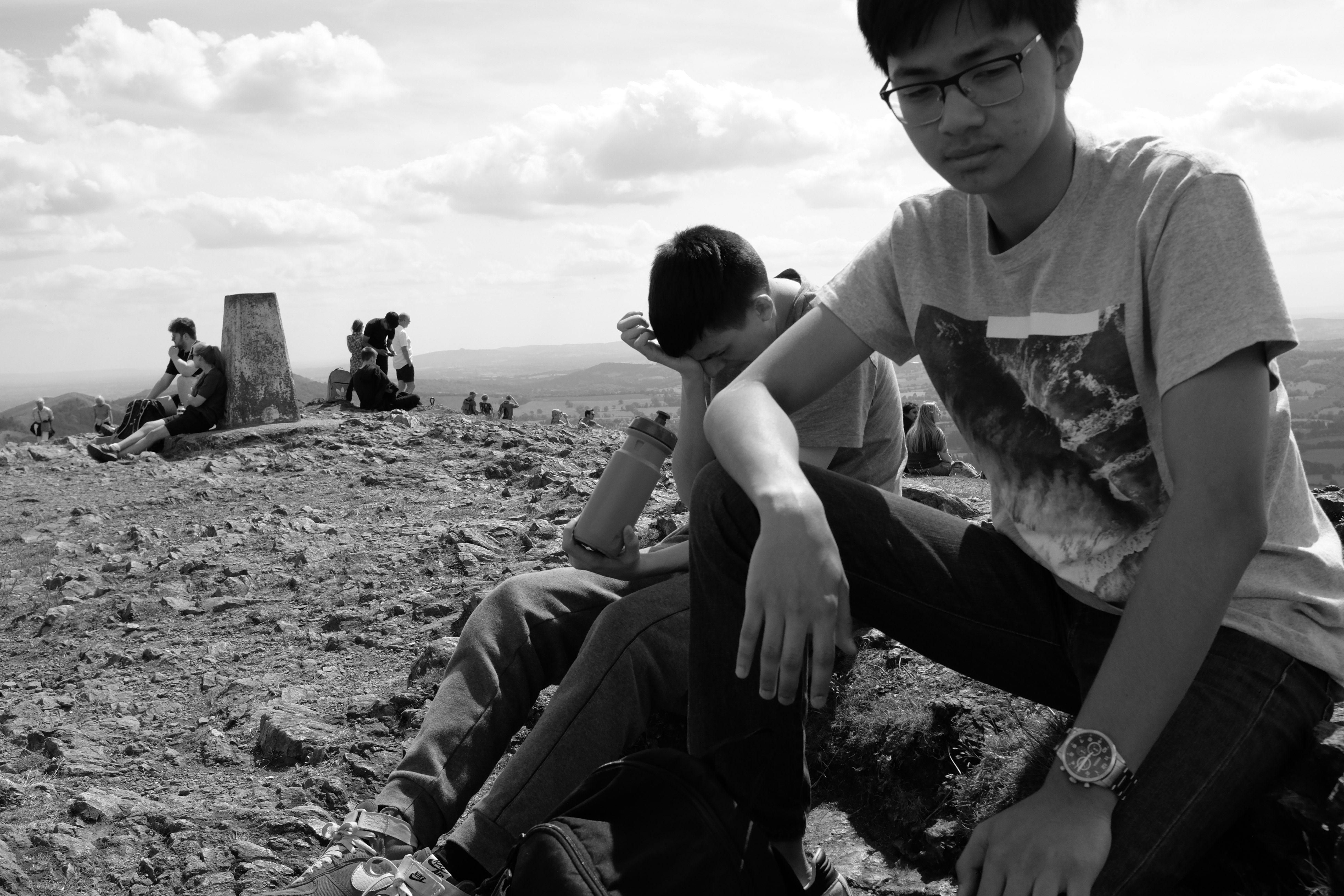
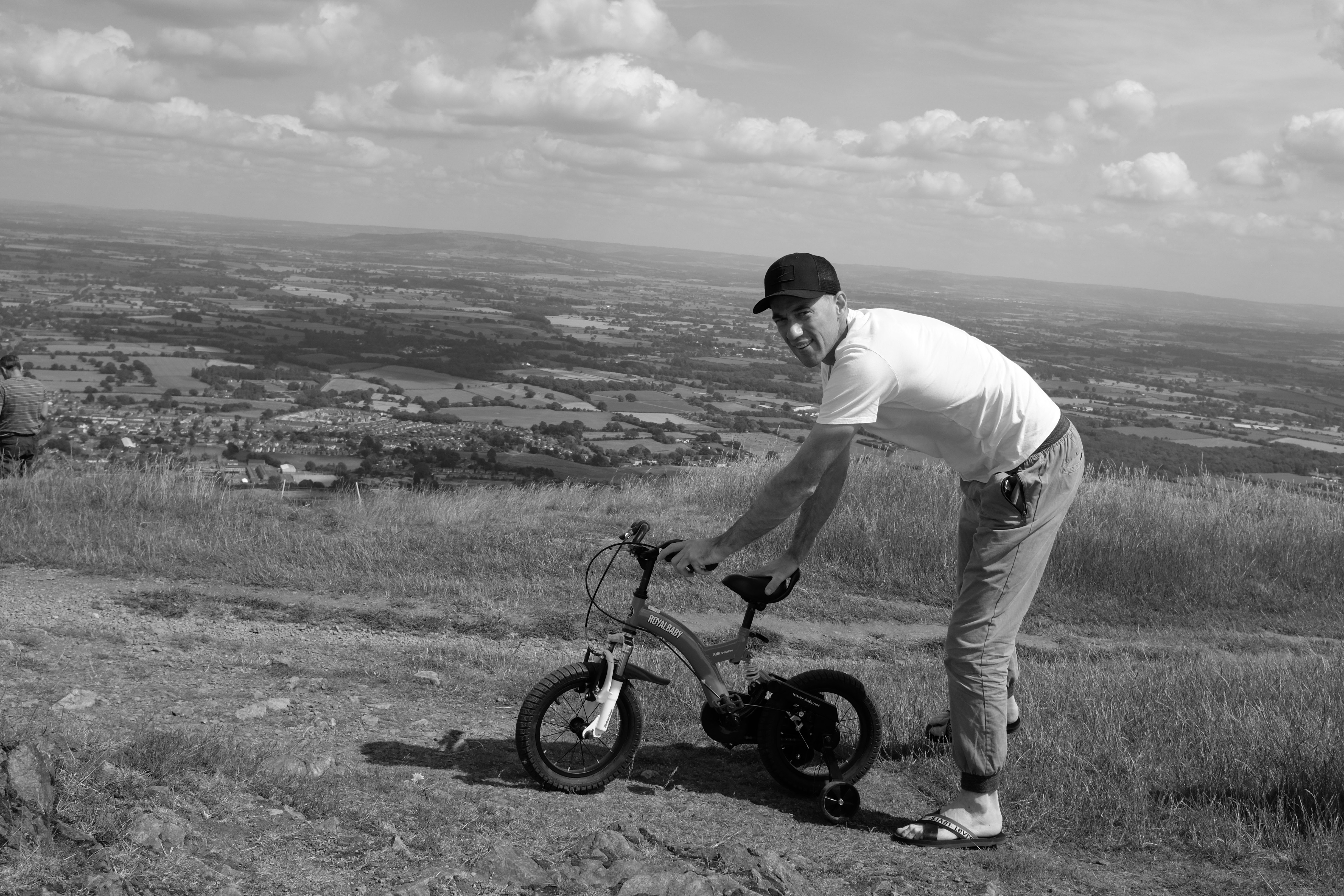
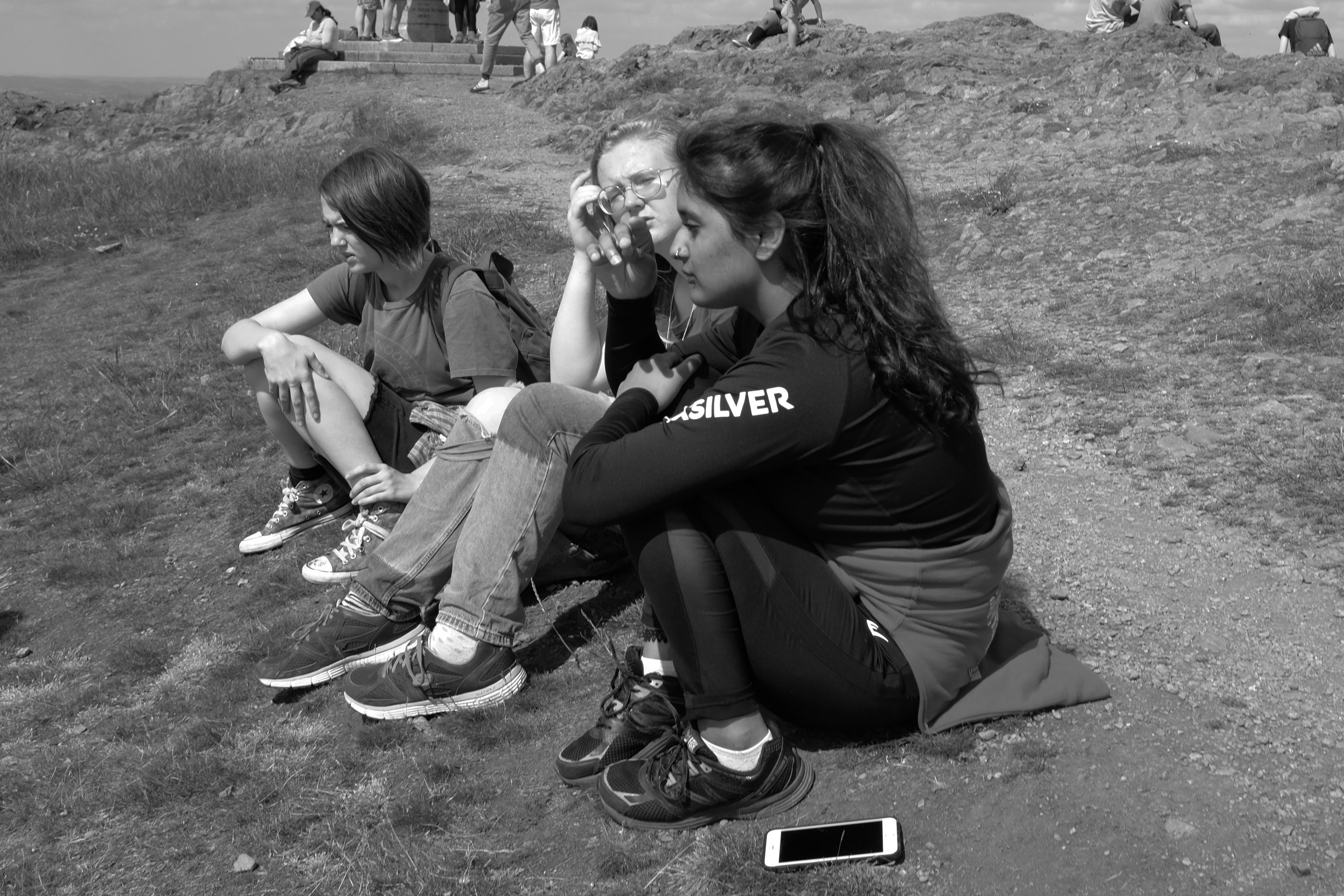
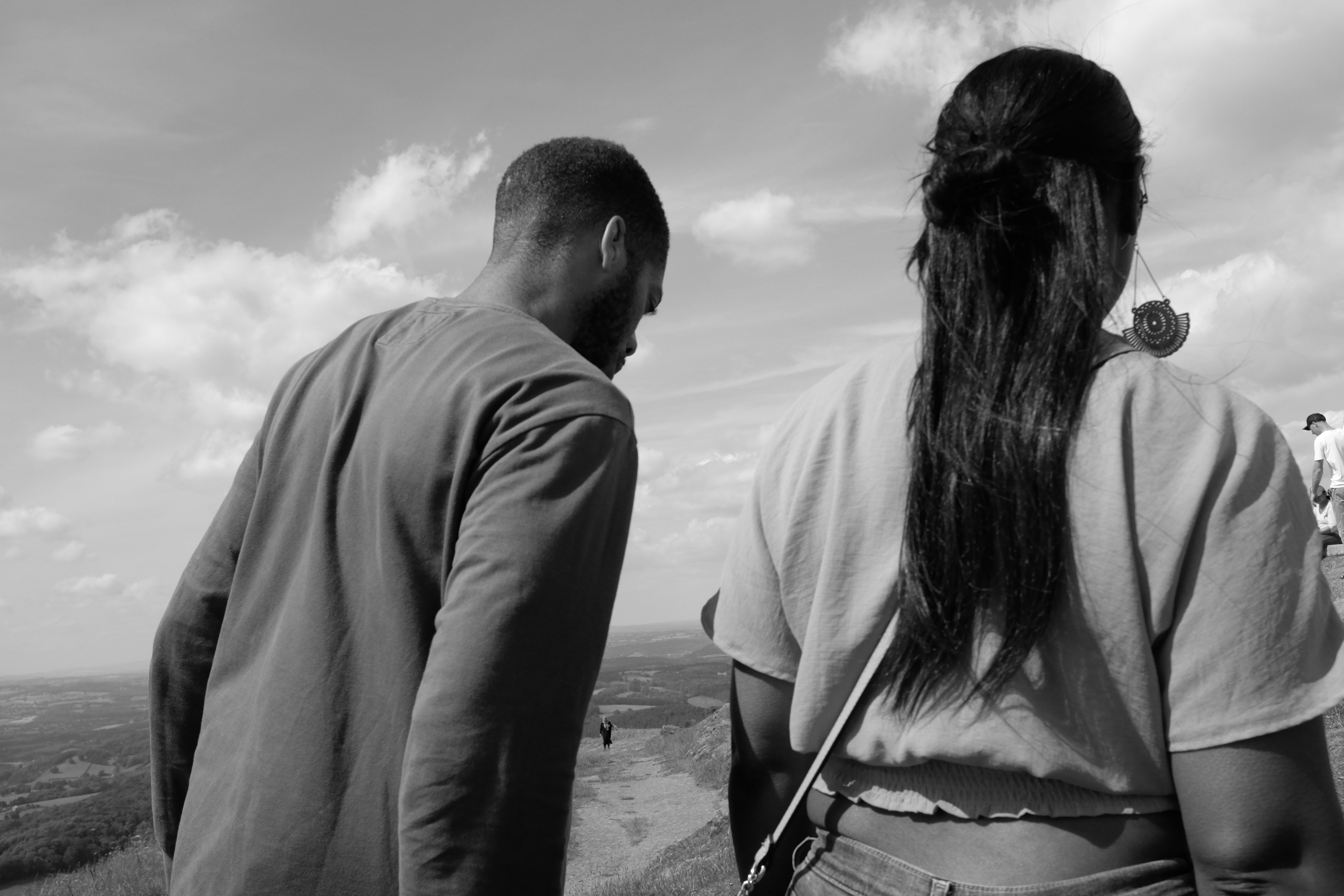
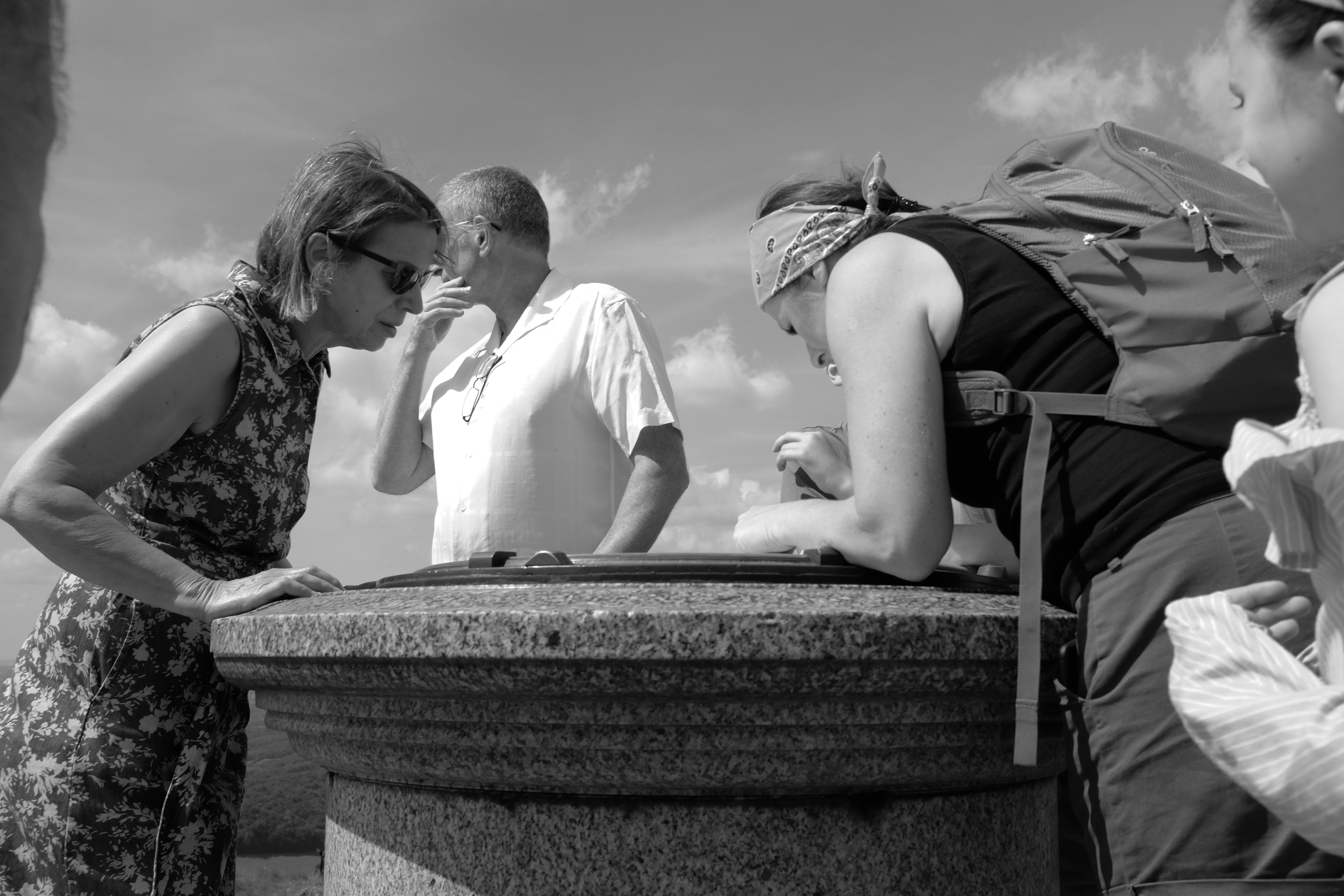
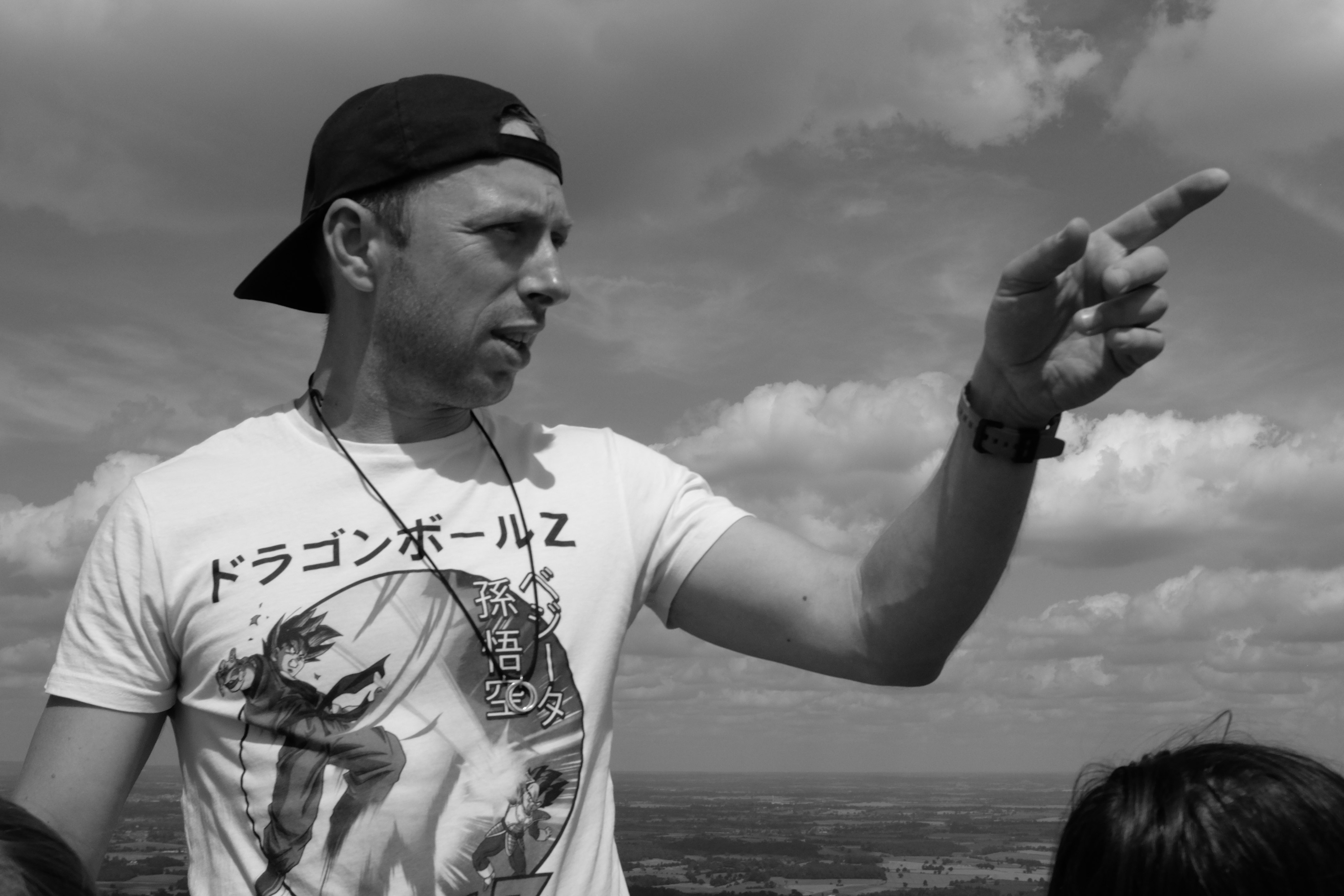
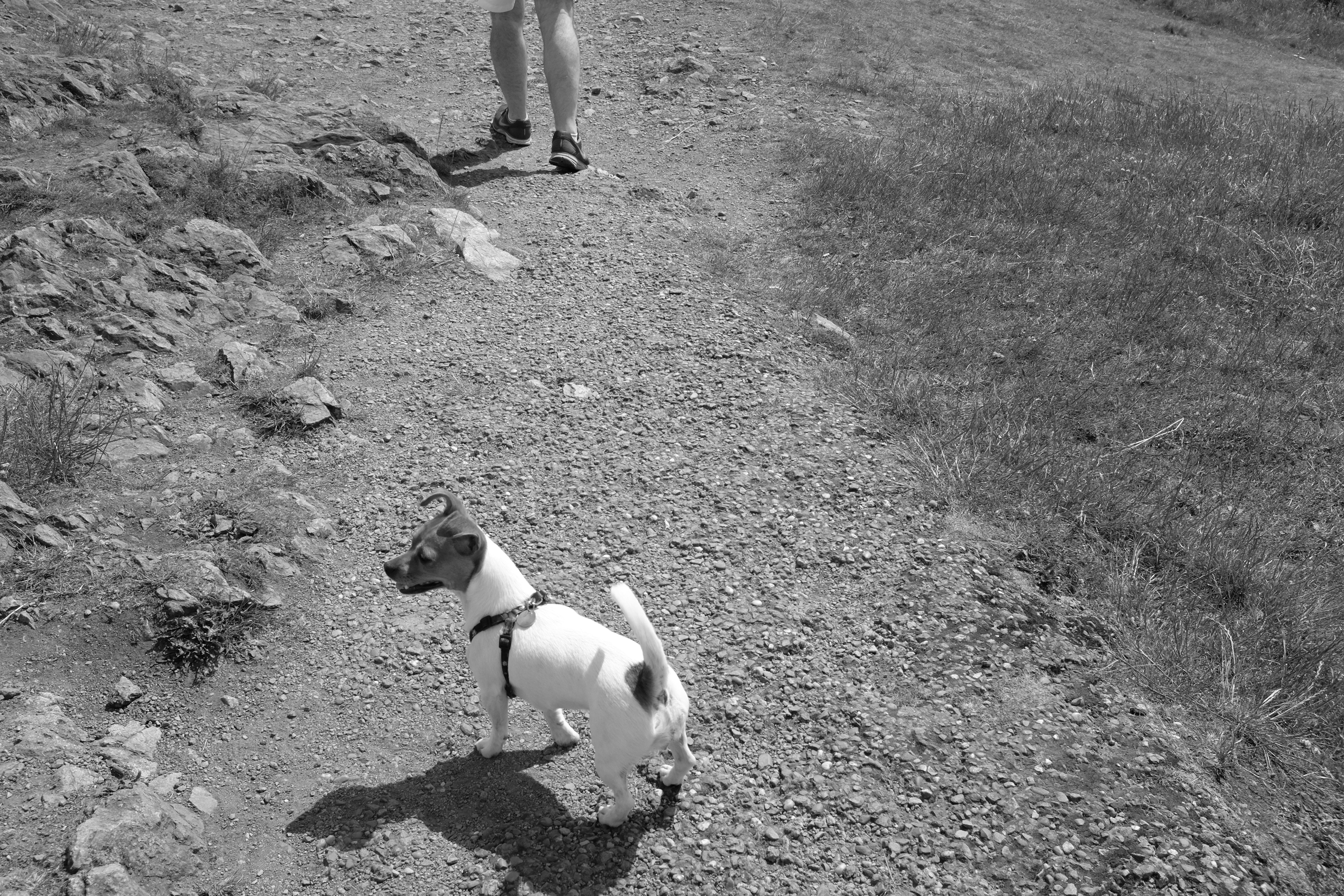
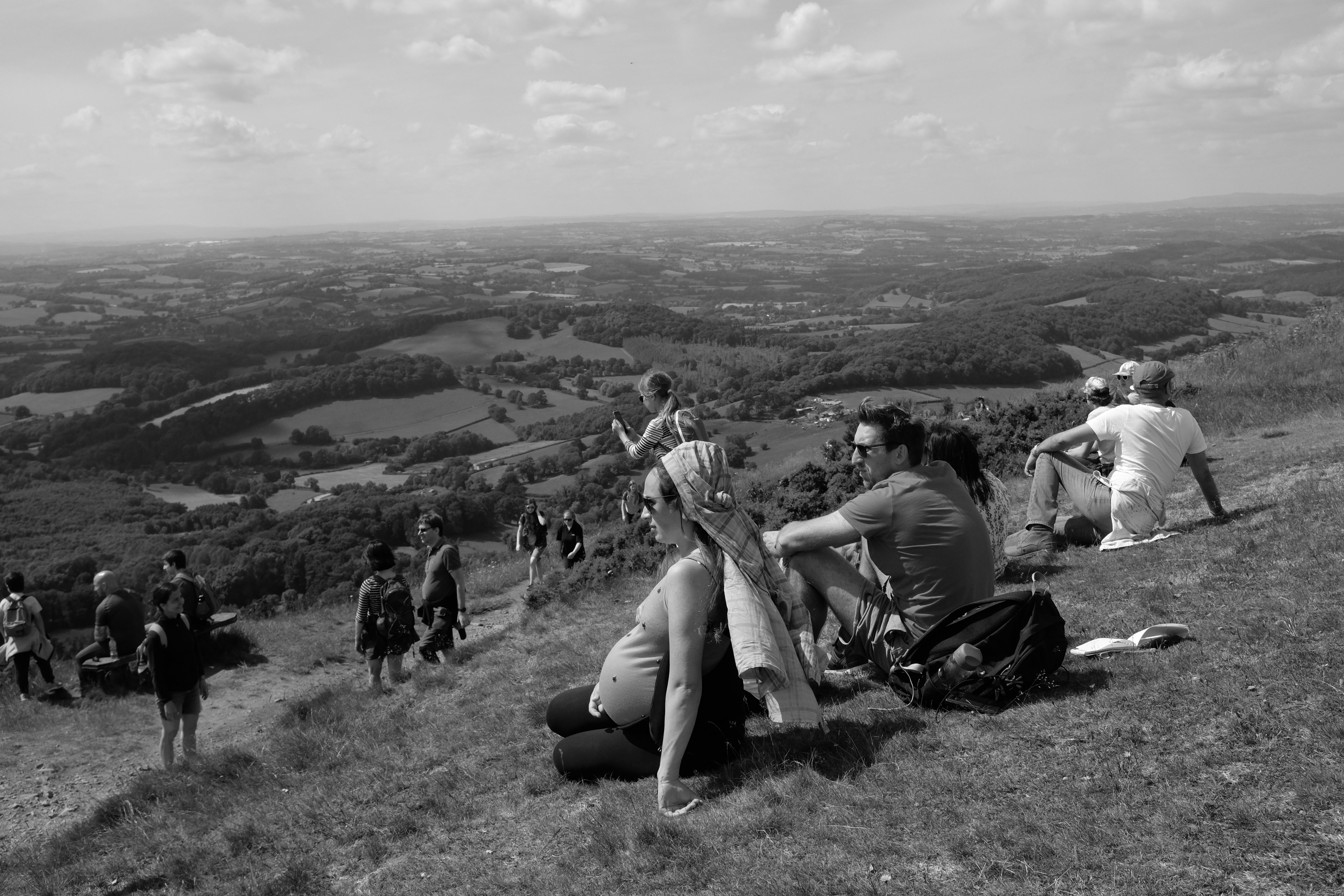
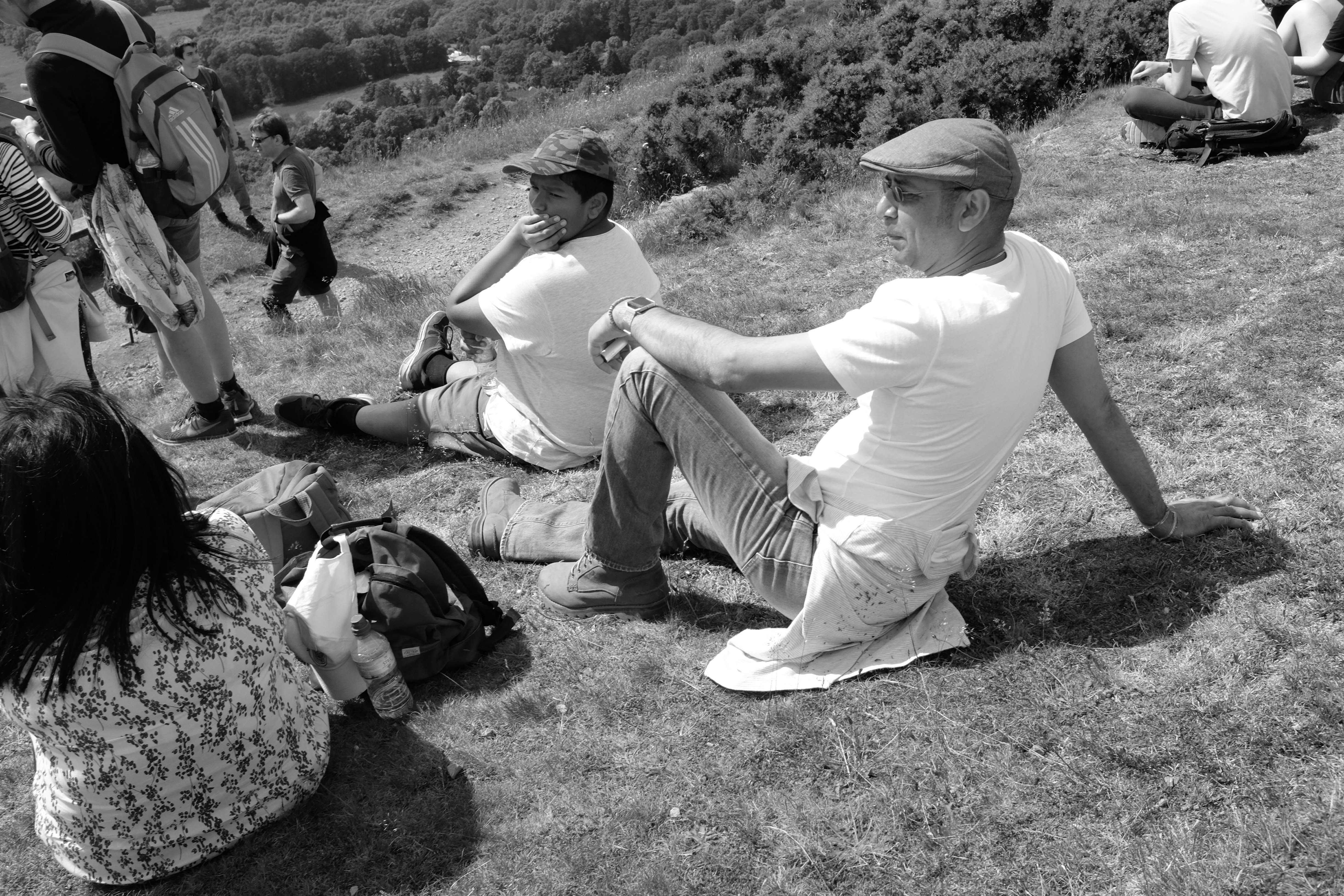
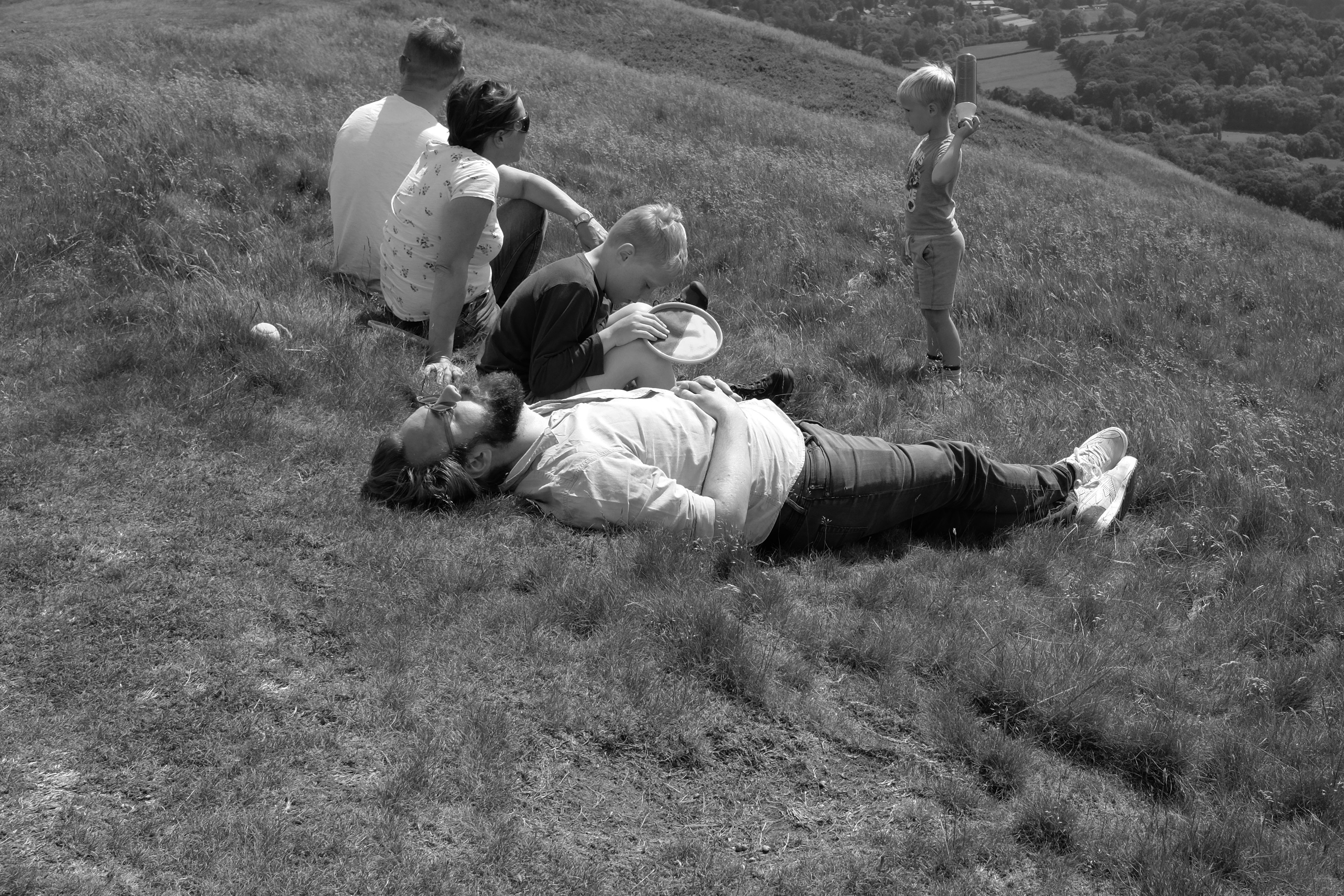
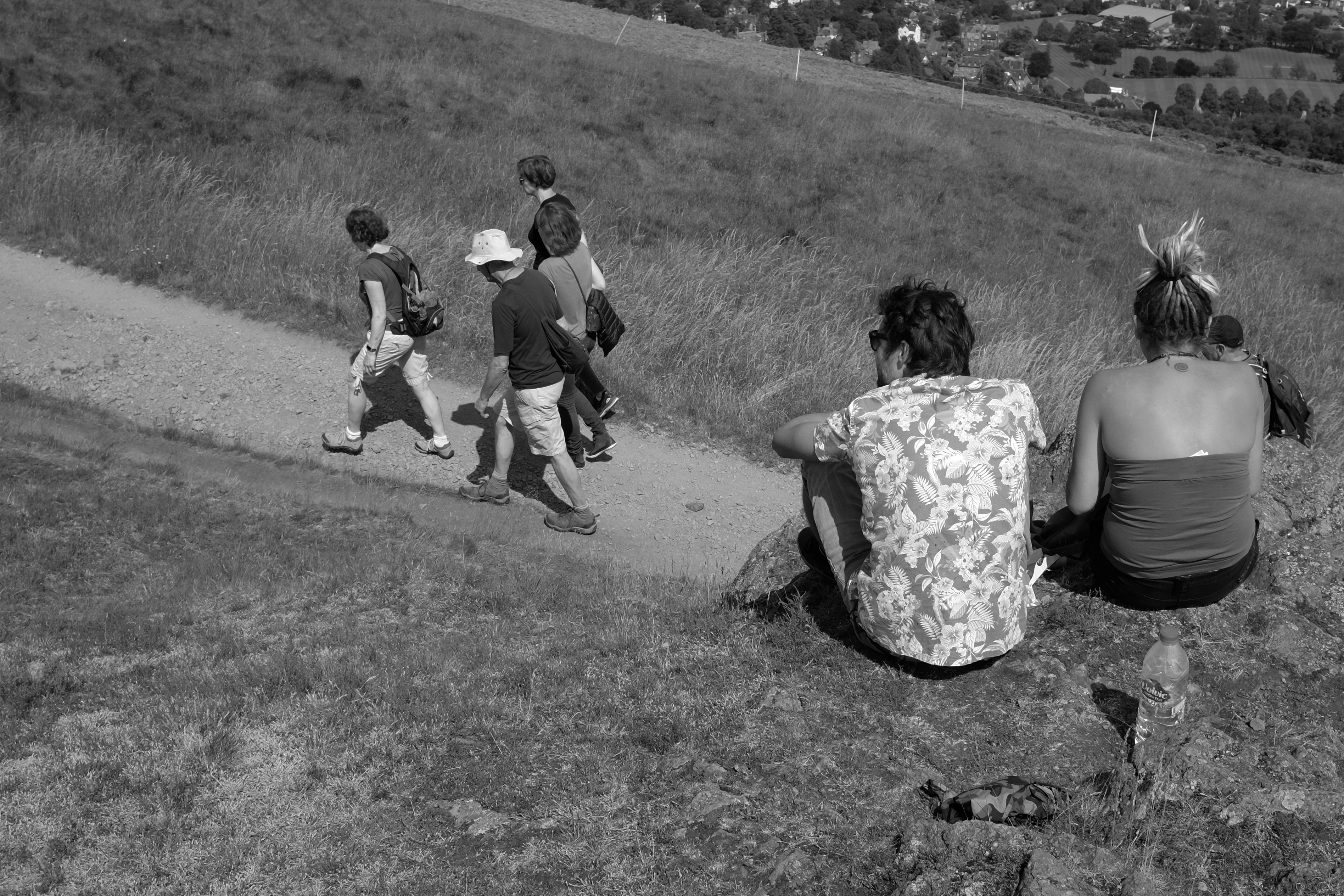
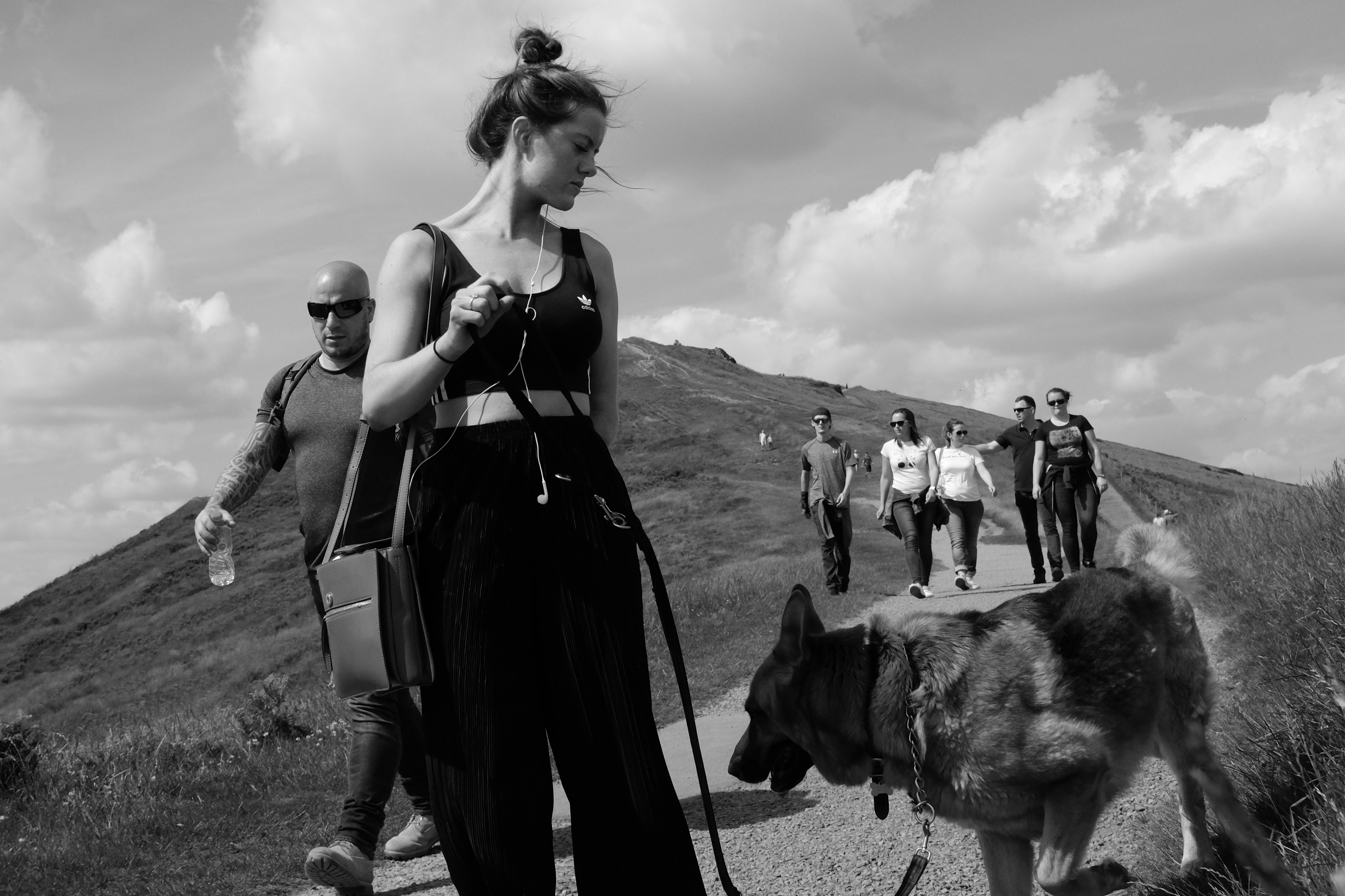
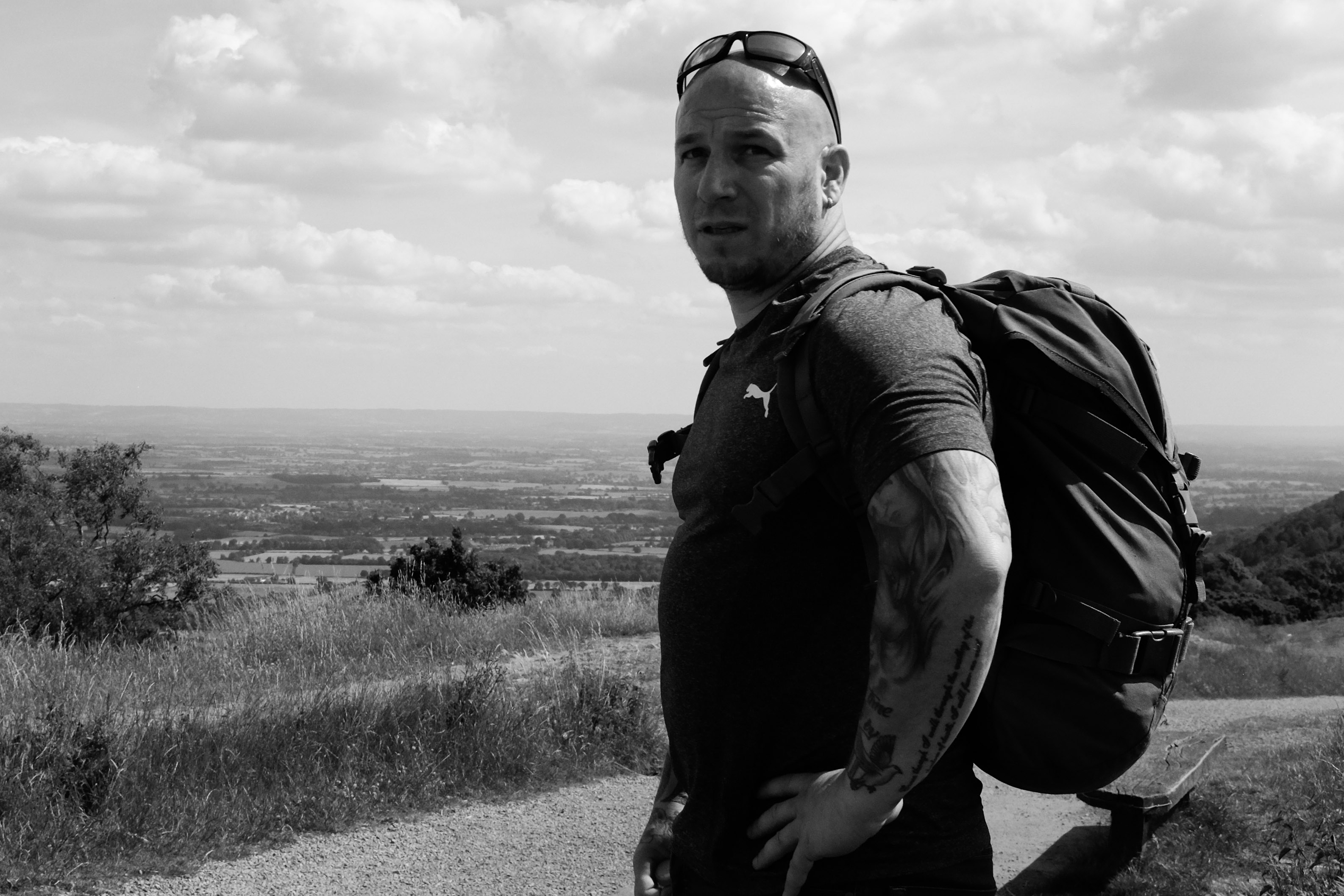
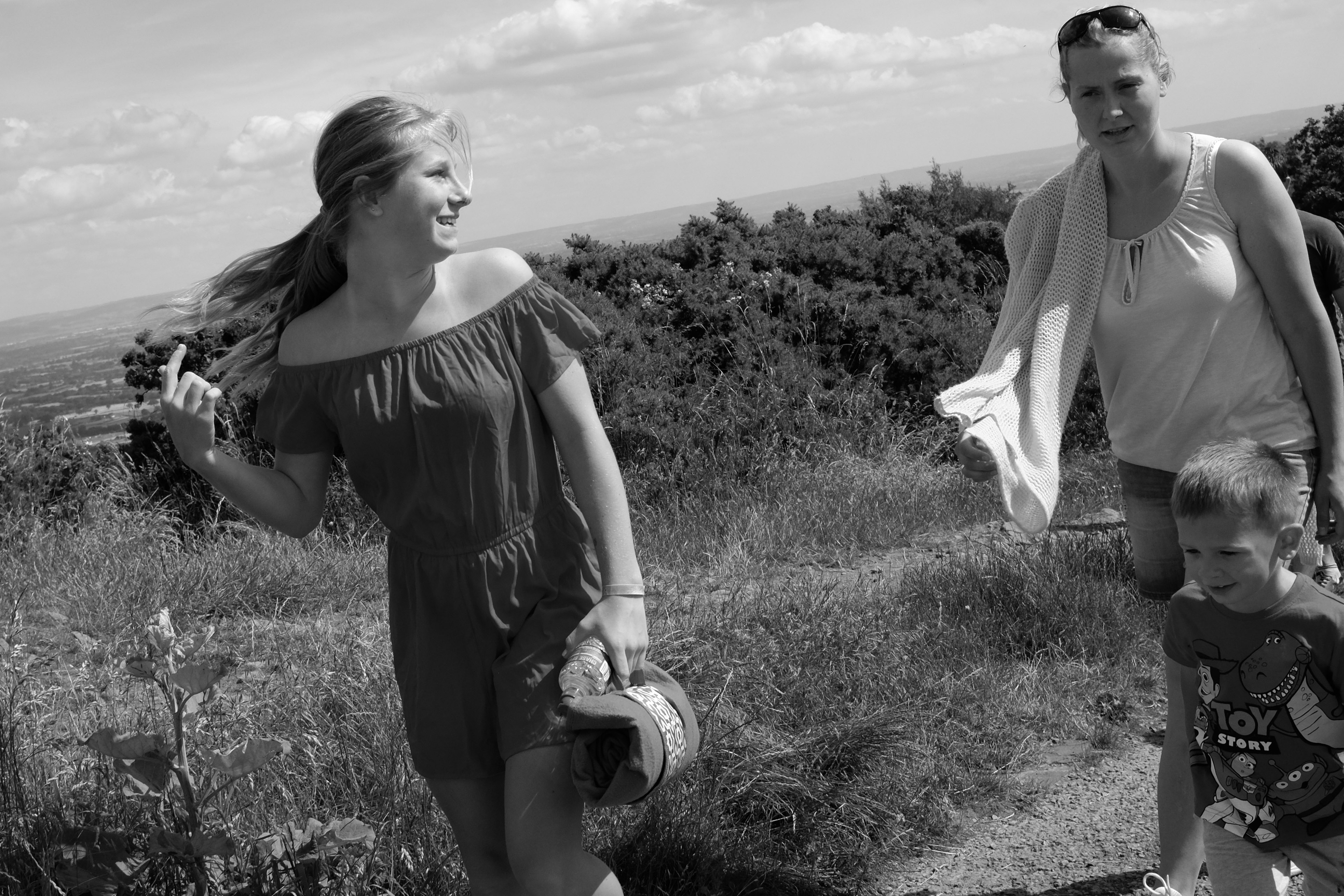
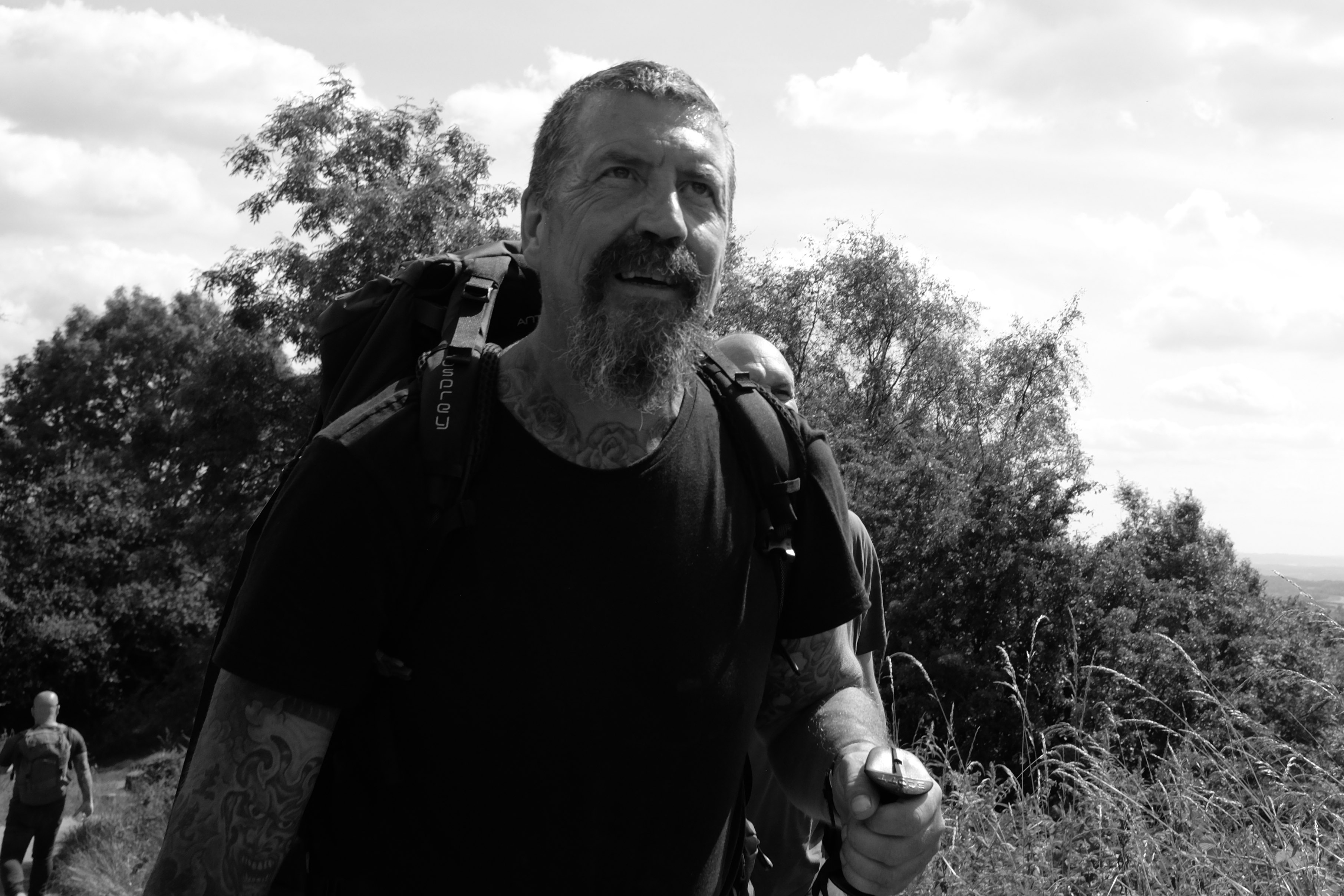
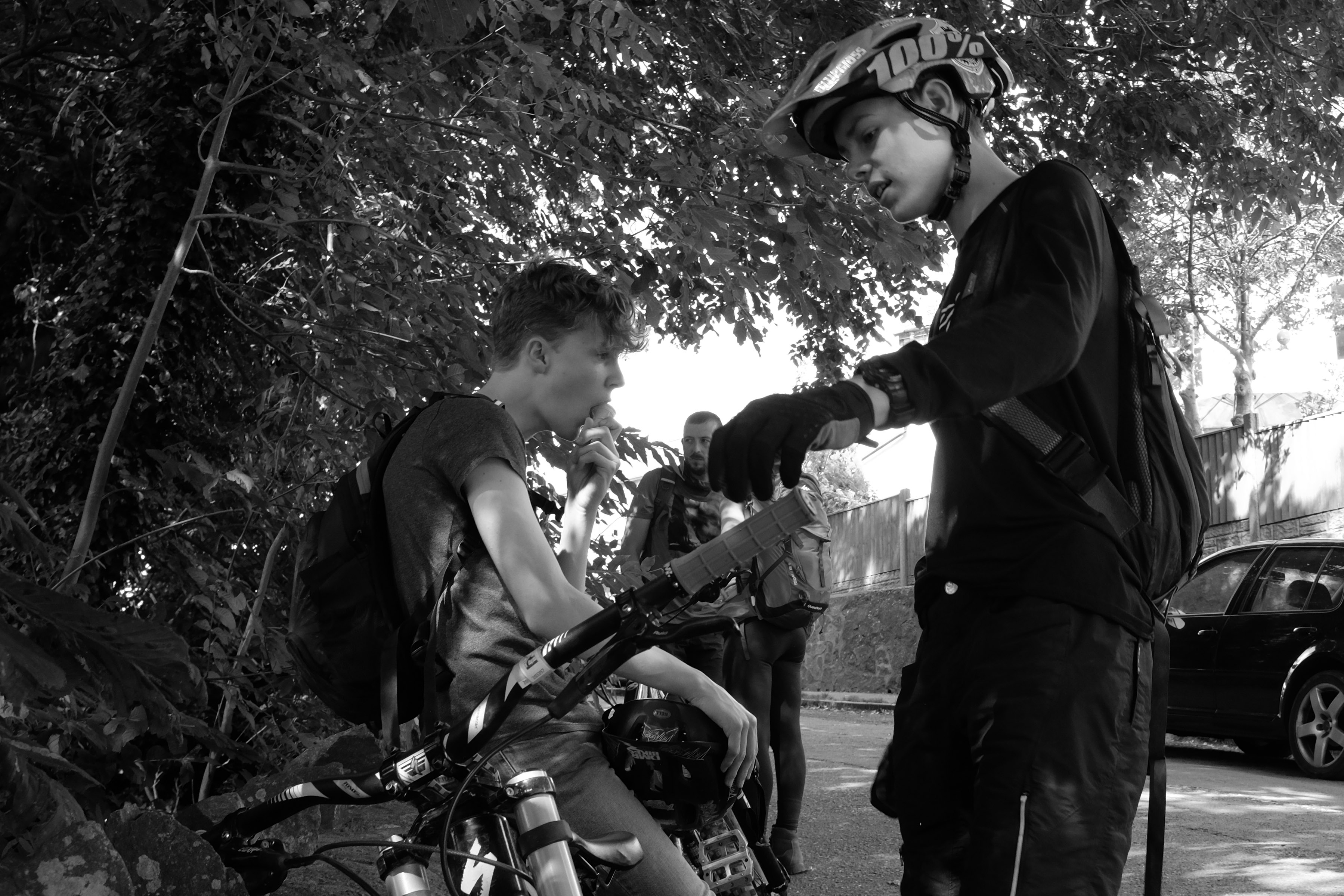
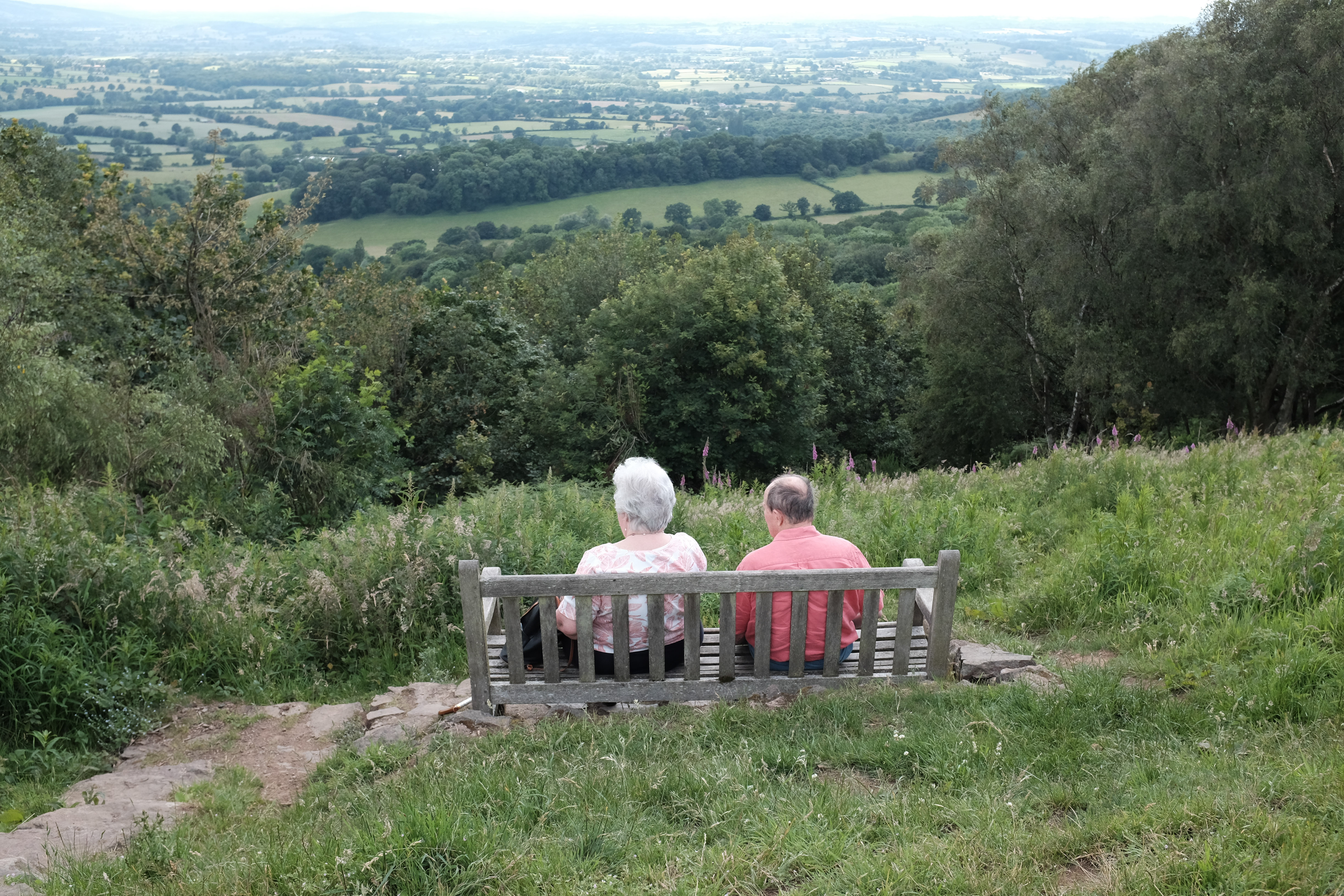
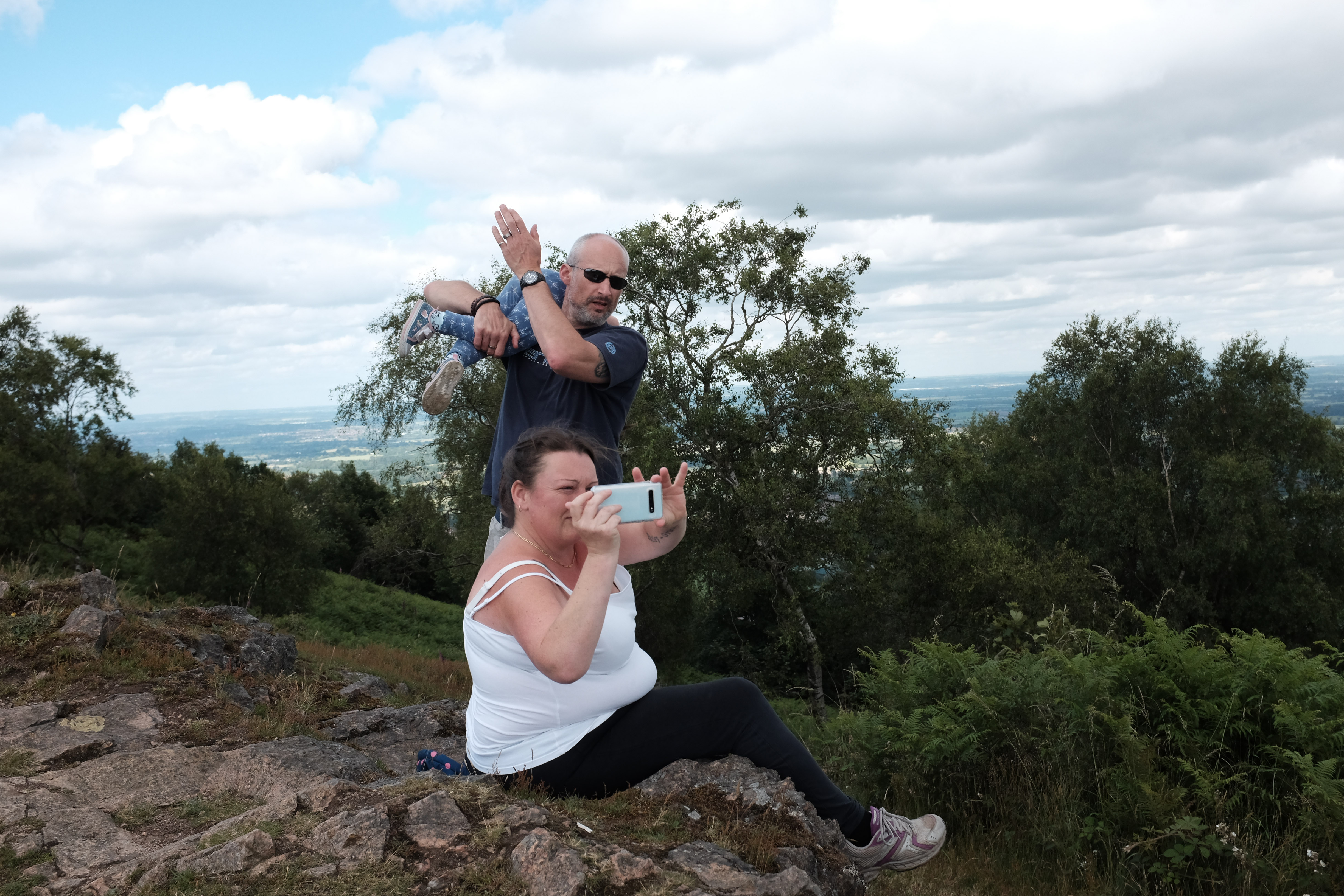
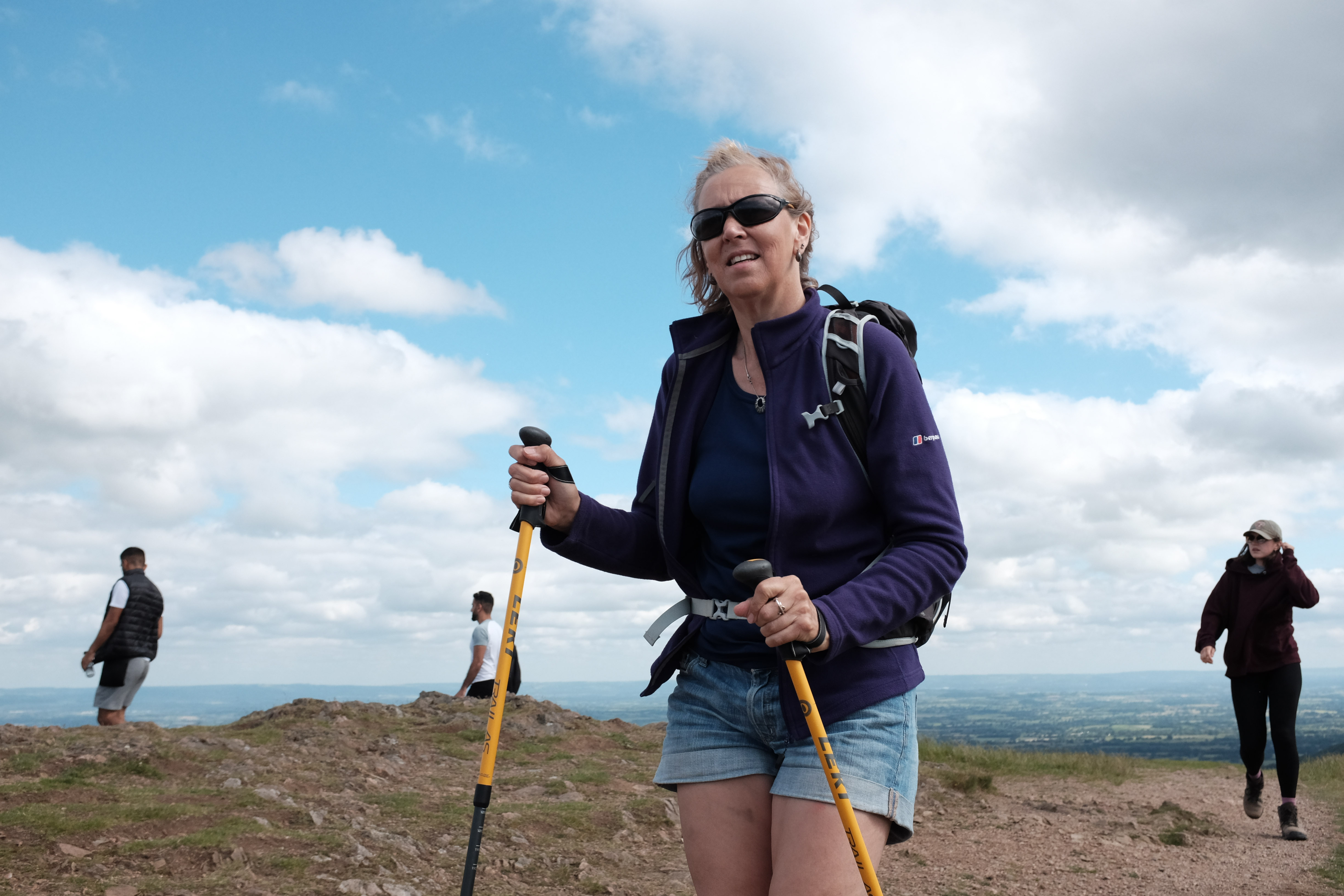
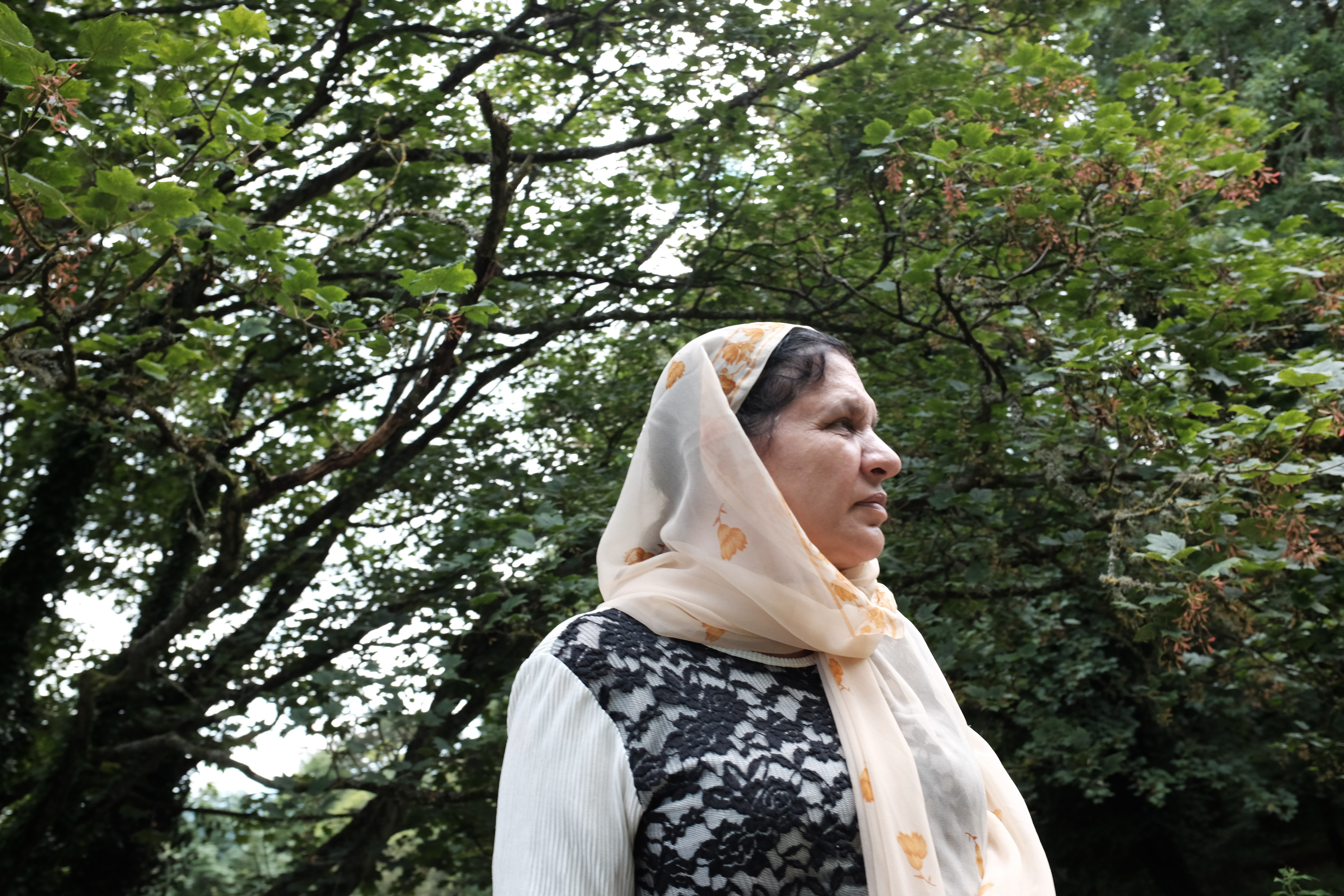
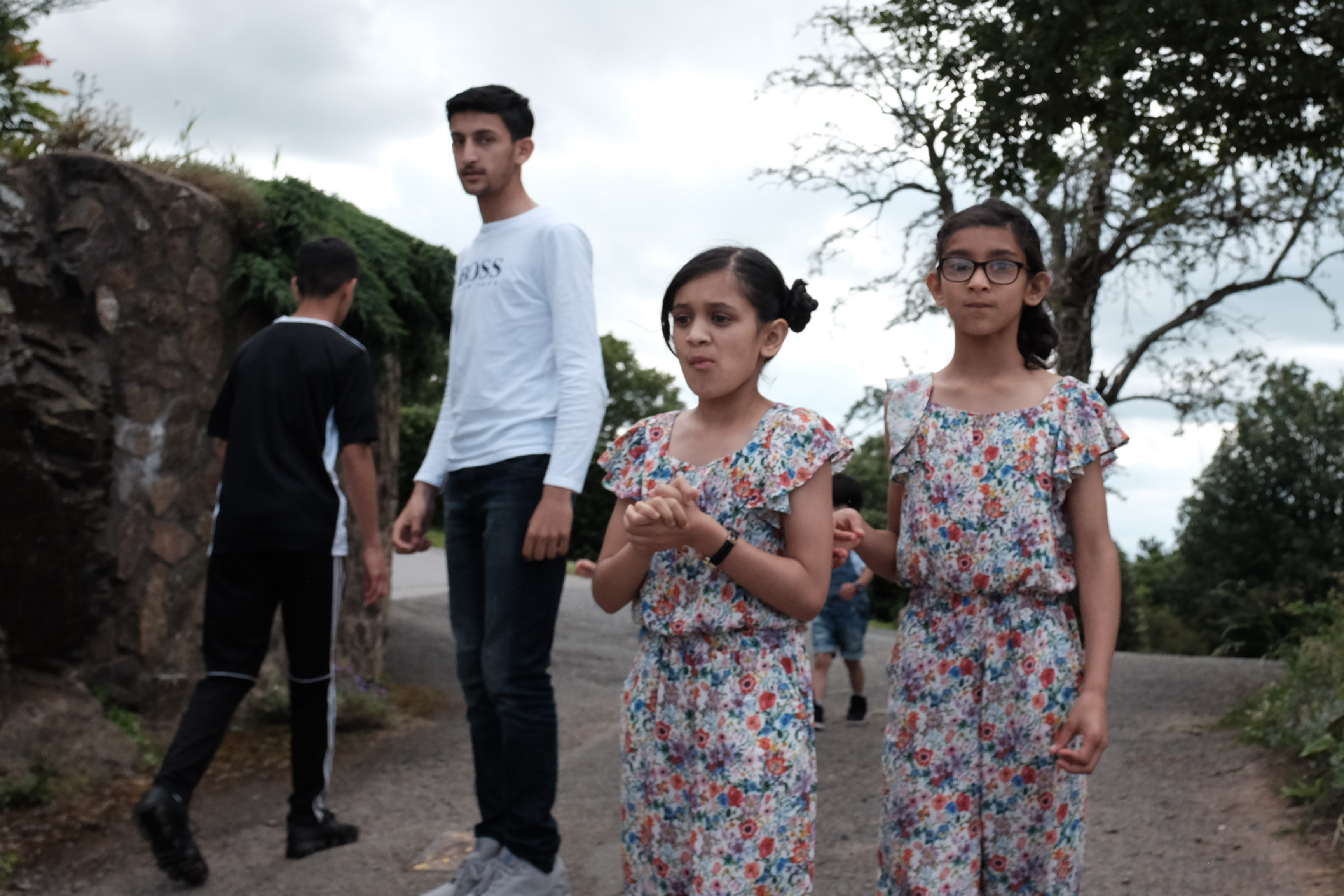
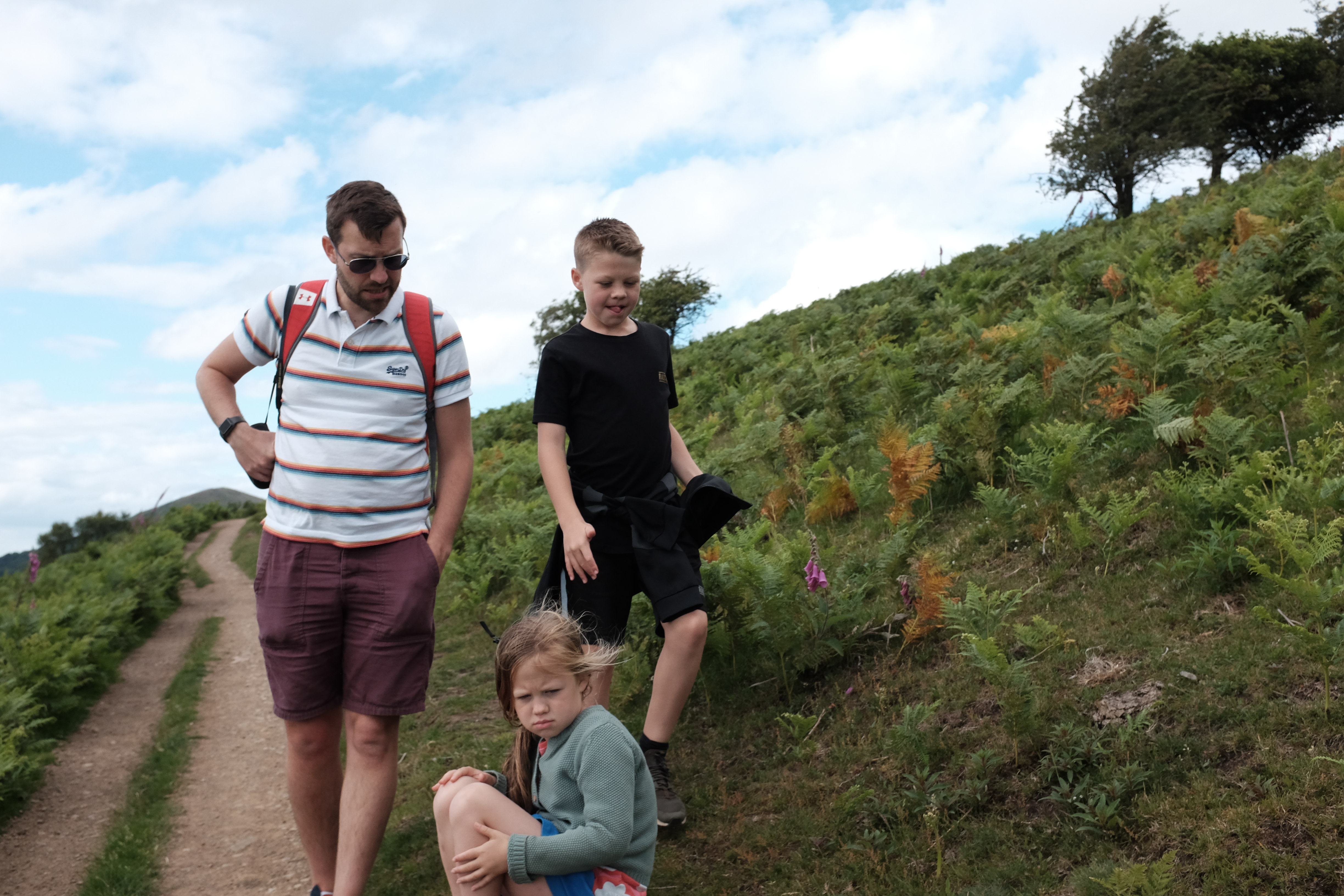
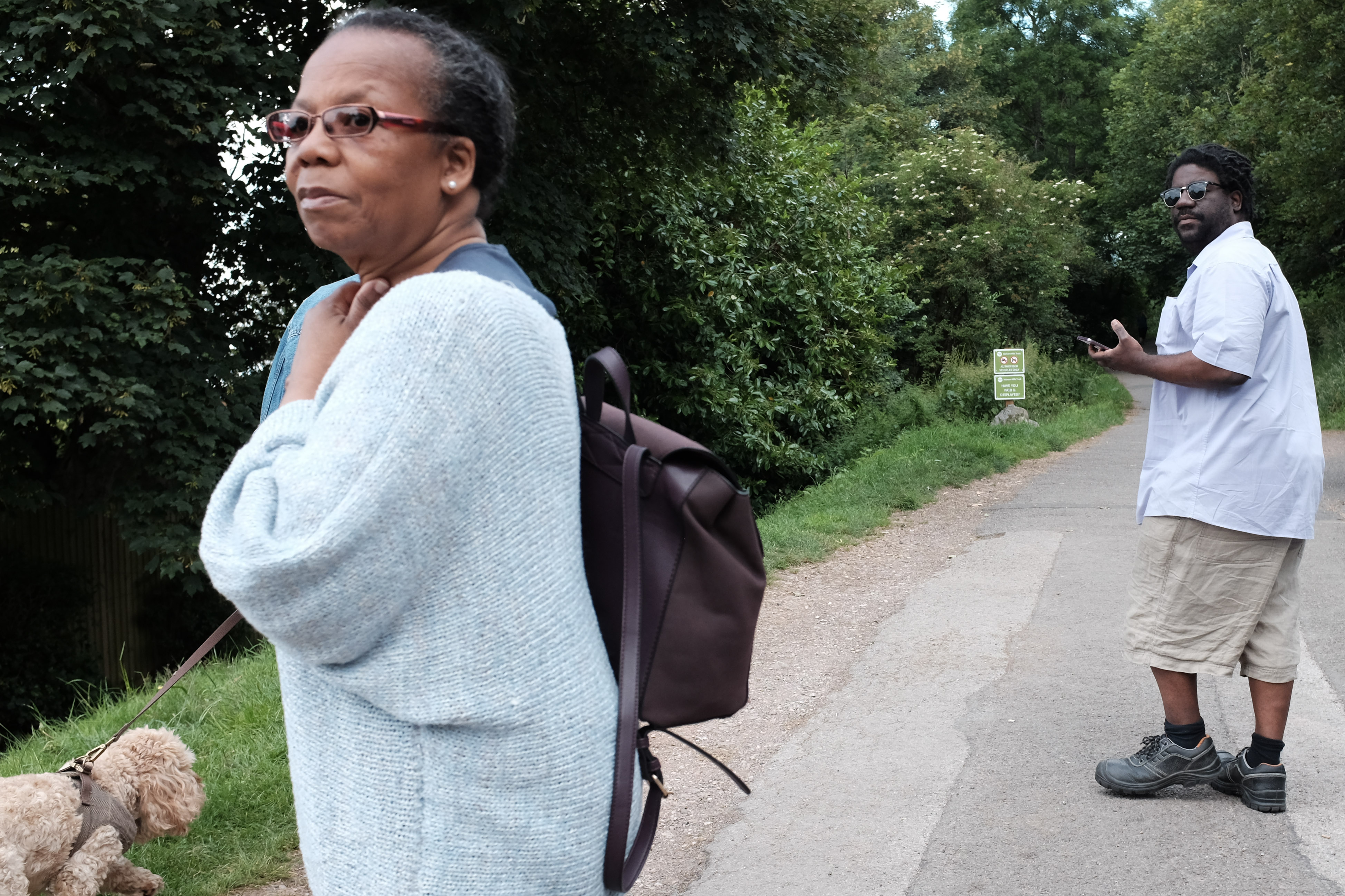
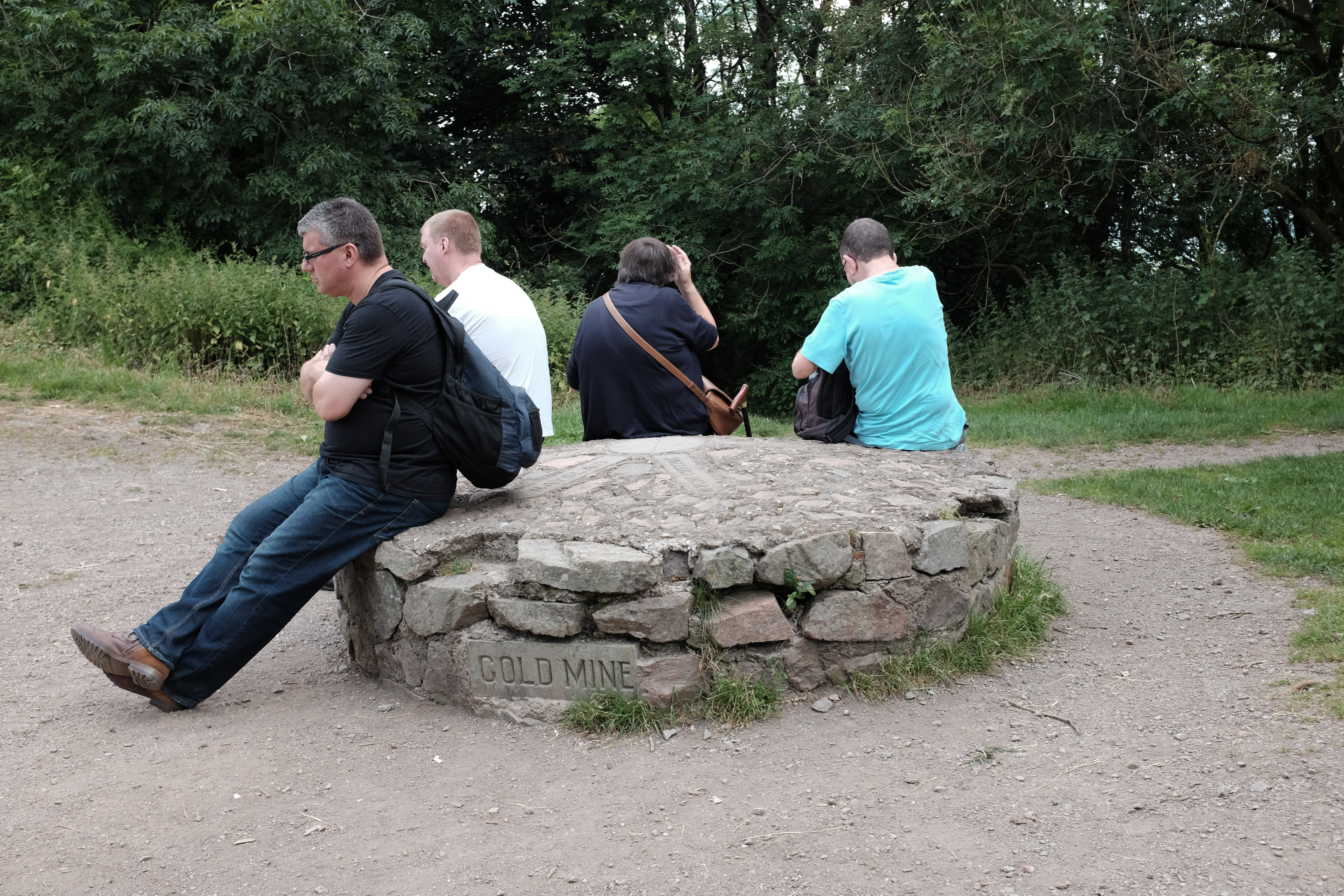
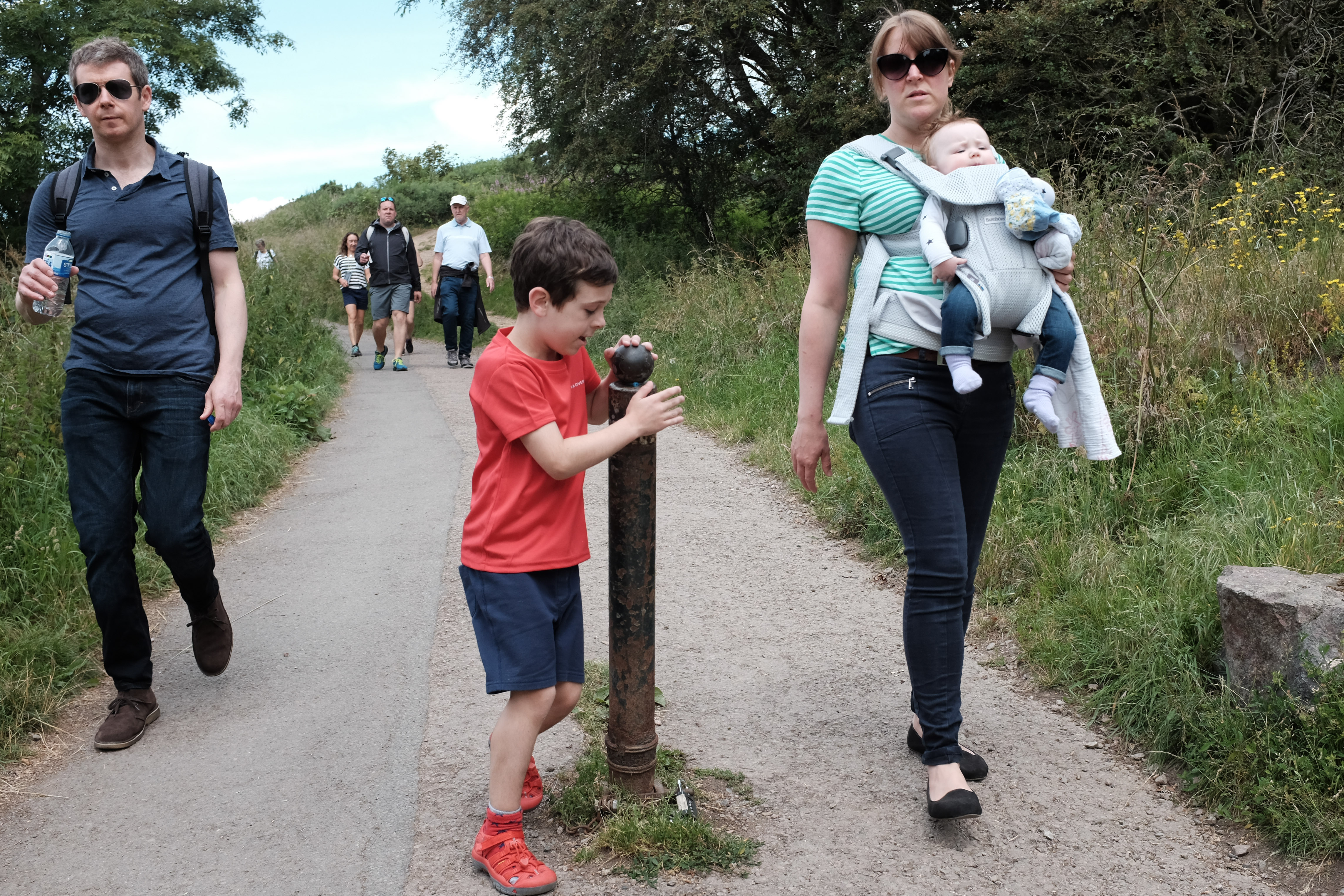
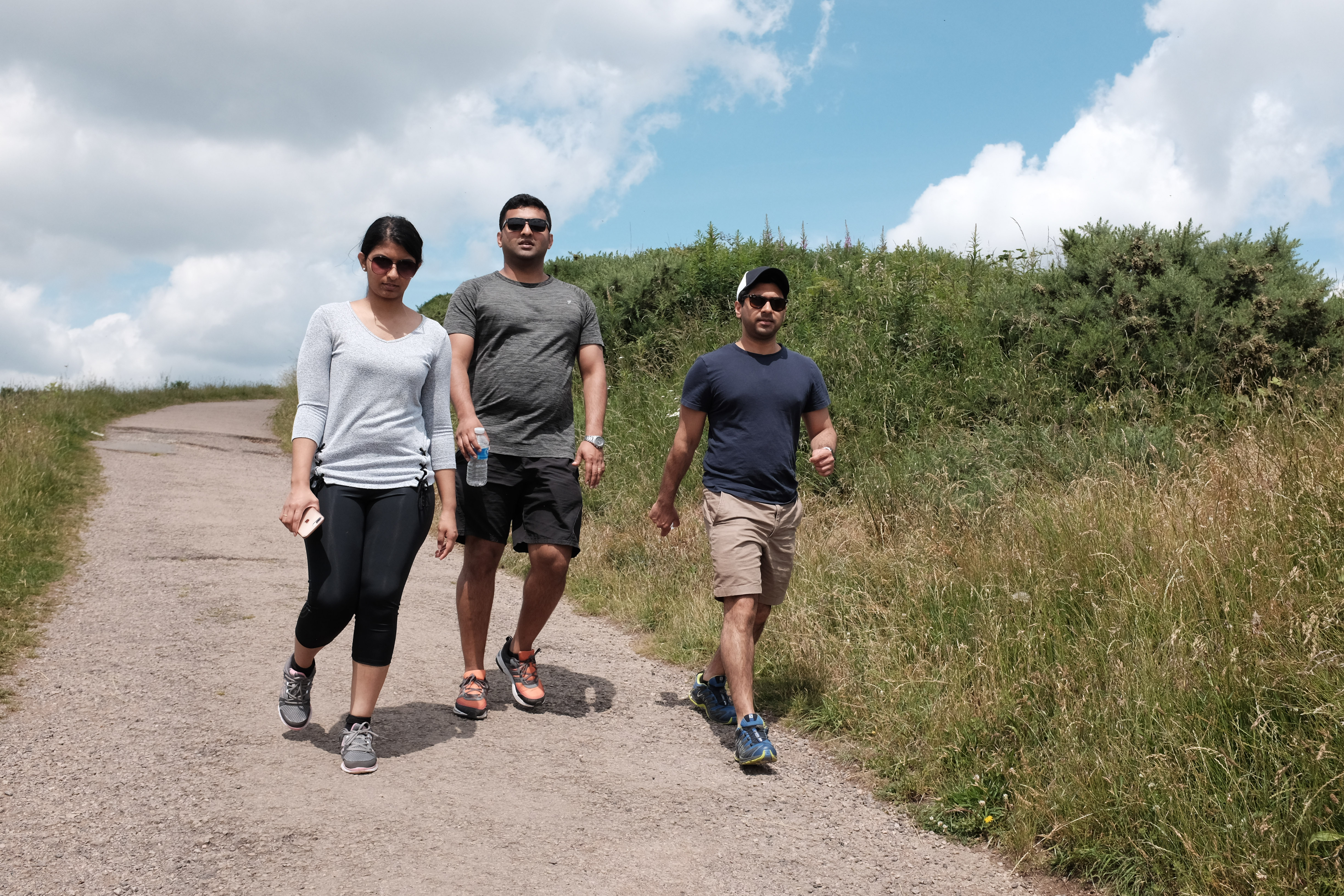
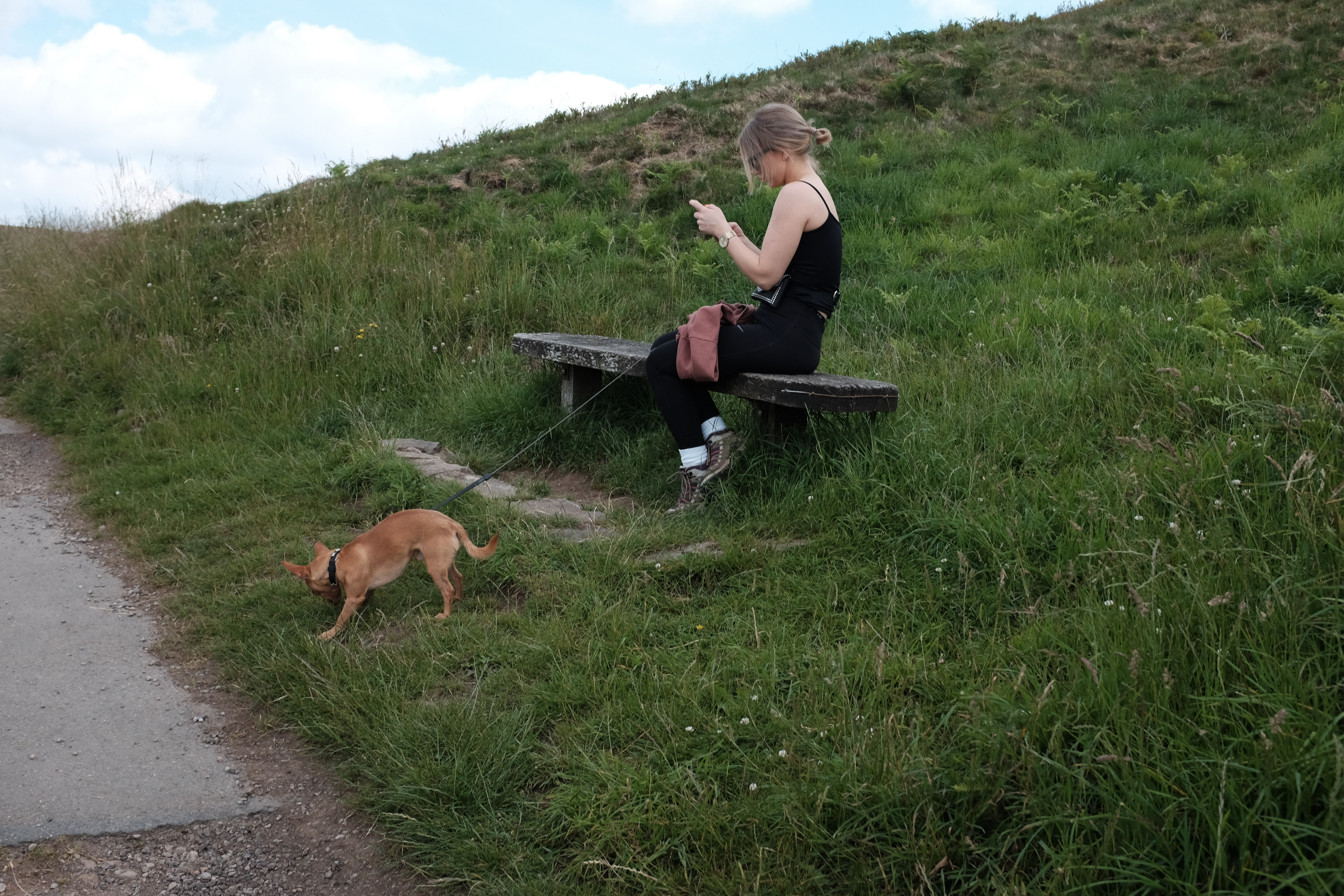
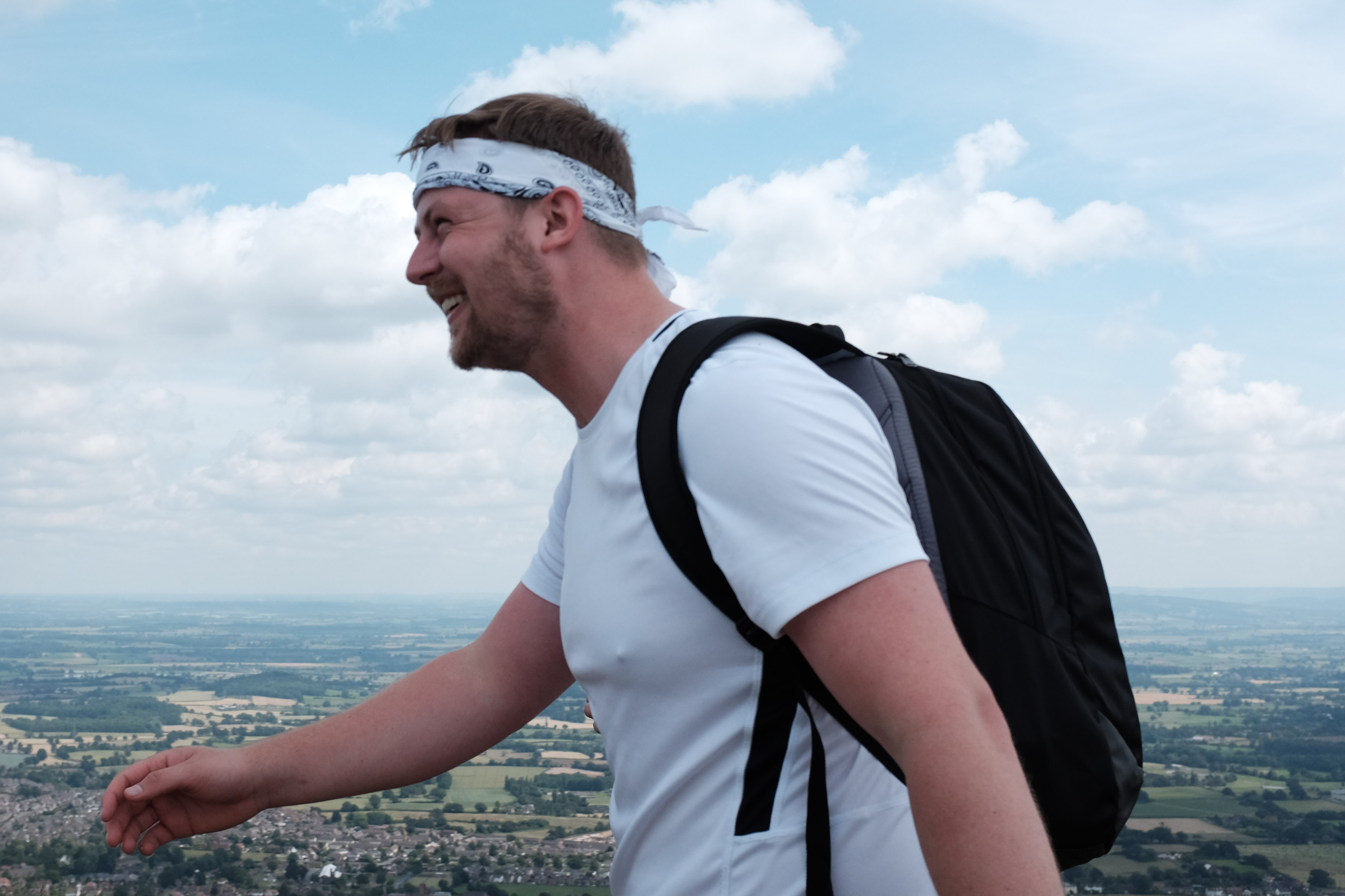
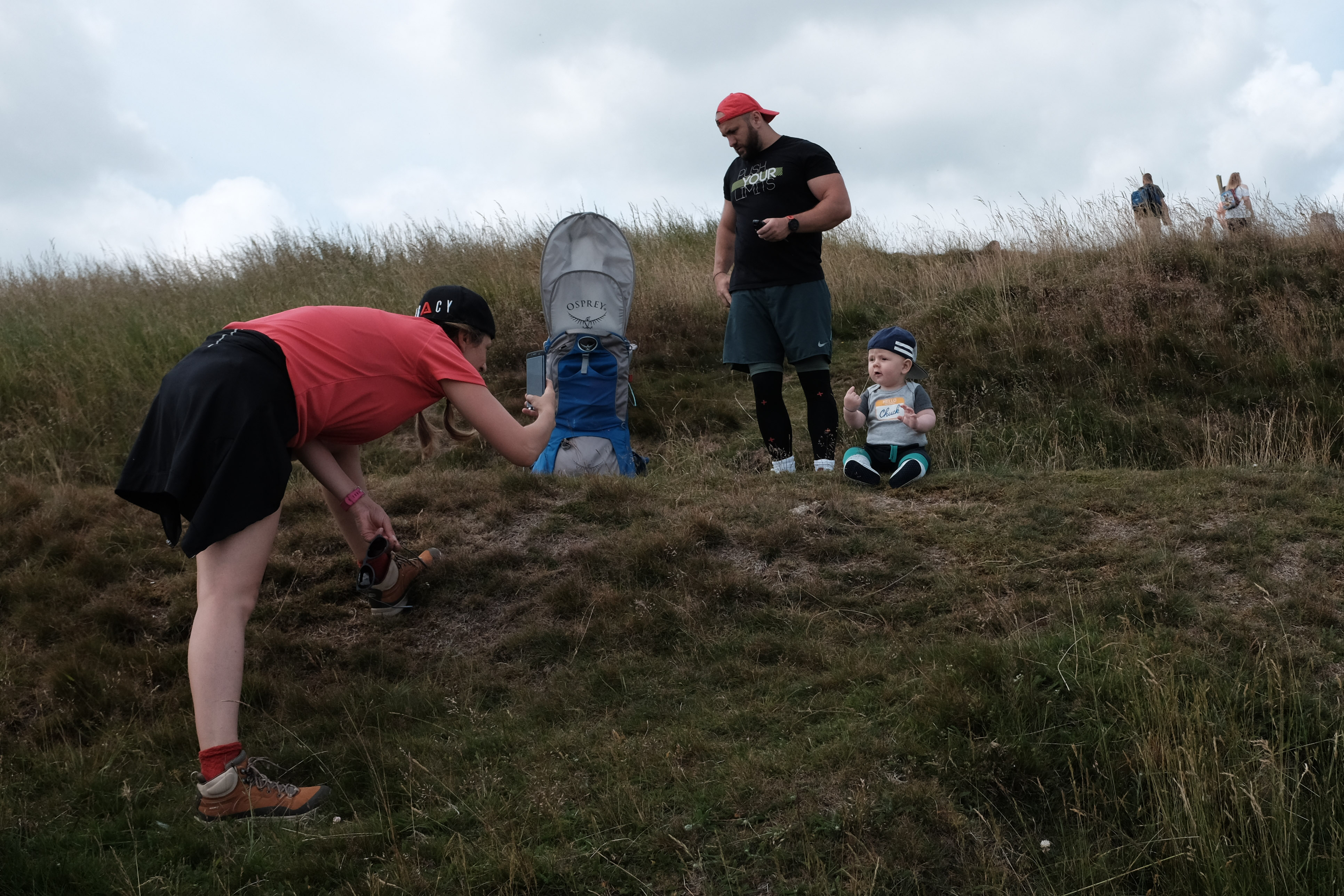
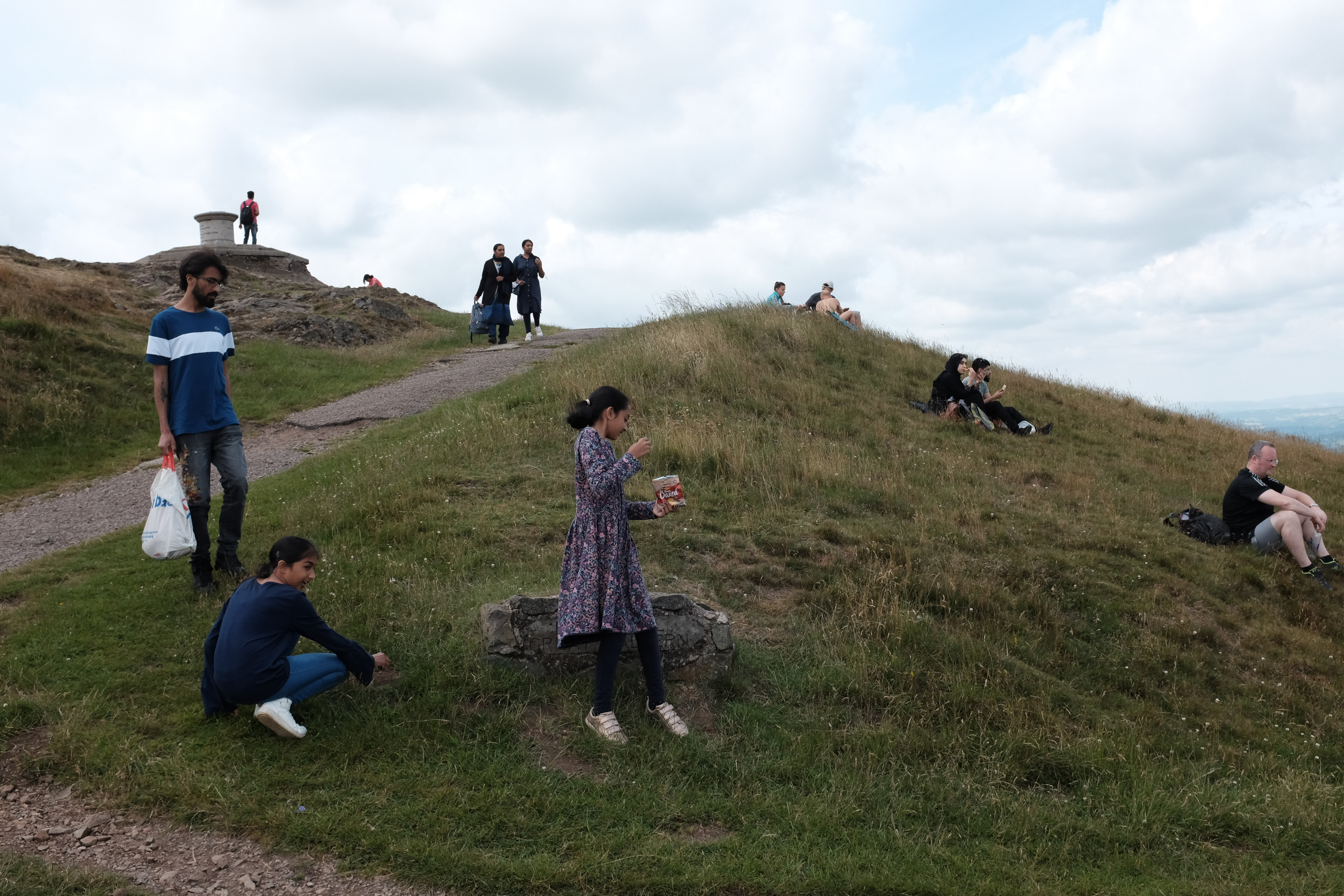
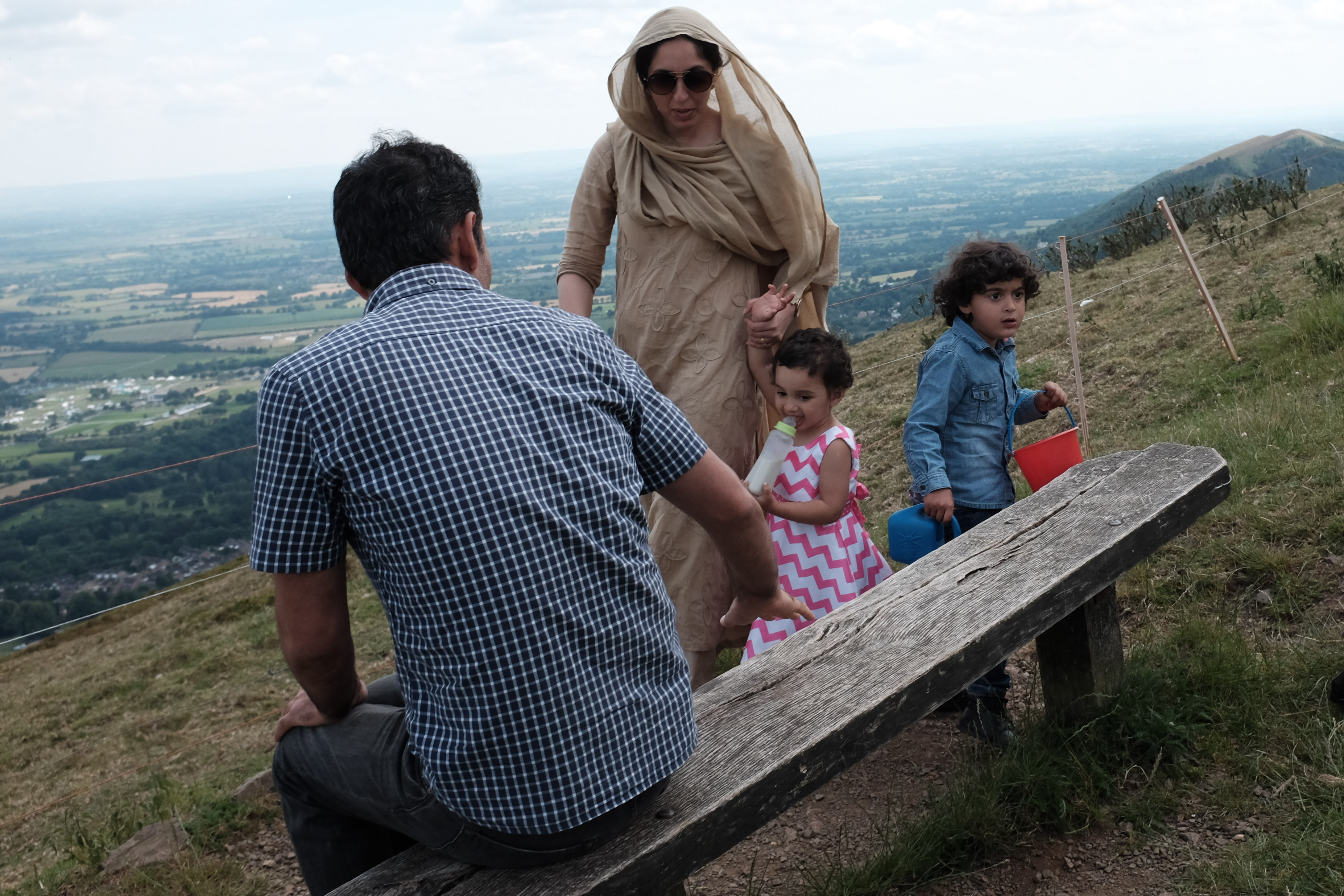
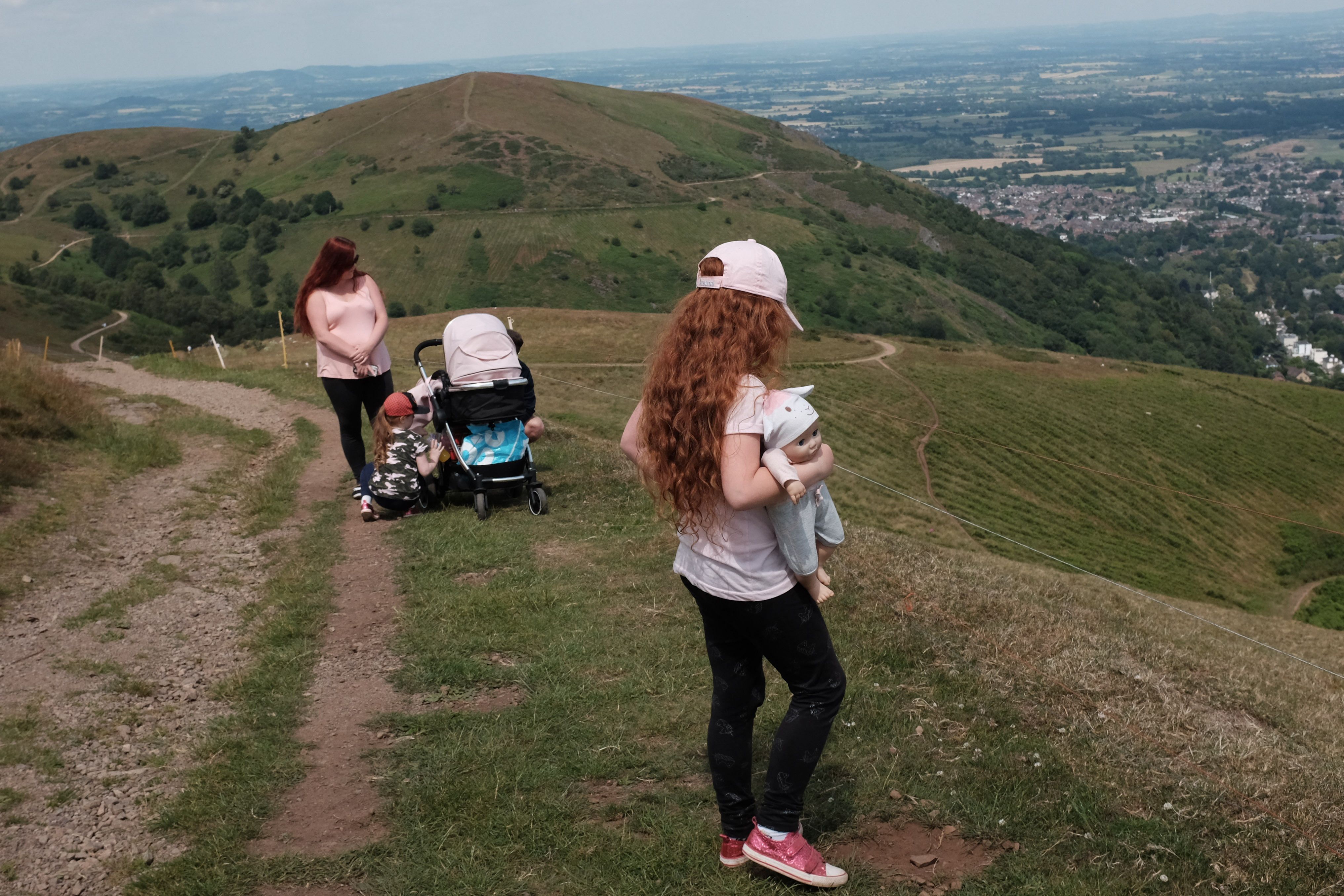
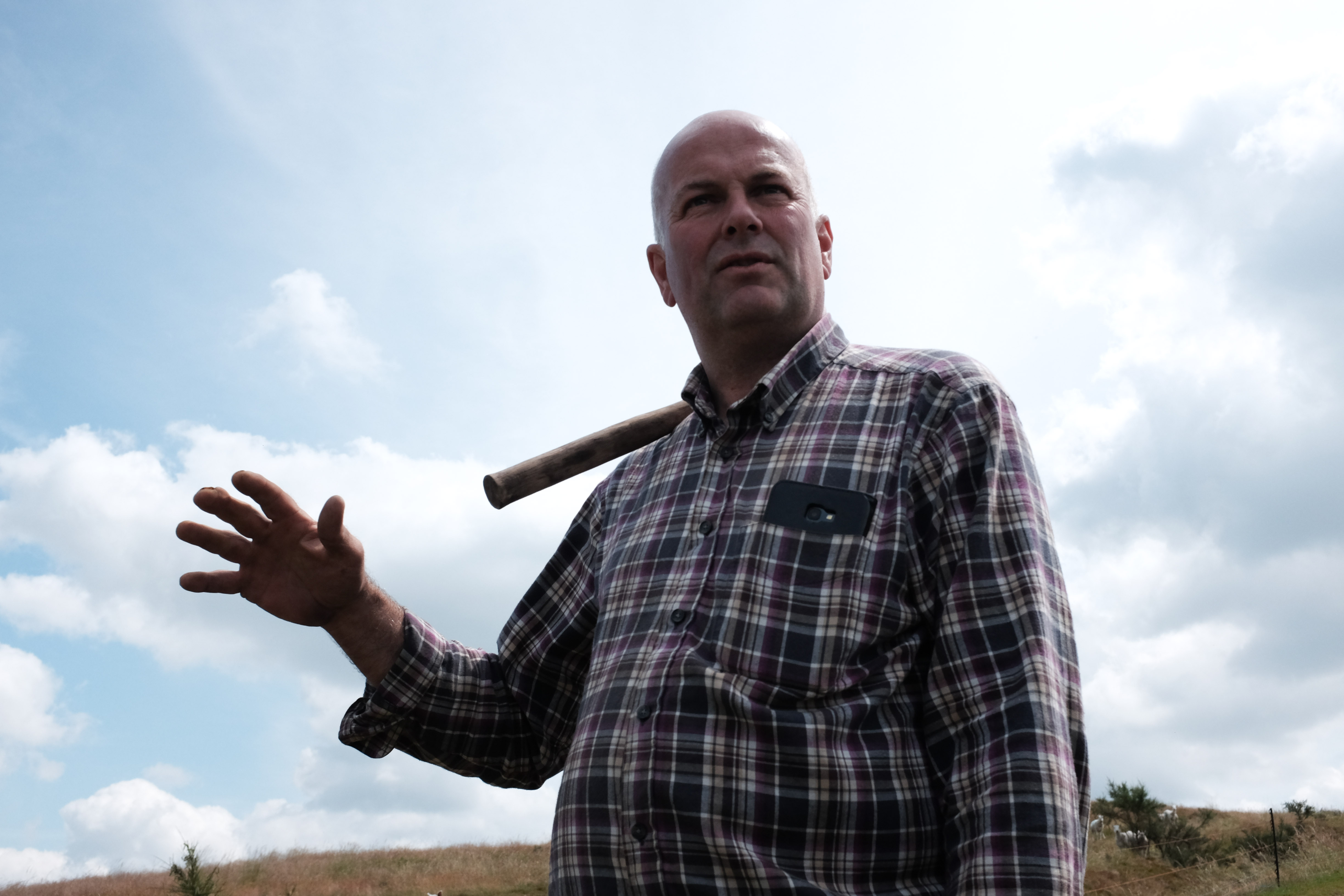
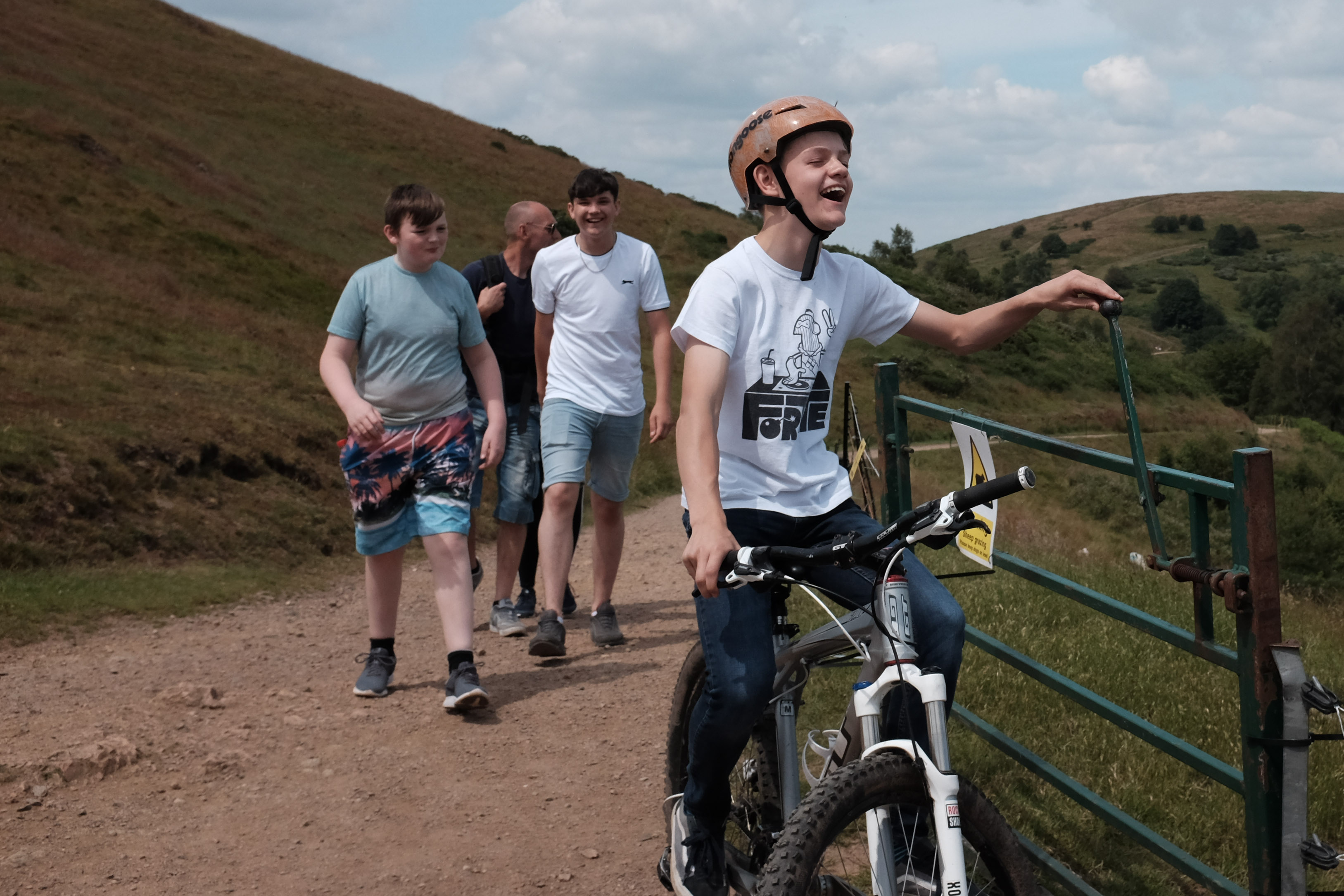
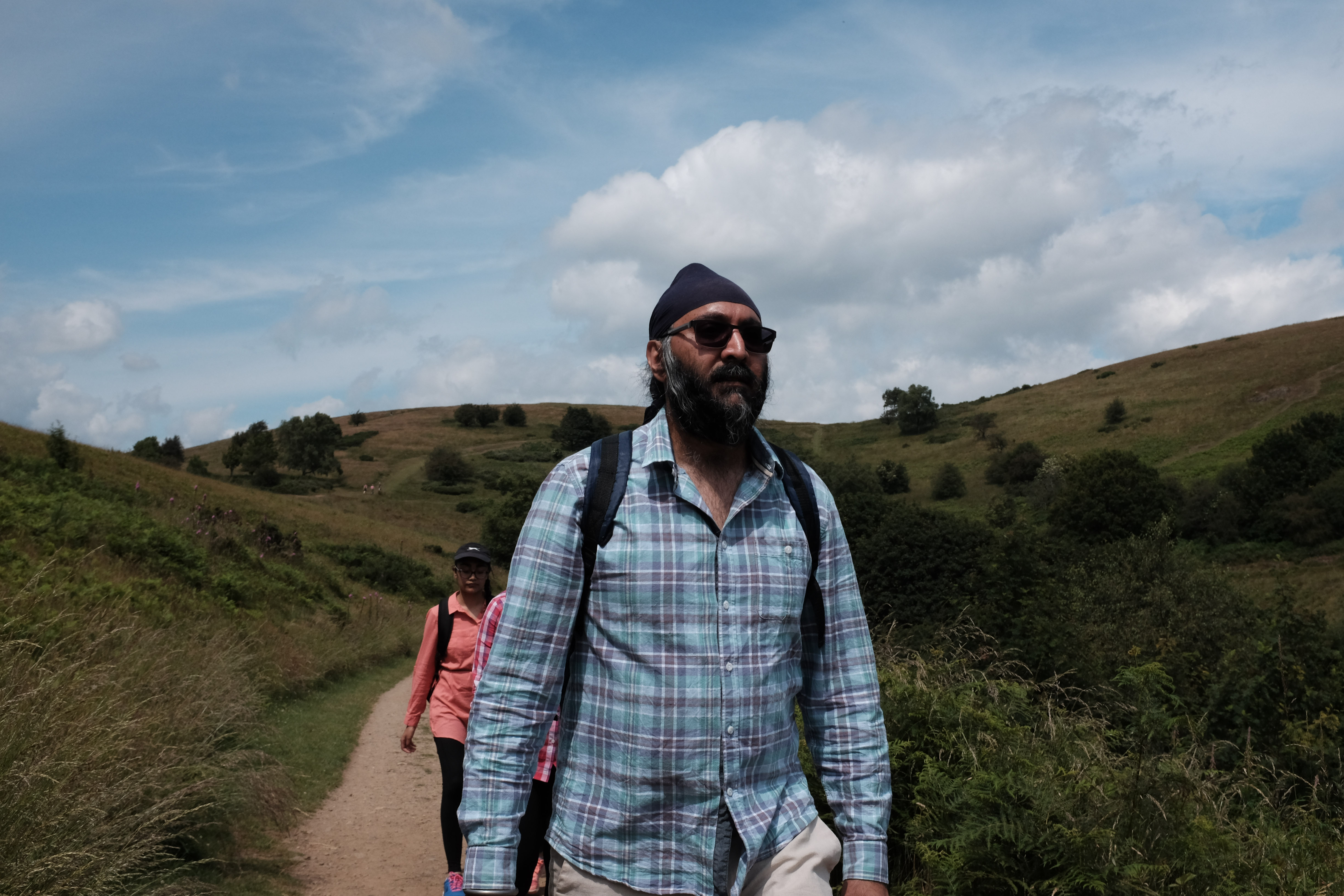
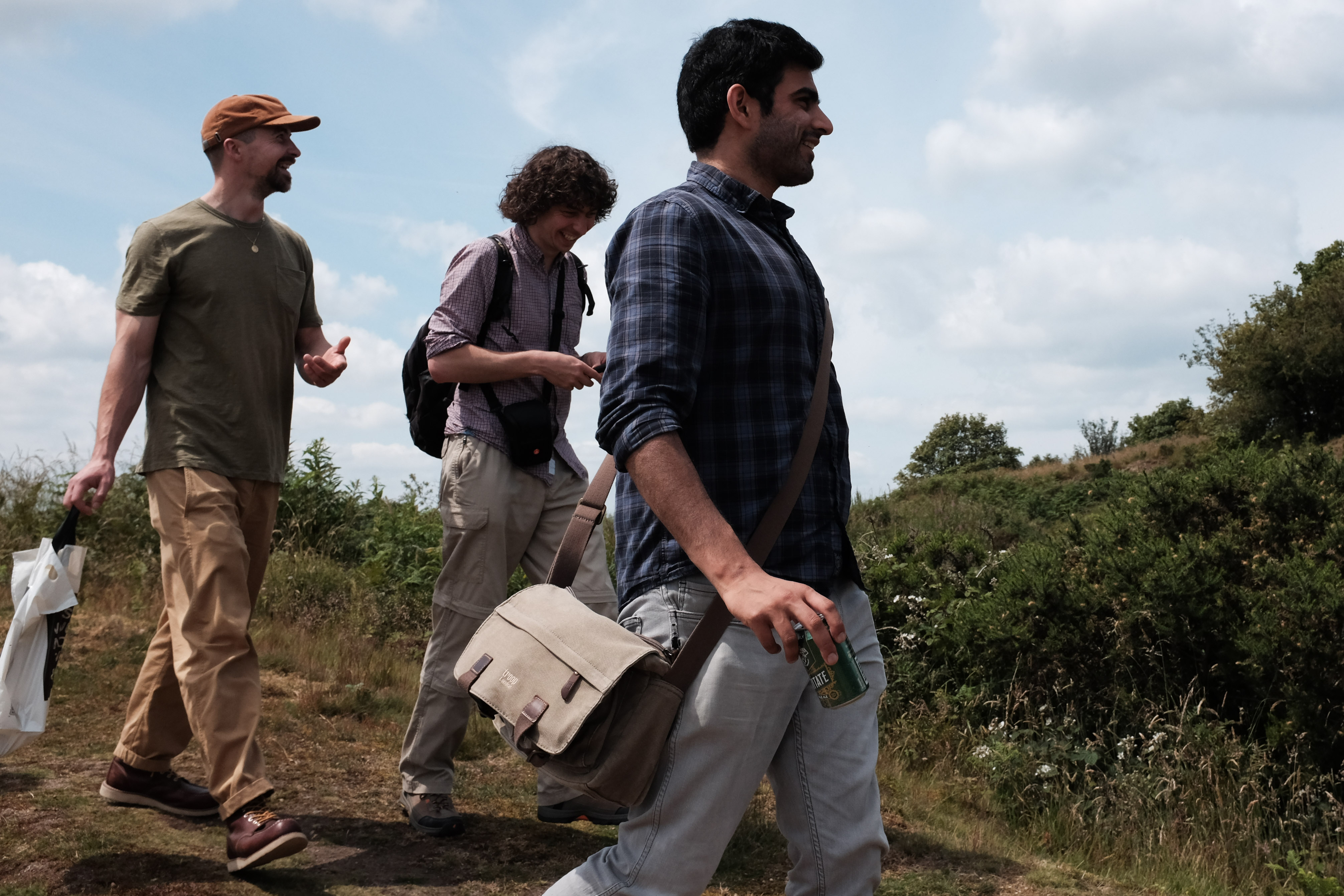
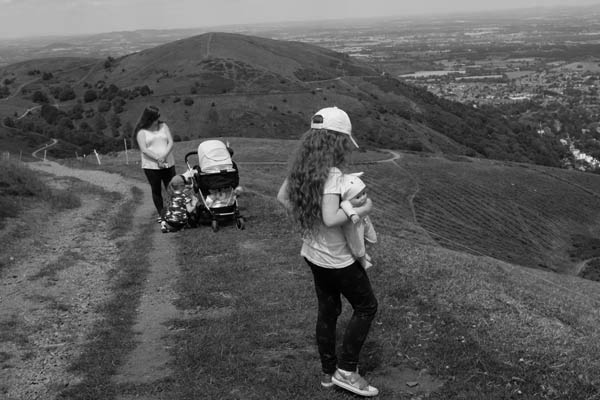
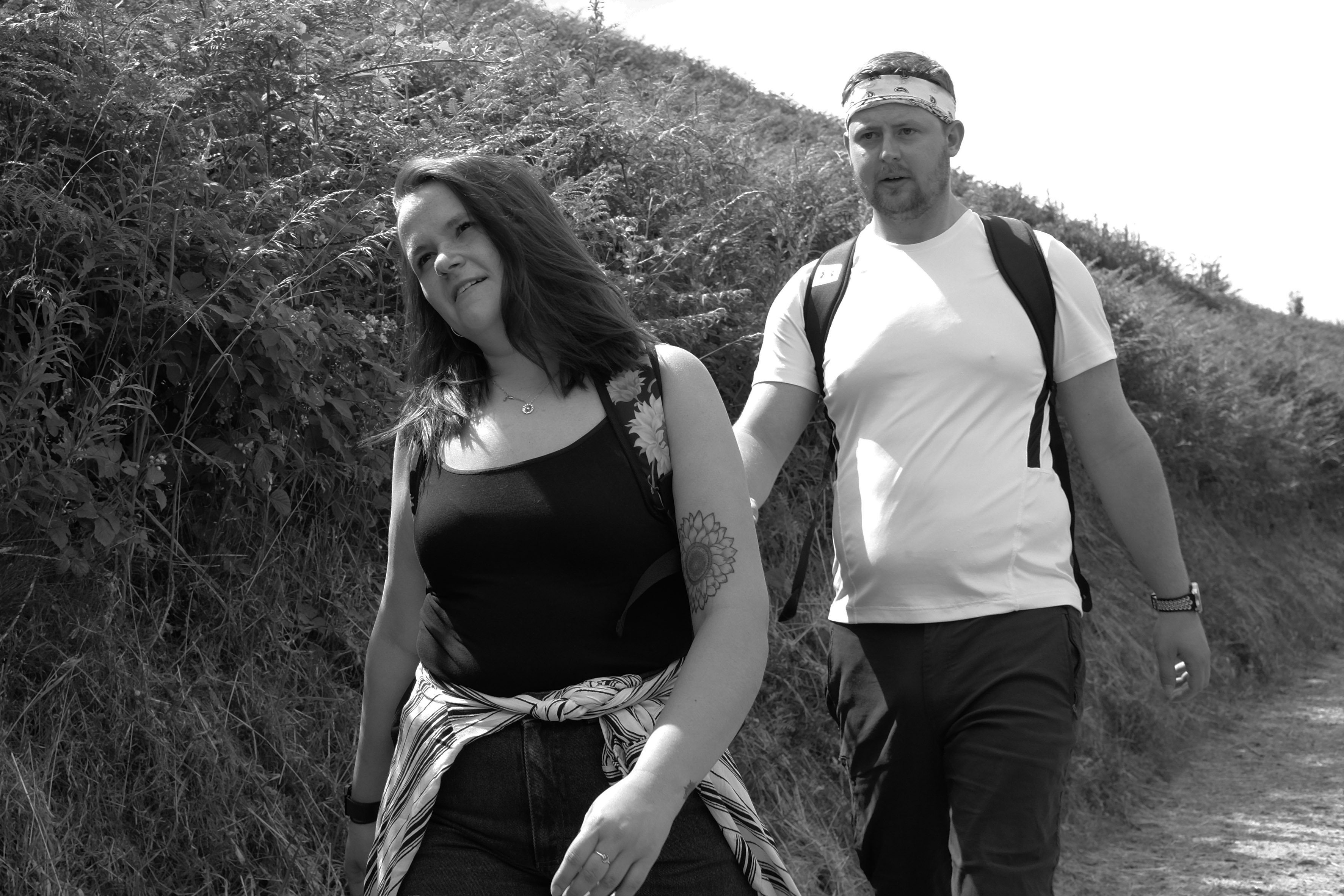
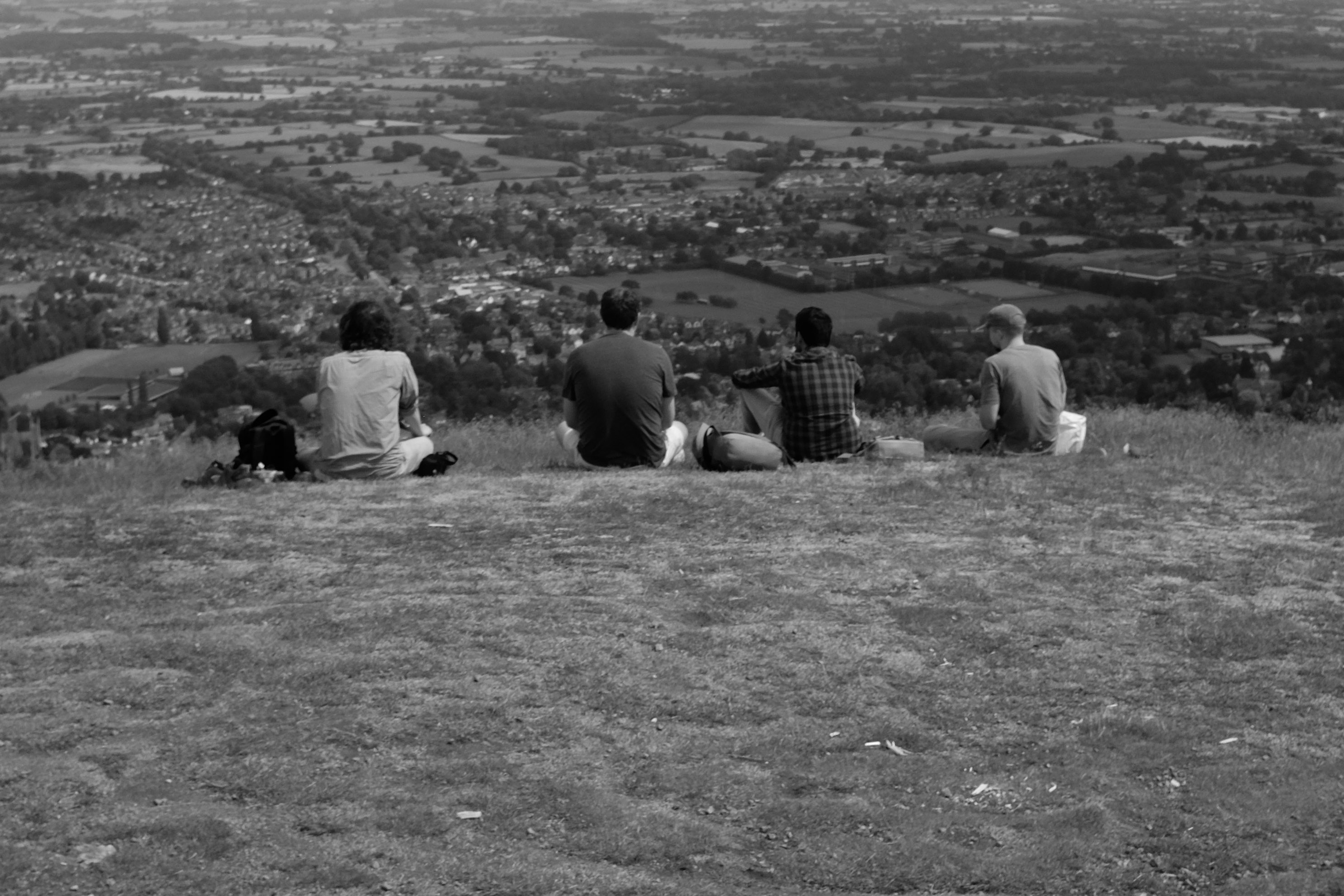
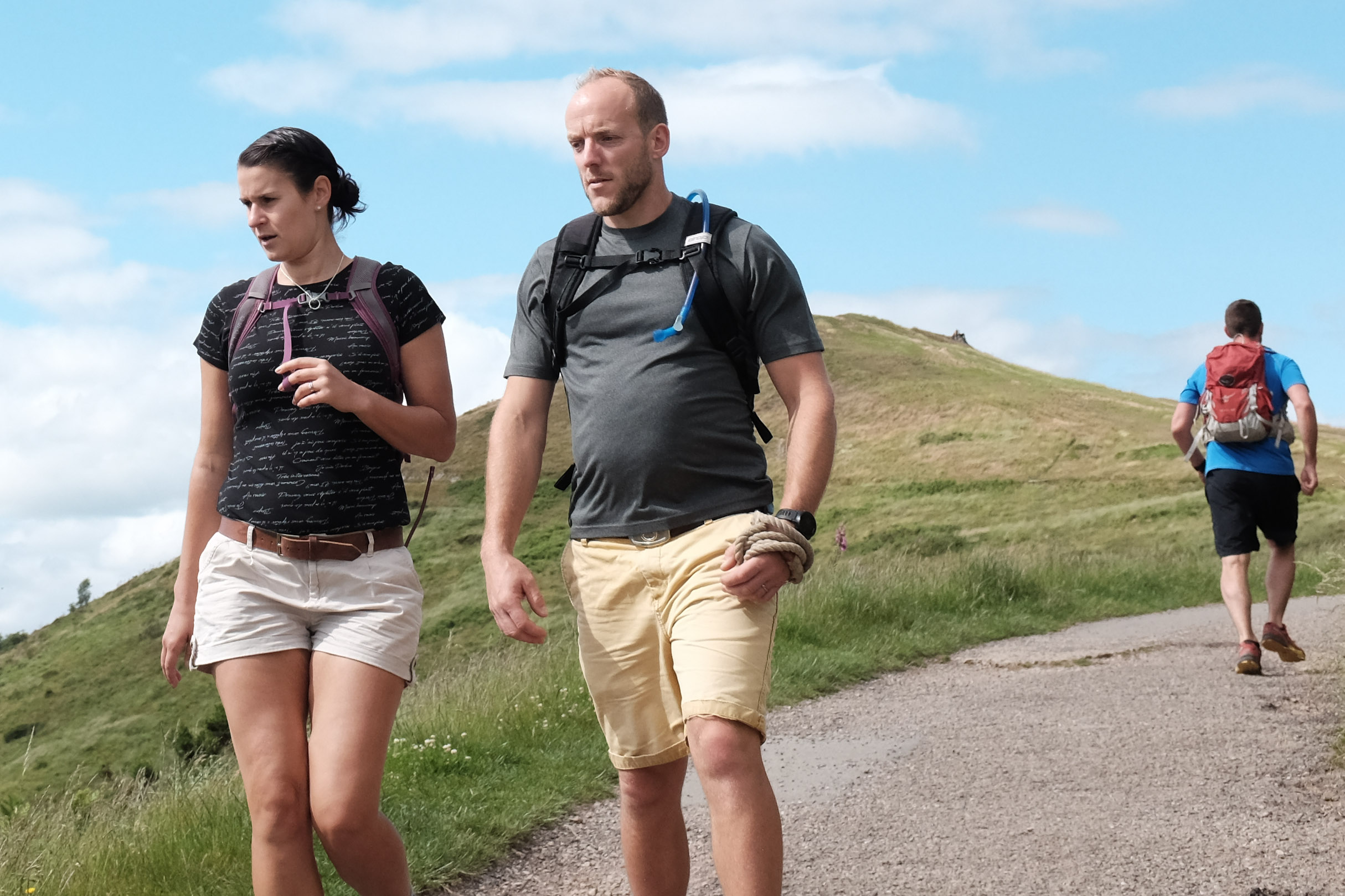
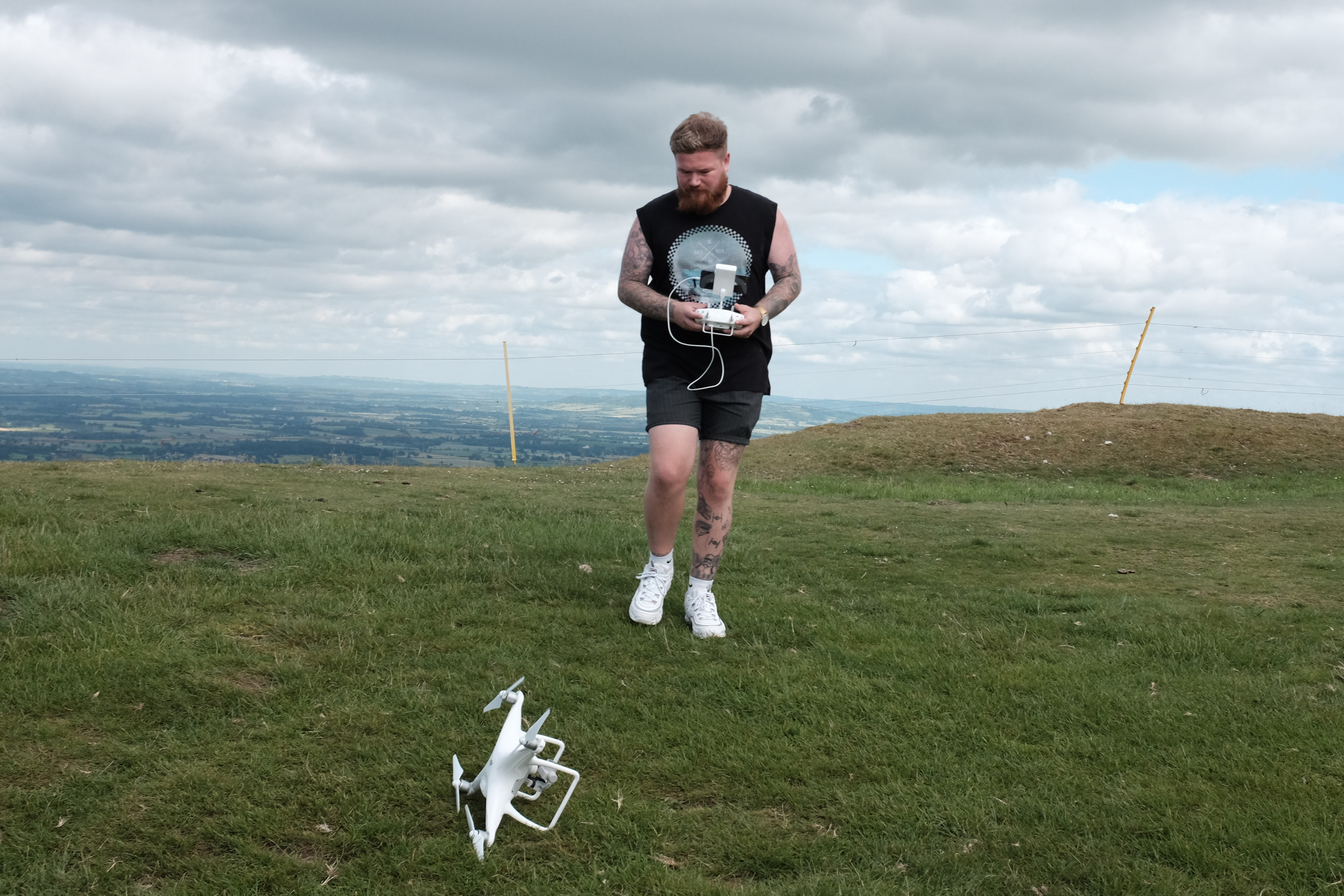
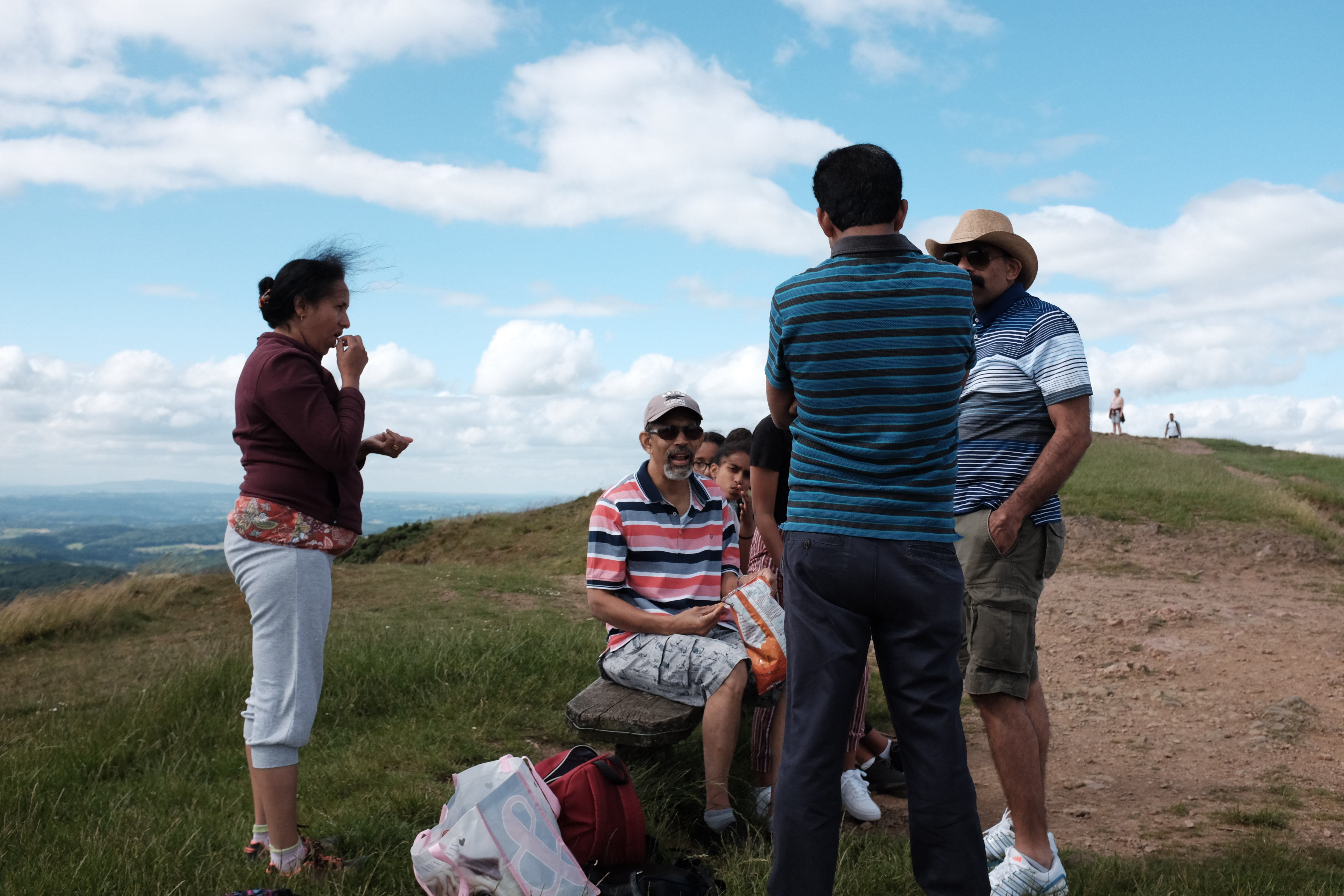
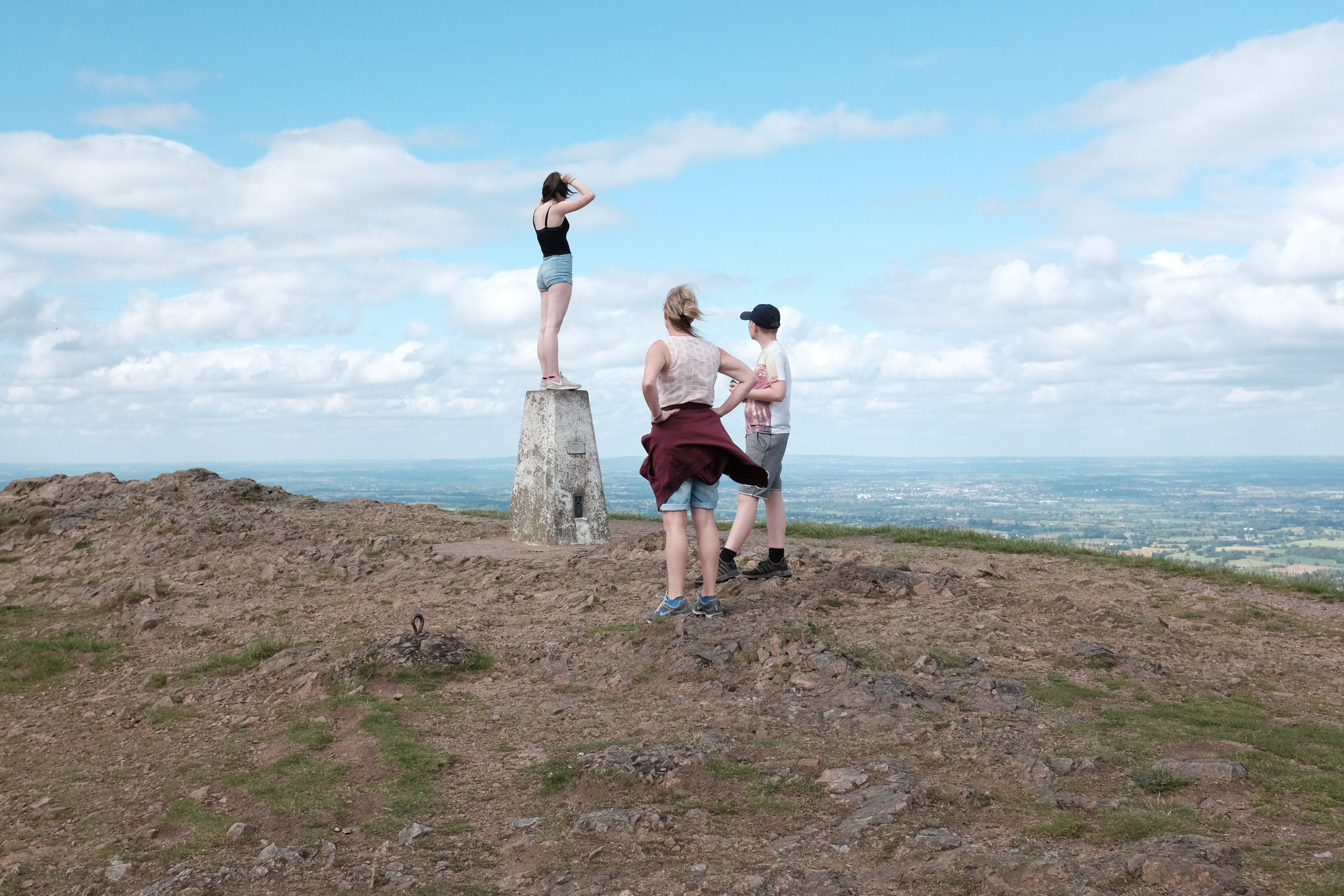
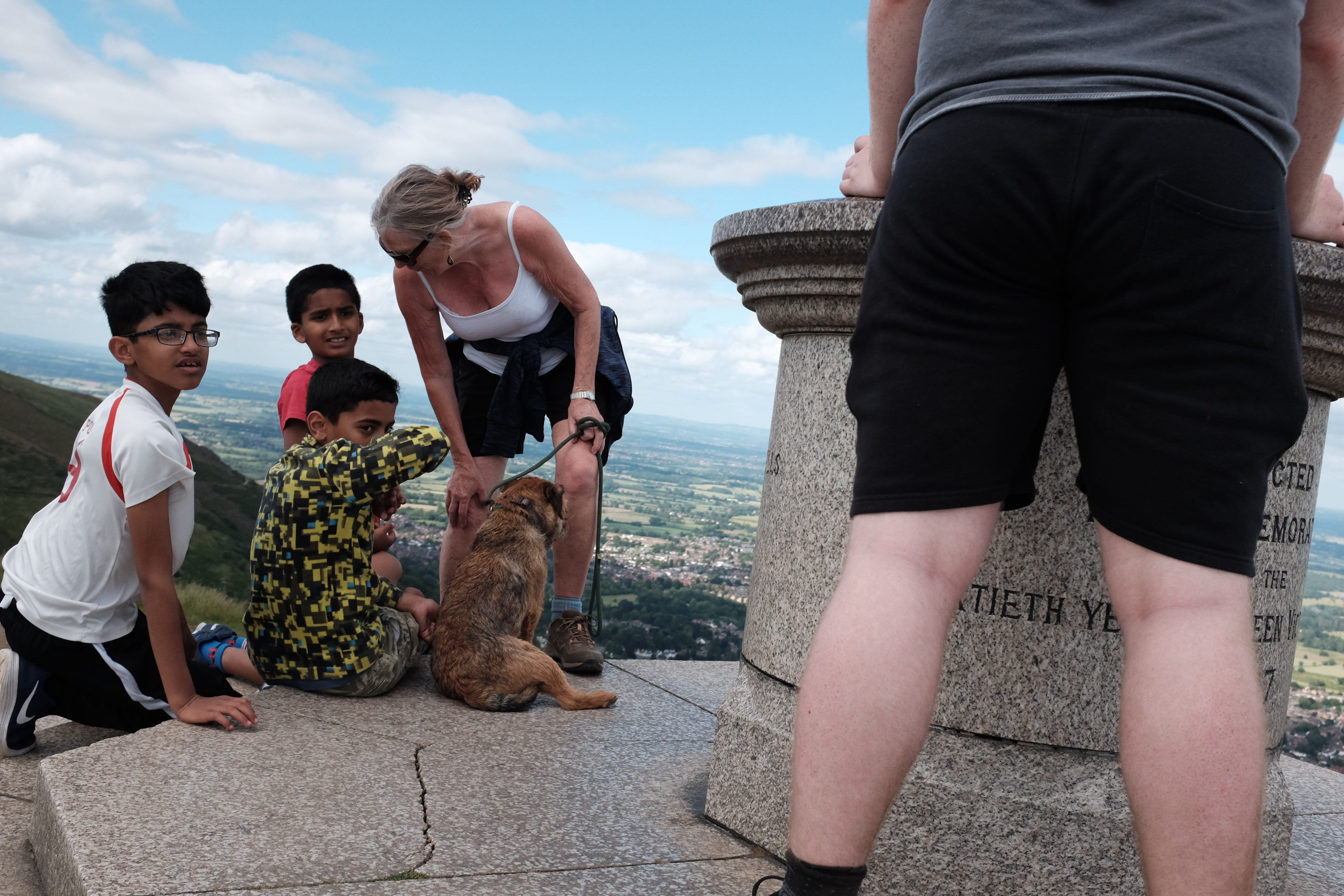
For this exercise I’ve transposed street to mean public and therefore carried out my shoot on footpaths on the Malvern Hills close to where I live. My reason for this was to garner a wider range of human activity rather than shoot in my local town of Worcester where I would be likely to just find shoppers passing me at pace, or people staring into their phones.

When viewing the two sets of images the main difference between the two is the amount of information contained within the colour set. The colour images are loaded with content helping draw my eye around the whole of the frame. The colour set is closer to reality as we see it, whereas the black and white set relies mainly on shape and form and is aligned to photographic history. The colour images are more contemporary in feel and play to the rational of human experience.

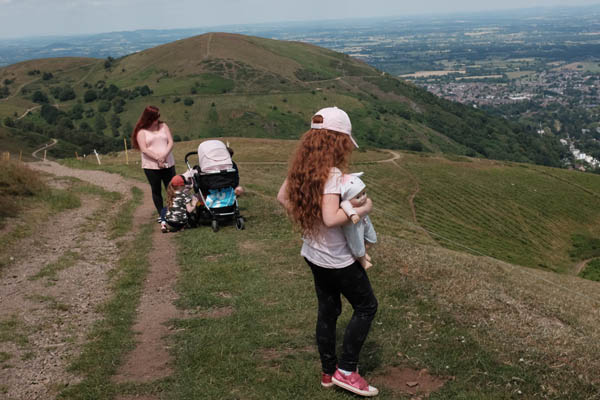
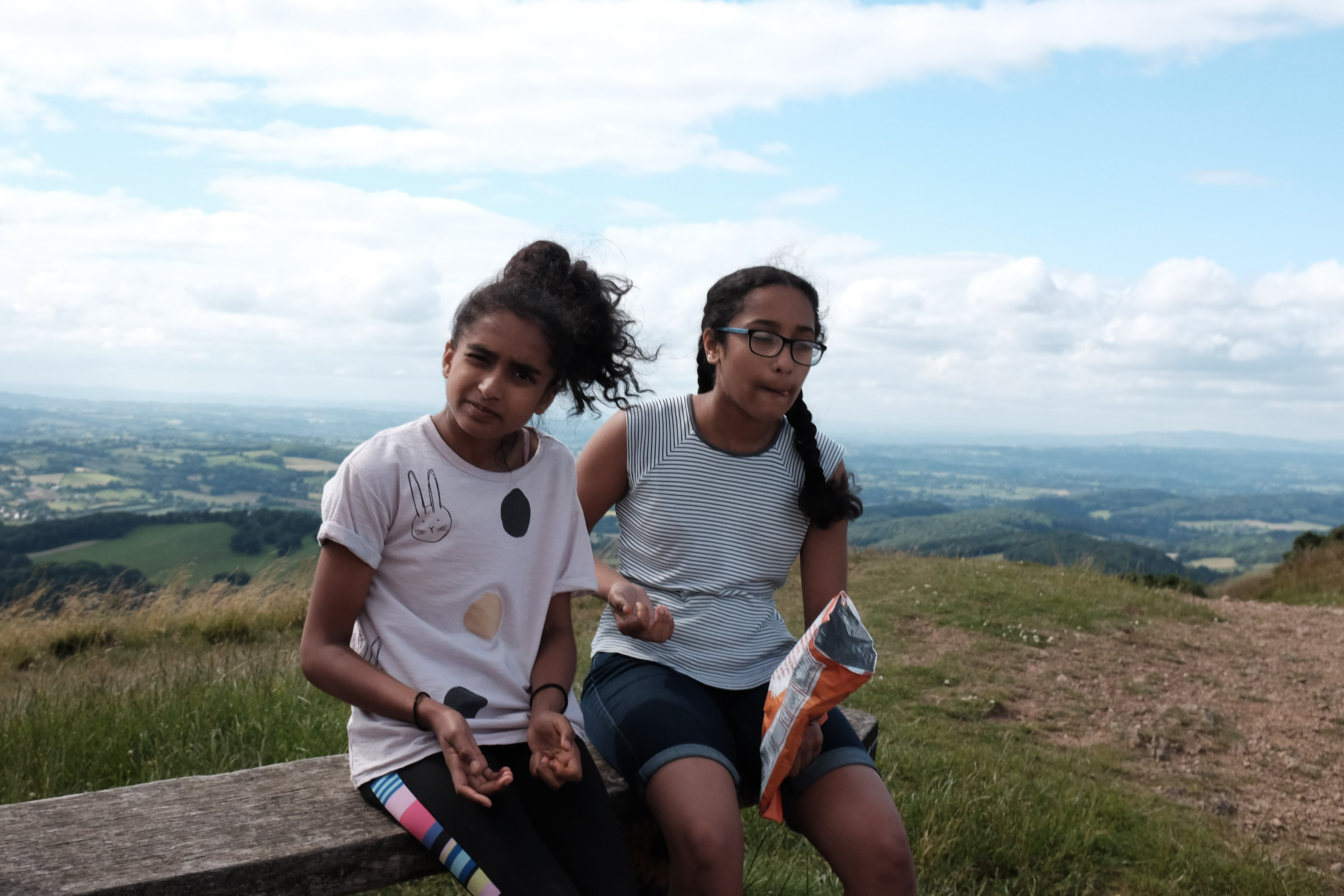
Looking at the two images above, it is noticeable how much information is lost in the black and white conversion. Instantly my eyes are drawn to the subjects hair and the pink of their tops and finally to the girl in the foregrounds shoes. My eyes flit in a triangular shape between all the points of colour reference – this sharpening of visual interest is lost in the black and white image – which is reduced to form and shades of grey.

I think the main point that I have learnt from this exercise is not necessarily regarding the reality of colour and its ability to draw you around the frame, but moreover, I’ve learnt about the reductive nature of black and white and the information that is lost. In so far as to which set I prefer I am quite torn between the two. I do like the graphic and stark qualities of the black and white set, but if push came to shove I would side with the colour images mainly for their realism and for the way that colour has the power to help lead me around the frame, and, as with the images above colour can add punctum.

I can honestly say that the exercise has truly shifted my thinking as I have always been stalwart in my defence of black and white. This is a lesson well learnt.

Project 3: Reportage

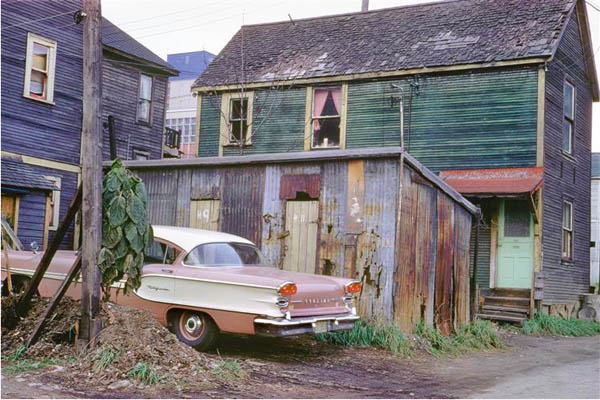
The shift from black and white street photography to colour was a gradual progression over the course of a couple of decades from the 1950’s through to the 1970’s. Three notable luminaries of early colour street photography were; Saul Leiter, Fred Herzog and Vivian Maier.

Herzog, New Pontiac, 1957.

These photographers embarked on their colour street work during the 1950’s, but due to the disregard of colour photography, because of its associations to advertising, they remained undiscovered until much later. Joel Sternfeld and Joel Meyerowitz also produced their own colour street output in the 1960’s. The ground-breaking exhibitions curated by John Szarkowski at the Museum of Modern Art, featuring work by William Eggleston and Stephen Shore, marked the wider acceptance of colour photography by the art world in general, leading to a greater proliferation of colour street work.

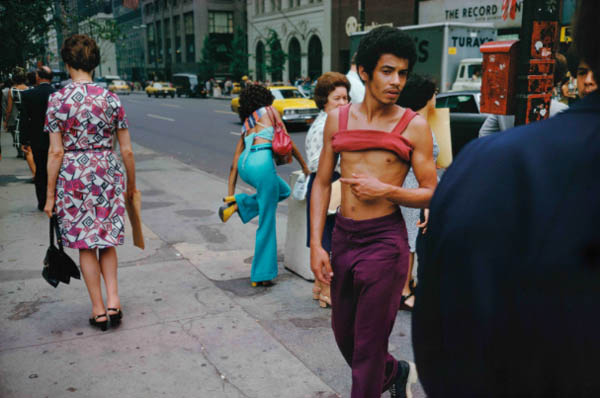
I want to focus on Joel Meyerowitz for a moment, as I think his view is great at summing up the potential of colour photography and also because I have a great deal of respect for him as a photographer and as a person. In his retrospective book Where I Find Myself (I highly recommend this) he states ‘What I saw was that the colour image had more in formation in it, simple as that! There was much more to see and consider, whereas black and white reduced the world to shades of grey.’ (Meyerowitz, 2018, 286). For me this is the crux. The world we see is colour, therefore, black and white reduces it and in so doing it takes away reality. Meyerowitz further adds ‘The sharpness and cohesive quality of the image compelled me to ‘read’ everything in the frame…colour in the distance actually added something to the meaning of the whole frame…” (Meyerowitz, 2018, 286).

Meyerowitz, New York City, 1974.

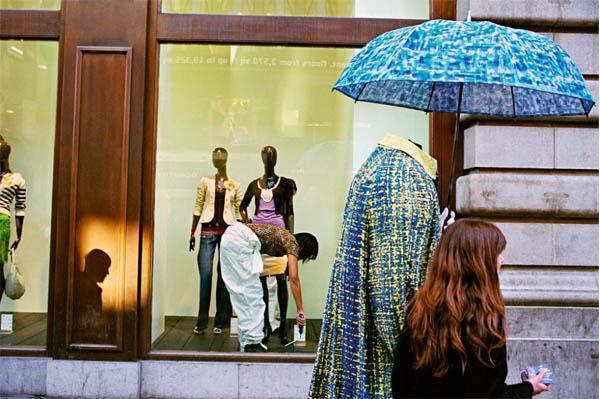
With regard to the shift away from surrealism I’m not convinced that there has been a shift away from it – with respect of street photography. Although Cartier-Bresson is an exemplar of surrealist street work and black and white is more obviously suited to it, there are many examples of current colour street contemporaries, such as work produced by Matt Stuart. Life can often be absurd, these absurdities play out on the street – because the street is the theatre of life, encapsulating all of humanity in all of its glory.

Stuart, Oxford Street, 2009.

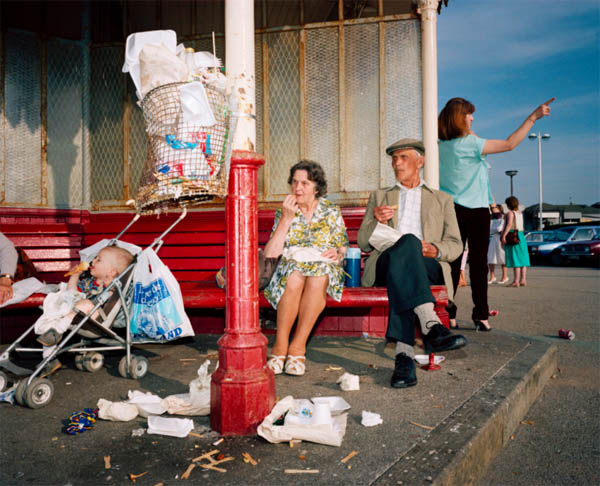
The work of Martin Parr is often described as an ironic view of British identity. Parr’s images show symbols associated with our nation alongside the wit which also typifies us. Whether it be his early black and white images of people scurrying about in bad weather or work from his breakout series The Last Resort – showing us humanity at the seaside surrounded by the artefacts connected to place – he holds a mirror to our society at large. In the past Parr has been derided for his satirical and uncompromising point of view, often being said to be cynical and sometimes demeaning, but are we not as a nation witty, sarcastic and ironic? For me Parr is first and foremost a humourist with an eye for representations of national and regional identity, also showing us the markers that are representative of the various class structures within our society.

Parr, The Last Resort, 1983-85.

Bibliography

Team, T. (2019). An Interview with Fred Herzog – ‘In His Own Words’ (excerpts). [online] AMERICAN SUBURB X. Available at: https://www.americansuburbx.com/2013/05/interview-fred-herzog-in-his-own-words-excerpts.html [Accessed 30 Jul. 2019].

Huck Magazine. (2019). Half a century of photography with Joel Meyerowitz. [online] Available at: https://www.huckmag.com/art-and-culture/photography-2/half-century-photography-joel-meyerowitz/ [Accessed 30 Jul. 2019].

MATT STUART | PHOTOGRAPHER | SHOOTS PEOPLE. (2019). COLOUR | MATT STUART | PHOTOGRAPHER | SHOOTS PEOPLE — MATT STUART | PHOTOGRAPHER | SHOOTS PEOPLE. [online] Available at: http://www.mattstuart.com/photography/0321d8w9xl9a15h8ixm9hup47fra41 [Accessed 30 Jul. 2019].

Magnum Photos. (2019). Revisiting Martin Parr’s Last Resort • Magnum Photos. [online] Available at: https://www.magnumphotos.com/arts-culture/society-arts-culture/martin-parr-the-last-resort/ [Accessed 30 Jul. 2019].

Williams, V. (2014). Martin Parr. Rev. ed. London: Phaidon Press Ltd.

Meyerowitz, J. (2018). Joel Meyerowitz – Where I find myself. Laurence King Publishing.

Howarth, S. and McLaren, S. (2011). Street photography now. London: Thames & Hudson.

Project 2 Aftermath

For much of the first part of David Campany’s essay; Safety In Numbness, he extols the virtues of the ‘presentness’ of moving images relating to an event, over the use of the ‘frozen’ image which is more readily used as a form of visual punctuation in television stories, stating ‘There is nothing like the ‘presentness’ of the moving image to emphasise the ‘pastness’ of the photograph.’ (Campany, 2003).

Aftermath photography has its roots within the earliest histories of the photographic medium. Roger Fenton and Ken Burns both recorded the scenes from the battlefields of The Crimea and The American Civil War respectively. Their unwieldy equipment and long exposure times predicated the construction of their images after the engagements of battle had subsided, which, in turn, led to a more artistic and aesthetic renditioning of the scenes. This measured, aesthetical approach has been adopted by a number of contemporary photographic practitioners such as the likes of Simon Norfolk, Paul Seawright, Donovan Wylie and David Burnett and their resulting bodies of work relate a more contemplative viewing experience.

The work of these photographers feels as if giving pushback against the fast-paced SLR/DSLR photojournalistic approach of the decades since the mid 1930’s and the chasing of the ‘bang bang’ – which presents the viewer with little or no interpretive responsibility and, although visually impactful, can become lost on the assimilate and move on generations. I’m not saying that these sorts of images are undervalued and less relevant, but I feel that there is room for both aesthetics in priming the memory of the viewer, with the hope of instigating change.

Returning to Campany’s thoughts on the sway of video over still imagery, and the beautification of war through the slower and more considered approach of aftermath photography – obviously, the moving image has great power; it’s in our homes on a daily basis, we consume it and then move on to the rest of our daily business, perhaps relating an opinion to a colleague the next day – but the deluge of daily broadcasts eventually eviscerates thoughts of an event, dulling our conscious. Photography on the other hand, has a greater potential to stop us in our tracks; to impregnate our minds with visceral thoughts, hopefully provoking a response deep within our own personal psychologies and the more contemplative approach of aftermath photography engages us on a deeper level of thought.

Bibliography

David Campany. (2019). Safety in Numbness: Some remarks on the problems of ‘Late Photography’ – David Campany. [online] Available at: https://davidcampany.com/safety-in-numbness/ [Accessed 23 Jul. 2019].

Davidburnett.com. (2019). Aftermath: David Burnett | Photographer. [online] Available at: https://www.davidburnett.com/gallery.html?gallery=Aftermath&folio=Galleries&vimeoUserID=&vimeoAlbumID=#/0 [Accessed 23 Jul. 2019].

Project 2 Photojournalism

Charity

Martha Rosler’s essay: In , Around and Afterthoughts (On Documentary Photography), which appeared in Richard Bolton’s edited book of essays The Contest of Meaning, sets about constructing an argument that documentary photography reinforces class structure by emboldening the gap between social classes through the capitalist paradigm.

Rosler states, “Documentary photography has come to represent the social conscience of liberal sensibility presented in visual imagery” (Rosler, 1992). When speaking of Jacob A. Riis and Lewis Hine, two photographers working in highlighting social injustices; who’s aims were predominantly about bringing reform through awareness via their documentary practice, she says “their appeals were often meant to awaken the self-interest of the privileged. The notion of charity fiercely argued for far outweighs any call for self-help. Charity is an argument for the preservation of wealth, and reformist documentary (like the appeal for free and compulsory education) represented an argument within a class about the need to give a little in order to mollify the dangerous classes below…” (Rosler, 1992). This seems such a massive slight on the principles of the two men, motivated to change a way of thinking by exposing the injustices they felt. Their motivations were not for self-aggrandizement but were for reform much like the prison reformists of the nineteenth century or the slave trade abolitionists.

If anything, the capitalist construct isn’t augmented by documentary photographers reinforcing the Us and Them thinking, but by the 1% who have much to lose with its downfall, emboldened by political and media moguls. Rosler appears to be a motivated by political viewpoint. I fail to see how people caught in the trap of poverty can help themselves unless pursuing a life of crime. Food-banks are an indicator of charitable worth in our present climate, and if charitable donations increase because of the public’s awareness to the plight of the poor or other social ailments (health, work, modern slavery), then the work started by Riis and Hine and modern contemporaries such as Jim Mortram, Matt Black, Chris Killip and Tish Murtha should be applauded.

In so far, as to whether images of the poor and destitute are patronizing or exploitative, this depends on the intent of the image makers. Taking Riis and Hine as examples, there is an argument that their work is patronizing but only in terms representative of class – they are much more privileged than those that they are making images of. This has no bearing on their intent though – highlighting the plight of the poor who were being exploited by wealthy landlords; their intent was purely humanitarian.

Photography has a great power to prick the conscience of the viewer. A single image is remembered far easier than five-minute documentary of moving image and I think is more affective at initiating social change. Photography’s potency should not be underestimated or disregarded as a catalyst for change.

Compassion Fatigue

“To suffer is one thing; another thing is living with the photographed images of suffering, which does not necessarily strengthen conscience and the ability to be compassionate. It can also corrupt them” (Sontag, 1979:20).

If you fail to be moved by an image of destruction or suffering you must be a sociopath, no matter how many times such images are presented to you. Are we being anaesthetised by the flow of images from the ever-present wars and cases of suffering presented to us? I’d like to think not; there is a great propensity for photography to establish emotive responses. If anything, I think that the use of moving image is lessening the emotional responses; because of the constant streaming into our consciousness through rolling news channels or even nightly broadcasts.

Take the image made by Eddie Adams of Gen. Nguyen Ngoc Loan, killing a suspected Viet Cong official. Eddie wasn’t the only journalist there at the time, there was also a film crew. When viewing the moving footage of the incident it is very easy to become dislocated from the event; the movement through the preliminary interactions, the firing of the gun, the immediate aftermath – where the camera tracks the General and then moves on, all happens so quickly and plays out more like a Hollywood fiction than reality. The power of the still image stops us in our tracks – holds us, and the freezing of time has a greater potency to lock the image cerebrally.

If anything, I think that Sontag’s view is more applicable, presently, to the moving image as opposed to the still image. Adam’s picture helped the already turning tide of political opinion in the United States, assuaging policy and along with other images such as Nick Ut’s, helping embolden the anti-war movement, hastening the end of the Vietnam war. More recent images such as the body of Alan Kurdi and chemical gas attacks in Syria have had a huge impact and have stirred emotions, leading to direct political interventions.

Inside/Out

Recently, I attended an exhibition showing the work of two photographers who both produced work on the subject of Polish communities in the West Midlands. The works were separated by two decades, by film choice (colour and black & white) and finally they were separated by the national identities of the photographers. Jon Tonks is an English national (outsider) and Czeslaw Siegieda was born in a displaced persons camp pf Polish lineage (insider). Siegieda made black and white images during the 70’s and 80’s and Tonk’s work was commissioned by MultiStory and was made in the two-year period after the outcome of the EU referendum.

When viewing the two sets of work it was obvious to me who was the insider and who was not. Siegieda’s images hold a greater sense of immersion and familiarity, there is a feeling of participation and understanding of the community, whereas Tonk’s work, for me, has a feel of distance and a sense of voyeurism. I know Jon spent over two years on his project and earnt the trust of the community, but I can’t escape the sense of detachment between him and his subjects. I’m reading into this, but I feel his association with his subjects were fleeting rather than immersive. I believe that an outsider can produce successful insights in documentary work, but only by engaging in longform projects and being truly immersed in their subject’s way of life.

Bibliography

Grange, A. (2013). Basic Critical Theory for Photographers. [S.l.]: Focal Press.

Bolton, R. (1992). The Contest of meaning. Cambridge, Mass.: MIT Press.

Sontag, S. (1979). On photography. London: Penguin Books.

Public information. (1994). San Francisco: San Francisco Museum of Modern Art [etc.].

Jon Tonks. (2019). Stories of Home – Jon Tonks. [online] Available at: https://www.jontonks.com/work/stories-of-home/ [Accessed 15 Jul. 2019].

Czeslawsiegieda.com. (2019). Czesław Siegieda Documentary Photographer. [online] Available at: https://czeslawsiegieda.com [Accessed 15 Jul. 2019].
Project 1: Eyewitness

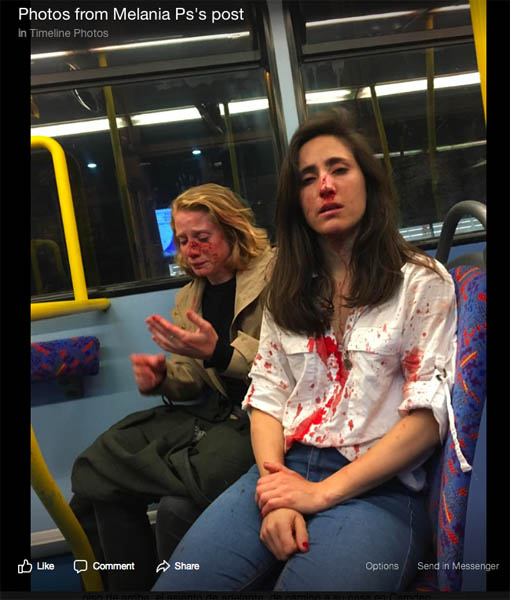
I’ve chosen to look at a two very different examples of citizen journalism. The first highlights a very current abuse of power; that of male power. The image was taken in the immediate aftermath of a vicious attack on two girls on a London night bus.

Fig 1.

The couple, Melania Geymonat and her friend, referred to as Chris, were sitting in the upstairs front seats of the bus when they were surrounded by four young males who proceeded to homophobically abuse them. The girls remain unsure as to what action may have given rise to the intolerable behaviour of the men, thinking that they may perhaps have kissed each other (and why not in a fair and tolerant society?). The men aggressively demanded that they kiss for them, to perform for their entertainment. I think it’s probably a safe bet that the men have watched far too much pornography, and like a large proportion of young men today are desensitised to sex and lack an understanding of intimate sexual relations. Alongside that, because of the disrespectful nature if pornography today, they copycat the arrogant and chauvinistic attitudes displayed to women in these films. This seems to be a worrying trend amongst young males, highlighting the objectification of women and the perception of male power over them.

When the girls refused to perform the abuse was ratcheted up from verbal to physical, with coins being thrown at them and escalating at punches being landed on them. The men then fled. Sometime after when the girls were still reeling from the attack, an image was made of them.

It’s not clear how soon after the attack the image was made. Melania’s Facebook post which was made almost a week after the incident stated, ‘it was only them and us there’ (Geymonat, 2019), if this is the case people can only have joined them after the men had fled, no-one was actually documenting the incident as it occurred. This would imply that there is a level of collaboration in the making of the image. The picture first appeared on Melania’s Facebook account, so it would have to have been made on her phone or sent to her via a third party. Looking at the image it appears as if there is a certain amount of thought put into its construction. Melania appears calm and composed compared to her friend Chris, as though she’s steadied herself; she’s facing squarer to the camera emphasising the blood on her shirt and has tilted her head back slightly, highlighting the damage to her nose. I definitely get a sense of purpose in the making of the image; as if the notion of sharing has immediately taken root. For me the image is definitely more subjective than objective, there is a reason for its creation from the onset, rightly, to show the world the extent of violent homophobia and the objectification of women.

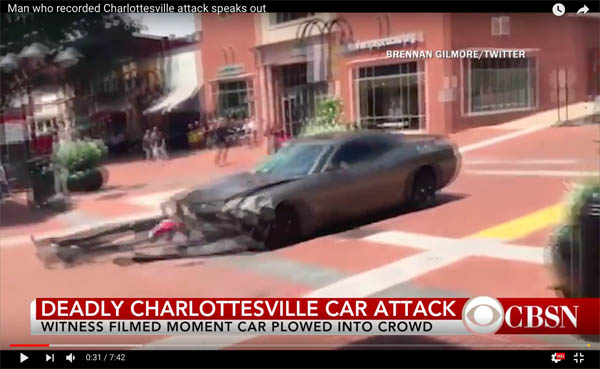
The second eyewitness account features live footage recorded at the scene of a horrendous attack on anti-fascist protesters in Charlottesville, Virginia.

Fig 2.

The protesters were marching in response to a demonstration organised by various alt-right factions who were themselves marching against the removal of a statue that for them symbolised their movement and the confederate states, who have a long history of white supremacy and ardent racism. There were several days of protests over the course of months and numerous altercations between the two groups, a lot of them ending in violence, heightening the tensions between them. On August 12th 2017 James Fields attended a white supremacist rally, after which he drove his car into a large mass of racially diverse protestors, killing one and seriously injuring several others. The incident was filmed by onlookers of which footage taken by Brennan Gilmore soon went viral and was picked up by major media outlets. Brennan was unsure as whether to post his footage but was persuaded after hearing that the alt-right were spinning negative propaganda regarding the incident. He saw the releasing of his film as a way of conveying the truth and silencing negative spin. When viewing his footage, I would argue that this is much more objective than the first incident with Melania and Chris. There was no time to do anything other than react – barely time to think. Brennan saw a fast car hurtling down the road towards the protestors, he didn’t know the eventual outcome, he just reacted to the fast car, almost on auto-pilot and recorded the world as it is.

There are both subjective and objective versions of eyewitness accounts that have been widely used over time, be it a plane crashing into the Twin Towers (objective) or a policeman smashing his baton into a miners face (subjective), the things that dictate the outcomes are relative time and the individuals involved in the capture.

Illustrations

Fig 1. Geymonat, M (2019) Facebook [Screenshot] In: Facebook.com. (2019). Melania Ps. [online] Available at: https://www.facebook.com/melaniapeese/posts/2310276979289157 [Accessed 24 Jun. 2019].
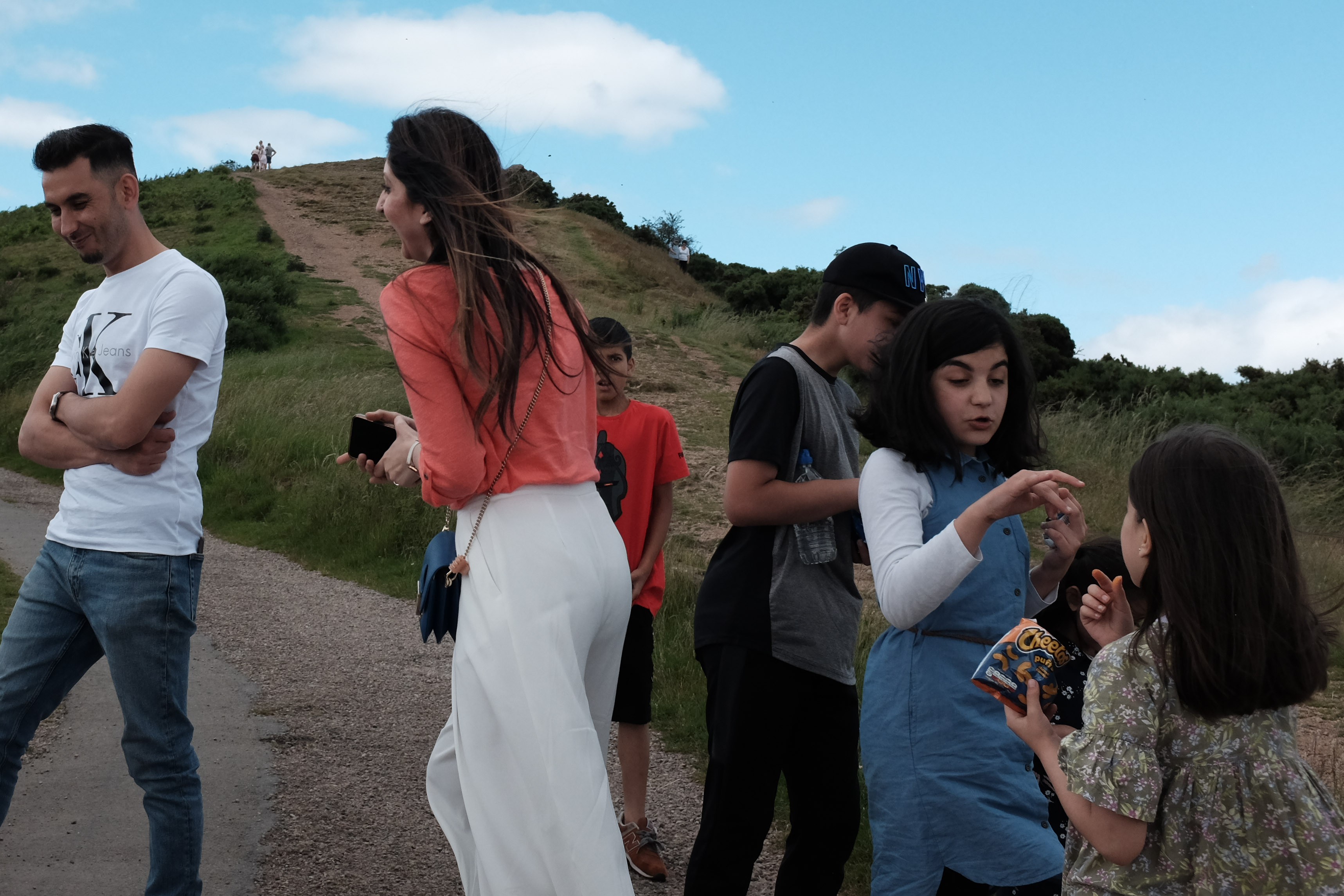
Fig 2. Gilmore, B (2017) Youtube [Screenshot] In:   YouTube. (2019). Man who recorded Charlottesville attack speaks out. [online] Available at: https://www.youtube.com/watch?v=Nfk2e15Bhfg [Accessed 24 Jun. 2019].
Bibliography

the Guardian. (2019). You saw me covered in blood on a bus. But do you get outraged about all homophobia? | Chris. [online] Available at: https://www.theguardian.com/commentisfree/2019/jun/14/homophobic-attack-bus-outrage-media-white?CMP=Share_iOSApp_Other&fbclid=IwAR297uLuj9AW10piR0rU_X3zf5RIDcyC6kuis5ADvlF21ZmCw19frw5vdK8 [Accessed 24 Jun. 2019]. 
The Independent. (2019). Homophobic attacks more common than people realise, LGBT+ campaigners warn. [online] Available at: https://www.independent.co.uk/news/uk/home-news/london-bus-attack-homophobic-violence-london-lgbt-lesbian-couple-a8949231.html [Accessed 24 Jun. 2019].
Facebook.com. (2019). Melania Ps. [online] Available at: https://www.facebook.com/melaniapeese/posts/2310276979289157 [Accessed 24 Jun. 2019].
YouTube. (2019). Man who recorded Charlottesville attack speaks out. [online] Available at: https://www.youtube.com/watch?v=Nfk2e15Bhfg [Accessed 24 Jun. 2019].
Nytimes.com. (2019). Charlottesville Car Attack Suspect Pleads Not Guilty to Federal Hate Crimes. [online] Available at: https://www.nytimes.com/2018/07/05/us/charlottesville-plea-hate-crimes.html [Accessed 24 Jun. 2019].
Erik Kessels

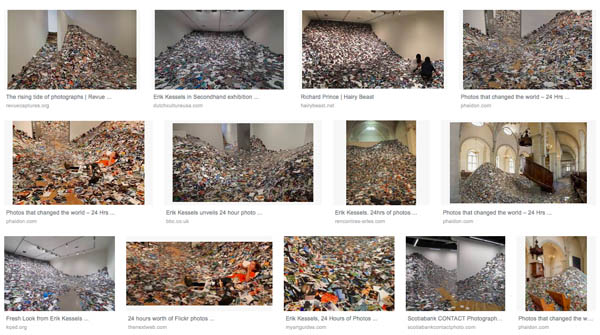
Erik Kessels installation, 24 Hours in Photos, is as much sculptural as it is photographic. The piece contains many thousands of images uploaded to Flickr in a 24 hour period, estimated at upwards of 400000 images. Often, descriptions of the work use adjectives associated with large volumes of water, such as; saturated, inundated, rising tide, tidal wave. Even our old principle Gareth Dent described it as a ‘flood’. In the many institutions and galleries that it has been shown, the work has been represented as such, often dwarfing the viewer with peaks and troughs, emblematic of an ocean, with viewers appearing as if standing before a roiling tsunami of images.
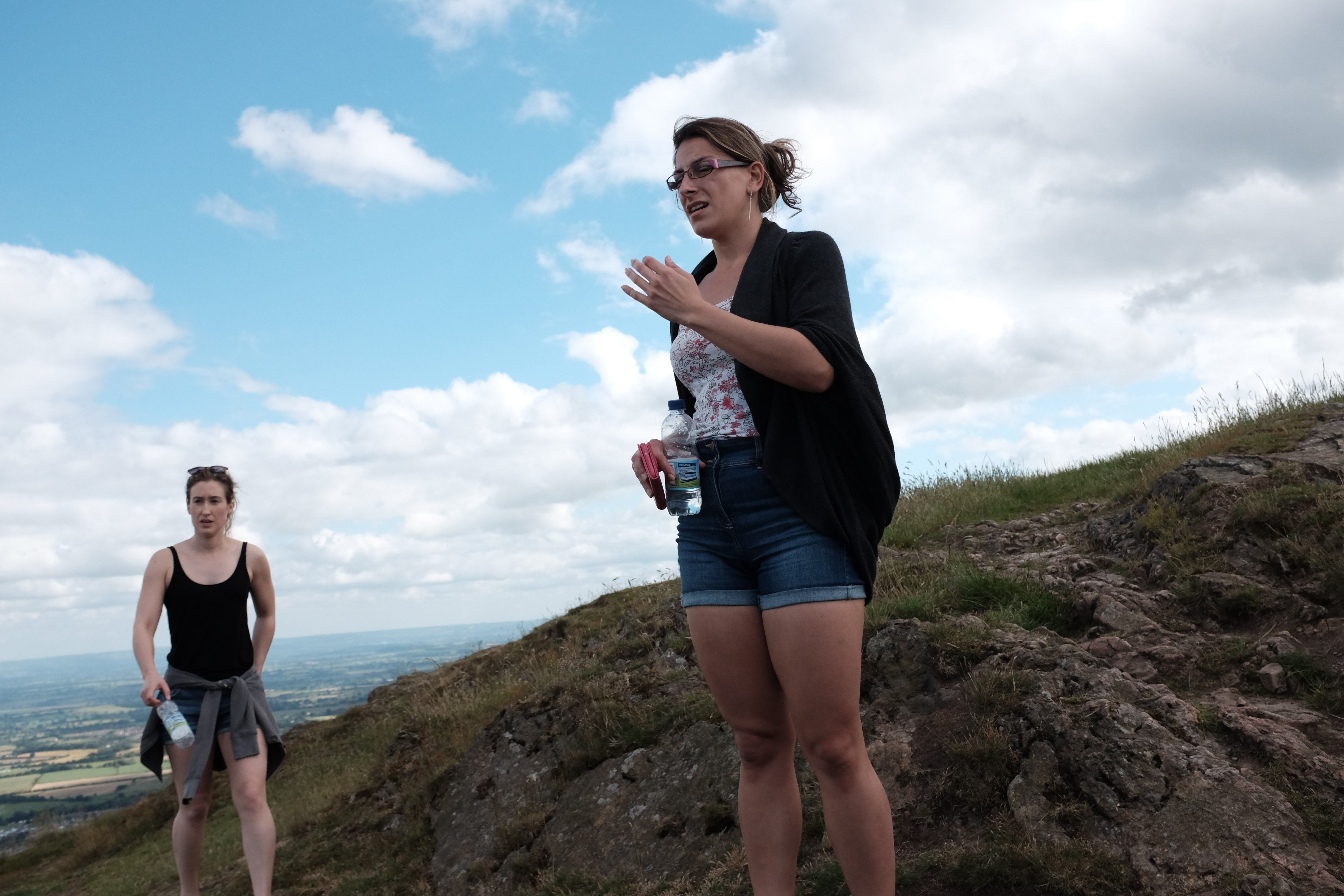
Fig 1.

The work was widely exhibited in 2013; since then Instagram has taken over the landscape of image sharing platforms. In 2016 it was estimated that in a single day 95 million images and videos were uploaded to the site. Add to this the upsurge in popularity of the platform among global youth culture and the huge demographic of India and China, with their billion plus populations and burgeoning middle classes and the amount of uploaded images very quickly overtakes the global populous.

When viewing the work, we see just the surface and often some of the surface images are wrong sided, so therefore out of view. What of the huge amount of images underneath and out of sight? Seeing this work as the metaphor that it is, it would be very easy as an image maker to become overawed by the concept of the image flood. We need to ask ourselves why are we creating work; is it about notoriety, the gratification of strangers, awards, the buzz of getting likes; or is it much more personal? For me it’s about the process of creativity and about learning from my peers; ultimately, it’s about progression with my photography. I take solace from two photographers who produced work solely for themselves, who sought for nothing more than the joy of their art: Jacques Henri Lartigue and Vivian Maier.

Illustrations

Fig 1. Erik Kessel Goggle Images (2019) [Screenshot] Google.com. (2019). Erik Kessels – Google Search. [online] Available at: https://www.google.com/search?q=Erik+Kessels&client=safari&tbm=isch&tbs=rimg:Cb8t7x2nidBHIjhOsqqvkEZ-urw2FZZV3aRFqJJGq0SOadhzw2V0jw9em1xx_1SNROso29LDHmu4D7XwHfOs-ROxjFioSCU6yqq-QRn66EXW9jyNpACIEKhIJvDYVllXdpEUR03gavvdRkeIqEgmokkarRI5p2BGf_1_1d3iQNMYioSCXPDZXSPD16bETwlyzinrY-6KhIJXHH9I1E6yjYRCFn1lK1L0V4qEgn0sMea7gPtfBFMYOcrSlEwFSoSCQd86z5E7GMWEUOKhLW0mOC1&tbo=u&sa=X&ved=2ahUKEwjx_rfsm-viAhUGcBQKHcgyD2gQ9C96BAgBEBs&biw=1310&bih=815&dpr=1#imgrc=_ [Accessed 17 Jun. 2019].

Bibliography

99firms.com. (2019). Instagram Marketing Statistics 2019 – 99firms.com. [online] Available at: https://99firms.com/blog/instagram-marketing-statistics/ [Accessed 17 Jun. 2019].

#weareoca. (2019). Dealing with the flood… – We Are OCA. [online] Available at: https://weareoca.com/subject/photography/people-are-hungry-for-stories/ [Accessed 17 Jun. 2019].