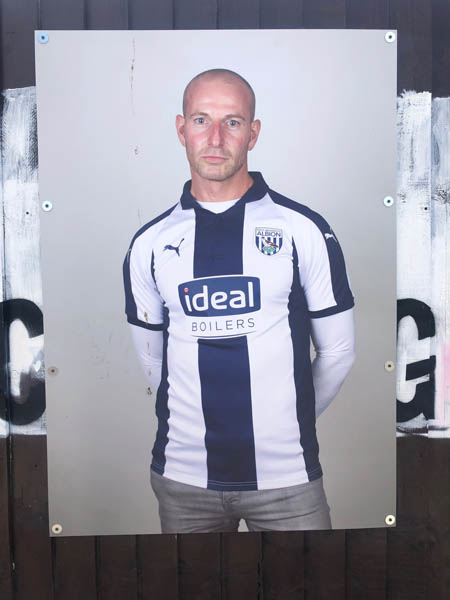
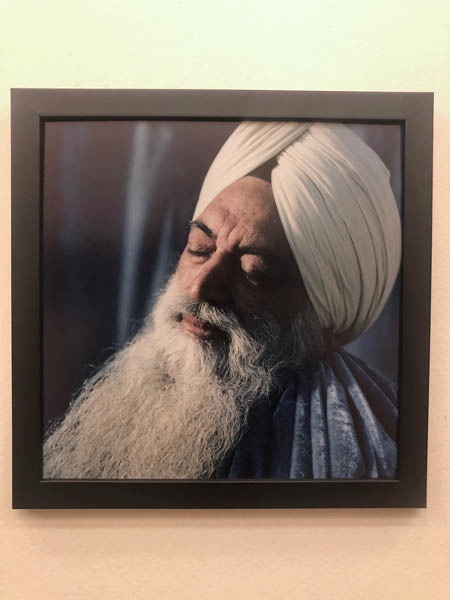
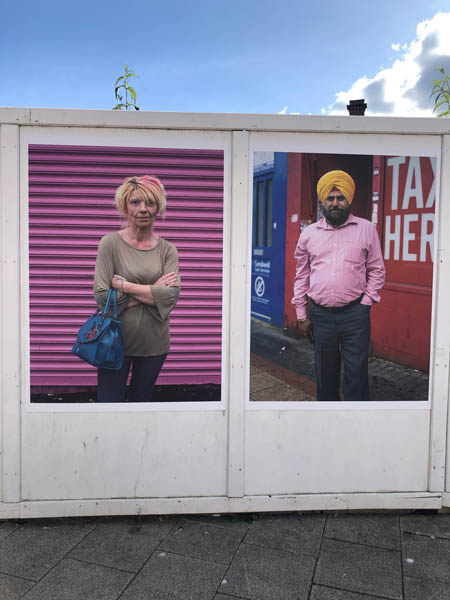
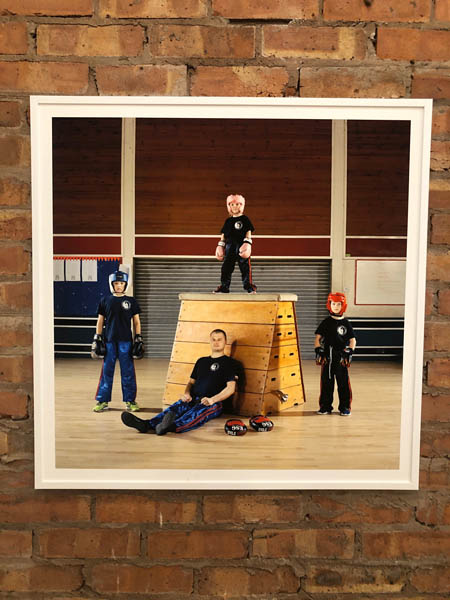
This study visit was organised by Amano Tracy and took place at MPF Bristol on 14/12/19. The event consisted of Martin giving a personal retrospective account of his career and photographic life to date.
Parr was born in Epsom, Surrey, 1952 and was influenced by his grandfather a keen amateur photographer and member of the Royal Photographic Society.
Parr studied photography at Manchester Polytechnic from 1970-1973; explaining that the course was designed to produce commercial photographers with a heavy bias on the science aspects of lighting and darkroom etiquette. Here though, Parr collaborated with his contemporaries such as Daniel Meadows and Brian Griffin, culminating in projects based on the notion of Northern Vernacular. During this time, he and Meadows got work in a Butlins camp as roving photographers. His Diploma show ‘Home Sweet Home’ exhibited at the Impressions Gallery was to reveal many of his re-occurring tropes that would litter his work in the following decades; documentary, kitsch, collectables and domestic interior. The exhibition was also an expression of his frustration at the traditional studio-based course at Manchester.
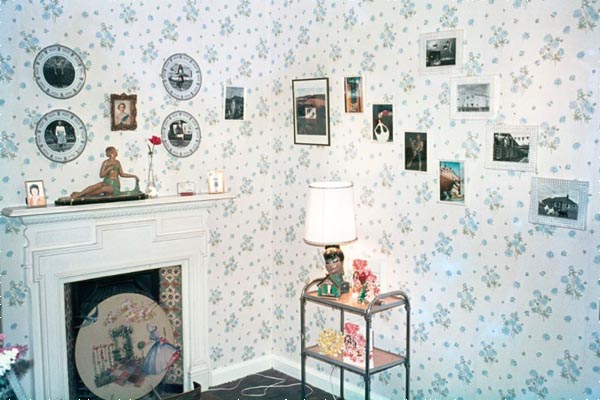
Parr, Home Sweet Home, 1974
In 1975, Parr moved to Hebden Bridge in the Pennines. Here, he became involved in an artist’s cooperative The Albert Street Workshop ‘It was very good…people would drop in for coffee and it was very sociable. I had one wall…I displayed my photographs, and as I took new ones, I replaced them, it was a constantly changing exhibition.’ (Parr, 2014, 71). His time here would see him mature as a photographer as he engaged with local community projects such as The Non-Conformists; a project working in the community Methodist and Baptist chapels. A long form documentary project shot in black and white. He explained, when asked, that he gained permission to photograph and that he became familiar with the occupants, enough so they just ignored him, resulting in an observational style of documentary photography. While in Hebden, Parr also worked on other projects that would eventually become books, two being “Beauty Spots” and “Bad Weather”. For his project “Bad Weather” Parr purchased an underwater camera and flash because, as his project suggested, he was photographing in very inclement conditions. He told us that he became interested in the way the flash lit up raindrops and that they were to become an integral part of this body of work and that how this would inform the use of flash in his later projects.
One of his early set of collections were the postcard photographs of British tourist spots made by John Hinde, these highly saturated colour photographs and the work of influential American colour photographers such as William Eggleston, Stephen Shore and Joel Meyerowitz marked a shift in technique from black and white to colour photography. In 1982 Parr moved to an are just north of Birkenhead in Liverpool, from here he spent the next three summers photographing working class Liverpudlian seaside goers at New Brighton. The resulting book and exhibition “The Last Resort” marked a huge shift in British photography, enabling the embrace of colour as a serious representation for art and documentary photography. I honestly think that the release of this book enabled a huge leap forward for British photography especially with regard of its reach with the wider populous and the acceptance of colour as a serious genre within the British photographic sphere. The work was criticised by some for its exploration (some say, exploitation) of the working classes, but, for me it shows truth inherent in our class structure, and if by being unflinching he makes some people uncomfortable, then perhaps they just can’t handle truth. Let us not forget; photography is now, truly democratic.
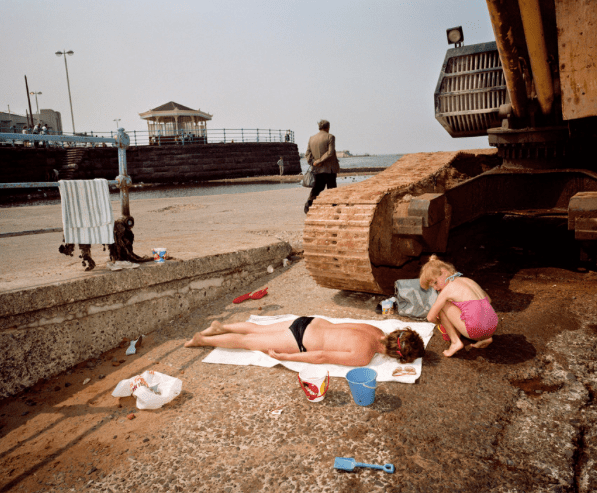
Parr, The Last Resort, 1983-1985.
After receiving some criticism for “The Last Resort”, of which he said it was as equally beneficial to him as the plaudits he received, he decided to turn the camera on his own class, the middle class and so produced a body of work entitled “The Cost of Living”. The project was to coincide with the height of “Thatcherism”, which helped enable the middle class to become respectively more affluent. Photographing at such places and events as; Malvern Girls School, Conservative clubs, Laura Ashley shops, village fetes, garden parties and bowling clubs. Richard Ehrlich, writing in Creative Camera states ‘Some people criticised “The Last Resort” as being voyeuristic and/or patronising, and “The Cost of Living” will be open to the same sort of criticism, particularly as the satire is even more biting. People are most vulnerable to satire when they take themselves seriously, and the people in “The Cost of Living” take themselves very seriously indeed…Parr has caught the comfortable, confident classes at the apex of their pride.’ (Ehrlich, 1990). Personally, I’ve always enjoyed the satire in Parr’s work, I find the humour quite refreshing, after all, sarcasm, self-deprecation, the absurd and satire could be said to be inherent in British DNA.
The next books he produced focused his gaze outside of the UK as he covered the topics of tourism “Small World” and globalisation “Common Sense”. Parr is a prolific producer of photobooks and also a huge collector too. He famously sold his collection of over 12,000 books to the Tate, widely recognised as one of the greatest collections of photobooks. His collecting interests didn’t just stop at photobooks as over the years he has gathered all sorts of different ephemera such as: Saddam Hussein watches, Margaret Thatcher plates, Space Dog ephemera and much more.
In 1994 Parr became a full member of the Magnum picture agency. The vote to include him into membership was one of the most divisive in the history of the agency, with Philip Jones Griffiths circulating a letter decrying his inclusion. He was voted in with a two thirds majority by just one vote. He became president of the agency in 2014; a post he upheld until 2017.
In 2014 Parr set up the Martin Parr Foundation in Bristol. The building it is located in (and where this visit took place) houses Parr’s own archive in a massive database, his collection of book dummies and other acquired photobooks and is a centre for promoting British photography and photography concerned with Britishness.
After the talk there was a Q&A with Martin covering a wide range of topics from student’s questions. For me one of the most revealing insights came from a question asked by Helen Rosemier. Asking about the ethics of representation and Parr’s thoughts on the subject, considering controversies surrounding some of his images, and also whether he’s had blowback from people who thought they’d been misrepresented; he answered that he’d very rarely received comments from people featured in his images with regard to misrepresentation and that generally the reactions were positive. Regarding ethics he said “In terms of the ethics, you just take anything and then you decide later whether you use it and what context you use it in.” Answering Helen’s question on exploitation he said, “Photography by nature is somewhat exploitative…it doesn’t bother me because I think it’s important to have the creative freedom to be able to photograph anything that you want to.” Reassuringly, even someone as renowned as Martin has hundreds of duff images for each success, “It’s the nature of the beast when producing work that is reactive.”
I found this a very worthwhile day. To gain insights into the practices and thoughts of one of Britain’s most eminent and well-known photographers is quite a coup for OCA and I was surprised by the number of people who dropped out of the visit at the last minute – their loss.
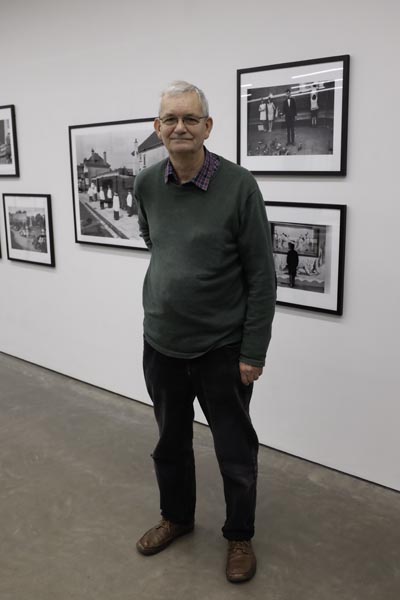
Authors own image.
Bibliography
En.wikipedia.org. 2020. Martin Parr. [online] Available at: <https://en.wikipedia.org/wiki/Martin_Parr> [Accessed 12 March 2020].
Martinparr.com. 2020. Martin Parr. [online] Available at: <https://www.martinparr.com> [Accessed 12 March 2020].
Pro.magnumphotos.com. 2020. Magnum Photos Photographer Portfolio. [online] Available at: <https://pro.magnumphotos.com/C.aspx?VP3=CMS3&VF=MAGO31_10_VForm&ERID=24KL5357TF#/CMS3&VF=MAGO31_10_VForm&ERID=24KL5357TF&POPUPIID=2S5RYDWKAOY8&POPUPPN=39> [Accessed 12 March 2020].
Nytimes.com. 2020. Will Martin Parr’S Photos Change The World? He Doesn’T Think So. [online] Available at: <https://www.nytimes.com/2019/04/17/lens/will-martin-parrs-photos-change-britain-he-doesnt-think-so.html> [Accessed 12 March 2020].
Williams, V., 2014. Martin Parr. London: Phaidon.
 Context and Narrative